Languages
Tuesday, October 27, 2026



News and Views from the Global South
COP30

‘Just Transition Must Make Climate Work for People Living its Consequences’
An open letter by more than 1,000 organizations from 106 countries, including trade unions, Indigenous leaders, feminist and youth movements, Afro-descendants, peasant groups, environmental advocates, disability networks and community organizations, to all States Parties to the United Nations Framework Convention on Climate Change is calling for a people-centered Just Transition.
Belém’s Hunger, Poverty Declaration Places World’s Most Vulnerable Populations at Centre of Global Climate Policy
A young woman at COP30 speaks about retracing her father’s footsteps. At only 16, her father and her grandfather were among the first families displaced by an unfolding climatic crisis of erratic weather and worsening climate conditions that goes on to date from their ancestral village in Sundarbans. Nearly 60 years later, she is on a mission to reclaim her ancestral lands.
As COP30 Takes Place, Can Africa Draw Lessons from Brazil on How It Develops Its Livestock Sector?
As the world gathers in Brazil for the UN climate talks, the country’s livestock sector - one of the largest in the world - is understandably in the spotlight.
We’re All in the Same Storm, Different Boats, Says Young Activist With Disability
At the UN Climate Conference venue in Belém, young activist João Victor da Costa da Silva is trying to make his case heard by negotiators. The 16-year-old Da Silva has a specific request for the parties: the needs of young people with disabilities should be addressed through the lens of climate justice.
Brazil is Breathing Life into Climate Commitments—Human Rights Lawyer
Binaifer Nowrojee, a human rights lawyer and the president of the Open Society Foundations (OSF), has lauded the Brazilian government “for significant steps taken to breathe life into the climate commitments.”
Without Truth, There Can Be No Climate Justice—Experts
Concerned scientists at the UN climate conference in Belém are appealing for collective action to combat climate change-related misinformation and disinformation.
Demonstrators Face-Off With Security as COP30 Activism Intensifies
In a departure from the past three COPs, in Egypt, Dubai and Azerbaijan, there have been increasingly intense demonstrations from activists at the COP30 venue in Belém, the capital of the northern Brazilian state of Pará.
Hollow Promises or Hope?
COP30 Brazil – Moment of Truth for the Planet
COP30 Brazil, though shadowed by the absence of many world leaders, remains a pivotal milestone in the global fight against climate change, tasked with building on the Paris Agreement’s momentum. Yet the glaring lack of commitment, coupled with withdrawals from the accord, casts a grim shadow over the future. The planet continues to warm, and scientists warn that current targets may not prevent a catastrophic temperature spike. While the summit’s focus on implementation not just new promises—is a welcome shift, it’s clear: words alone won’t cool the Earth.

Indigenous Knowledge Holders Want to Be Acknowledged
Generational lived experiences are key to confronting and living with a changing climate, say Indigenous knowledge holders and activists at the UN Climate Conference (COP30). As the first COP to be held in the Amazon region, in Belém, representatives of Indigenous communities reiterated the importance of generationally transferred knowledge and skills to adapt to and mitigate the threats posed by climate change.
A Tale of Two Cities – Belém, Nairobi and Why Global Tax Justice Must be at Center of Climate Crisis Response
The climate crisis is getting worse and requires fundamental changes to societies, economies, and our global financial architecture in response. While extreme economic inequality is on the rise – the world's billionaires now hold more wealth in the world than every country except the U.S. and China – the impacts of climate change are also unequally felt, with the poor in the Global South and North most at risk.
COP30’s Crossroads: To Accelerate Implementation or Make More Promises?
“Devastating climate damages are happening already, from Hurricane Melissa hitting the Caribbean, Super Typhoons smashing Vietnam and the Philippines to a tornado ripping through Southern Brazil,” said Simon Stiell, Executive Secretary of UN Climate Change, on the eve of COP30 in the Amazonian City of Belém. “This is why COP must achieve three things: It must send a clear signal: nations are fully on board for climate cooperation—that means agreeing to strong outcomes on all the key issues.”
The Top Climate Leaders Are Now in The Global South
When world leaders now gather in Belém, Brazil for the UN climate conference, expectations will be modest. Few believe the meeting will produce any breakthroughs. The United States is retreating from climate engagement. Europe is distracted. The UN is struggling to keep relevant in the 21st century.
‘We Want a Place at the Negotiation Table’ — Indigenous Leader
Indigenous leaders from across the Amazon region are calling on climate negotiators to base climate initiatives on the recognition of the land rights of affected Indigenous communities. From the COP30 venue in Belém, these leaders are demanding full participation in the design and implementation of proposed projects.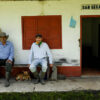
The Silent War Before COP30: How Corporations Are Weaponising the Law to Muzzle Climate Defenders
As the world prepares for the next COP30 summit, a quieter battle is raging in courtrooms. Strategic Lawsuits Against Public Participation (SLAPPs) are the fossil-fuel industry’s new favourite weapon, turning justice systems into instruments of intimidation.
Turning Indigenous Territories From ‘Sacrifice’ Zones to Thriving Forest Ecosystems
A report by the Global Alliance of Territorial Communities (GATC) and Earth Insight paints a stark picture of how extractive industries, deforestation, and climate change are converging to endanger the world’s last intact tropical forests and the Indigenous Peoples who protect them.
What’s Now Needed is Political Courage, Says UN SG Guterres at COP30
Political courage is the biggest obstacle to limiting the rise in global average temperature to no more than 1.5°C, said UN Secretary-General António Guterres.
Global Emissions Falling Too Slowly, Expert Urges Renewables Push, Fair Finance
A decade has passed since the adoption of the Paris Agreement, and a United Nations synthesis report released ahead of COP30 in Belém shows that "Parties are bending their combined emission curve further downwards, but still not quickly enough."
Deliver Emission Cuts, or Risk Locking the World Into ‘Catastrophic Warming’
The world is falling dangerously short of meeting the Paris Agreement goals, with global greenhouse gas emissions rising to record levels and current national pledges still far off the mark, the United Nations Environment Programme (UNEP) said in its Emissions Gap Report 2025: Off Target.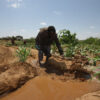
COP30: New Faces, Old Issues: What Must Change if Global Climate Talks Are to Deliver Justice for Africa
Three decades after the first Climate COP, the multilateral climate process – which was intended to serve as an instrument of justice and a guardian of the planet’s atmosphere – has fallen far short of its goals.
COP30: The Real Solution to Climate Change Could be Through International Law
At COP15, the developing countries were calling for the temperature to not rise above 1.5 degrees and they ignored the Copenhagen Accord which agreed to 2.0 degrees
COP30 Belém: Turning Promises into Action
 From the 10th to the 21st of November 2025, the 30th session of the Conference of the Parties (COP30) will be hosted in Belém, Brazil.
 « Previous Page — Next Page »





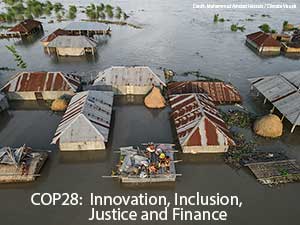
IPS at COP30
In early November negotiators, civil society, Indigenous people, media and others from about 200 countries will arrive in Belém, Brazil, for the 30th annual UN climate conference, COP30, marking a decade since the Paris Agreement was reached.
It is also a COP with huge expectations—as it takes place in a climate where there are strong political headwinds for multilateralism and in the knowledge that the climate crisis is upon us and the earth has experienced its hottest year on record.
There are also expectations that this will be the COP of implementation and for many in the developing world who are bearing the brunt of the climatic changes, their priority is climate justice, ensuring that those least responsible for climate change but most affected by it are placed at the forefront of the negotiations for finance and adaptation and mitigation plans.
While there has been progress with renewable energy surpassing coal after nearly 50 years.
Yet climate disasters are still ahead of the efforts to reduce emissions and contain them. The Baku to Belém Roadmap from the COP29 and COP30 presidencies will also need to show the scaling of climate finance up to USD 1.3 trillion annually will happen.
IPS will be at the conference bringing exclusive news and interviews, making sense of the negotiations and controversies, and looking at how the outcomes will impact the people of the developing world and climate-vulnerable regions.
IPS coverage is supported by the Open Society Foundations.


The Week with IPS

NEXT STOP - SDGs
Tracking global progress towards a sustainable world
Tracking global progress towards a sustainable world
