
Wednesday, November 25, 2026



News and Views from the Global South
Environment
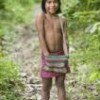
Indigenous Groups Denounce Exclusion from Biodiversity Talks
Indigenous groups had no voice in the negotiations in Curitiba, Brazil, about a binding global policy for the use of genetic resources. But they are already preparing to make sure they are heard in 2008.BIODIVERSITY: Billions Needed to Win Race Against Species Loss
A two-week international conference on biodiversity here came to an end Friday on a mixed note of hope and despair, with some delegates describing the outcome as a moment to celebrate, but others expressing disappointment with the slow pace of progress in talks on how to implement decisions made some 14 years ago.BIODIVERSITY: Environmentalists, Indigenous People Disappointed by COP8
Environmental and indigenous activists are leaving the eighth Conference of the Parties to the Convention on Biological Diversity (COP8), which ended Friday in this southern Brazilian city, with a sense of disappointment, because of the absence both of practical decisions and of their participation in key negotiations.ENVIRONMENT: Int’l Cooperation Weak on Ocean Fisheries
With a quarter of all ocean fish stocks now depleted, policy-makers and conservation groups say it is critical to bring more countries on board an international treaty on sustainable fisheries management.BIODIVERSITY: No Patents Without Local Consent, Delegates Urge
Delegates from developing countries attending an international conference on biodiversity here are demanding changes in the World Trade Organisation (WTO) rules which deal with patenting of genetic resources, such as seeds, plants and animals.LIBERIA: Before UN Sanctions Are Lifted, a Timber Industry Clean-Up
Liberia's newly-elected but cash-strapped government has begun to find ways that the U.N. sanctions can be lifted to allow the country to exploit its immense timber resources for the benefit of its war-ravaged people.BIODIVERSITY: Synergy Between the Rio Conventions
The concept of promoting synergy between the three "Rio Conventions" on the environment gained strength at the 8th Conference of the Parties to the Convention on Biological Diversity (COP8), which ends Friday in this city in southern Brazil.ENVIRONMENT-PERU: Gas Pipeline Consortium to Pay for Its Own Audit
The Peruvian government has changed its mind and decided it will not pay for an independent international investigation to assess the condition of the 750-km pipeline that transports natural gas from Camisea in the country's Amazon jungle region to the Pacific coast.ARGENTINA-URUGUAY: Quiet Diplomatic Talks on Pulp Mills Hit New Hurdle
The dialogue between Uruguay and Argentina aimed at finding a solution to the ongoing crisis over two paper pulp factories on the Uruguayan side of a border river has run up against a new hurdle, despite what looked like promising advances.BURMA: Ethnic Groups Flee Drought and Army
In much of Asia a dry season could mean a break from monsoon rains and intermittent floods but for the Karen ethnic community, settled along Burma's eastern borders, it means a season of death, destruction and flight.BIODIVERSITY: A Name as Means of Protection
While no government is disputing the idea that in order to protect biodiversity a universal index of all known species is needed, many wonder if such a task is possible without sufficient financial support from rich countries.POLITICS-US: Public Ever More Sceptical About Bush’s Crusade
The vast majority of the U.S. public appears to have grown thoroughly disillusioned with Pres. George W. Bush's crusade to spread democracy abroad, according to a new survey by one of the country's premier public opinion analysts.BIODIVERSITY: Putting the Gene Back in the Bottle
When 150 of the world's leaders gathered in Rio de Janeiro for the historic Earth Summit 14 years ago, they agreed to embrace the principle of fair and equitable sharing of the benefits of genetic resources as part of global efforts to protect biodiversity.ENVIRONMENT-CANADA: Annual Seal Hunt Begins
Despite protests by animal rights activists, including former Beatle Paul McCartney and French film star Bridgette Bardot, the annual seal hunt has begun on the ice floes of the Gulf of St. Lawrence in eastern Canada.ENVIRONMENT: Bonn Conference Endorses Disaster Reduction Projects
Senior government officials, representatives of international organisations, experts and members of the civil society from around the world have stressed the need for mobilising political commitment to minimising the impact of natural disasters by putting in place reliable early warning mechanisms.DEVELOPMENT-INDIA: Last Ditch Try at Saving the Narmada River
For 20 years, thousands of people living on the banks of the Narmada river have kept their faith in India's independence leader Mahatma Gandhi, and used non-violence to protest the building of a mammoth dam that will submerge their homes.BIODIVERSITY: Activists Disagree on Economic Aspects of Benefit-Sharing
Access to genetic resources and the equitable distribution of the benefits derived from their use are the most controversial issues being discussed in Brazil by the 3,600 delegates from 173 countries attending the largest conference ever on biological diversity.BIODIVERSITY: Creating a Network Against Biopiracy
Two patents granted in the United States between 2000 and 2002 and another for which an application has been filed have put "maca", a high altitude Andean plant that is used by indigenous people in Peru, at the centre of a new battle against biopiracy, which involves the construction of an international network against the misappropriation of traditional knowledge.BIODIVERSITY: Brazil’s Lula Lashes Out At Rich Nations
Brazilian President Luis Inacio Lula da Silva Monday castigated the wealthy and technologically advanced countries of the world for failing to live up to their responsibility in tackling poverty and environmental degradation on the planet.WATER-LATIN AMERICA: Suez Packs Its Bags and Won’t Be Back
The French water company Suez, the favorite villain of anti-privatisation activists, has entered the final stretch of its withdrawal from Argentina and Bolivia, where it has been packing for quite a while. And it could be a long time before it returns to Latin America.ENVIRONMENT: How Disasters Can Be Less Disastrous
The world is far from having a global system for all hazards and all communities. But an effective globally comprehensive early warning system can be built, drawing on the available expertise and technical capacities, says a new report prepared at the request of the United Nations Secretary General.« Previous Page — Next Page »


Through our global network of local writers, we are continuing our award-winning coverage of global and local environmental challenges, with a focus on the people for whom the ecosphere matters in a direct way: rural dwellers who have little means to protect themselves against adverse conditions; communities that need to switch to sustainable development in order to survive; poor women and children, who are the most vulnerable in natural disasters. Sponsored by the United Nations Environment Program (UNEP), the United Nations Development Program (UNDP) and The World Bank (WB), IPS also maintains the award-winning Tierramérica, a specialised information service on environment and development.

The Week with IPS

Tracking global progress towards a sustainable world


