
Sunday, November 29, 2026



News and Views from the Global South
Environment
IRAQ: Nobel Laureate Saramago on Why War Is Wrong
Portuguese writer José Saramago, winner of the 1998 Nobel Prize for Literature, spoke with Tierramérica about the humanitarian and environmental dangers of a war in Iraq, saying he believes the human tragedy would be worse than the ecological disaster created by the proposed U.S.-led attack.ENVIRONMENT: Missing Weapons of Mass Conservation
The United Nations is not just looking for all sorts of bombs that have gone missing in Iraq, it is worrying about bees that have gone missing in Nepal.ENVIRONMENT-RUSSIA: Destroying Chemical Weapons Not Easy
Where a government is determined to destroy chemical weapons, it is running into opposition because groups say the process is not environmentally friendly.IRAQ: Environment Victim in Any War Scenario
When scientist Matthew Naud, of the United States, visited Iraq in 1998 it was easy for him to find evidence of the environmental impact of the Gulf War, which took place seven years earlier. He reached his hand into the desert sand a few centimetres and found still-fresh remnants of oil spills.ENERGY-NIGERIA: Electricity Returns to Villages after 20 Years of Darkness
This small community of about 5,000 inhabitants was among the first villages to benefit from Nigeria's first rural electrification programme in 1970, but darkness returned to the village just two years after the inauguration of the project as thieves carted away the electrical equipment.ENERGY-GABON: Abundant, but Little Used, Natural Resources
Gabon has embarked on a programme to develop its energy resources, which has remained untapped due to the country's poorly developed energy sector.Ecobreves – NICARAGUA: New Mollusk Species Discovered
Eight new mollusk species have been identified after 11 years of research by two experts at the Central American University's school of science, technology and environment.Ecobreves – HONDURAS: Protection for Cayos Cochinos Demanded
Environmental groups from Honduras and abroad are lobbying the national Congress to declare the northern bay of Cayos Cochinos, on the Caribbean coast, a natural marine monument.Ecobreves – CENTRAL AMERICA: Free Trade, But Not in Pesticides
The project to establish a customs union in Central America could open borders to harmful pesticides, undermining efforts to reduce their use in the region, warn environmental activists of El Salvador.
José Saramago:
The anti-war spirit of Portuguese writer José Saramago, winner of the 1998 Nobel Prize for Literature, has scandalized the public more than once. He has called for silencing the drums of war in the Mexican state of Chiapas and in Palestine, the latter of which he compared to Auschwitz, the Nazi concentration camp where Jews were exterminated during the Holocaust.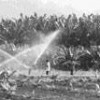
Banana Diseases
The banana is a crucial fruit for human beings. But the production of this food -- essential for hundreds of millions of people around the world -- is faced with the serious threat of plagues, particularly the black sigatoka fungus and Panama disease.Environment Under Enemy Fire
Burning oil wells, contaminated water supplies, horrendous epidemics and destruction by nuclear, chemical or biological weapons are some of the possible environmental impacts of a war in Iraq, say experts consulted by Tierramérica.
José Saramago:Trees can be revived, the dead cannot”
The anti-war spirit of Portuguese writer José Saramago, winner of the 1998 Nobel Prize for Literature, has scandalized the public more than once. He has called for silencing the drums of war in the Mexican state of Chiapas and in Palestine, the latter of which he compared to Auschwitz, the Nazi concentration camp where Jews were exterminated during the Holocaust.Hybrids Could Provide Way Out of Banana Crisis
Banana varieties obtained by Honduran scientists could be the answer to the biological threat looming over this fruit's Cavendish family, the most exported banana type in the world.Organic Farming Takes Off in Cuba
Organic tomatoes, ginger, broccoli, oregano and other produce and spices are readily available today in Cuba's free farmers' markets, thanks to the country's urban gardening programme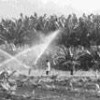
Plagas del banano
El banano es una fruta crucial para la humanidad. Pero la producción de este alimento que es esencial para cientos de millones de personas enfrenta el peligro de las plagas, especialmente de la sigatoka negra y la Enfermedad o Mal de Panamá.Ecobreves – CHILE: Hunting Ban in Santiago Andino
Chilean officials have implemented a 30-year ban on the hunting and trapping of wild mammals, amphibians, reptiles and birds in the central area of Santiago Andino, one of the 25 sites worldwide for which the World Bank is urging protection of biodiversity.Ecobreves – VENEZUELA: Accord to Improve City Park
Municipal authorities, businesses, museums and even religious communities of Caracas have agreed to clean up and improve Los Caobos Park, a 22-hectare area serving as an important "lung" for the Venezuelan capital.Ecobreves – BRAZIL: Testing Genetic Vaccine against Dengue
A DNA vaccine against dengue type 2 was successful in tests using mice in experiments conducted by the Rio-based Oswaldo Cruz Foundation.Ecobreves – CUBA: Sugar Mills Pollute River
Two sugar mills in the southeastern province of Guantánamo dumped industrial waste into the Guaso River, causing serious ecological damage and economic losses for the region.ENVIRONMENT: Climate Change Spurs Genetic Adaptation in Animals
While politicians and researchers debate the realities of climate change, plants and animals worldwide are already adapting. Red squirrels in Canada's North now give birth weeks earlier so their young can take advantage of the shorter winters that have come with increasing global temperatures.« Previous Page — Next Page »


Through our global network of local writers, we are continuing our award-winning coverage of global and local environmental challenges, with a focus on the people for whom the ecosphere matters in a direct way: rural dwellers who have little means to protect themselves against adverse conditions; communities that need to switch to sustainable development in order to survive; poor women and children, who are the most vulnerable in natural disasters. Sponsored by the United Nations Environment Program (UNEP), the United Nations Development Program (UNDP) and The World Bank (WB), IPS also maintains the award-winning Tierramérica, a specialised information service on environment and development.

The Week with IPS

Tracking global progress towards a sustainable world


