Languages
Saturday, October 17, 2026



News and Views from the Global South
Featured
From Struggle to Strength: Turning Daily Hustle Into a Force for Survival
In the bustling Chifubu constituency of Ndola, the provincial capital of Zambia’s mineral-rich Copperbelt Province, 31-year-old Victoria Bwalya is usually among the early risers, cleaning and setting up for the day in her restaurant business.
Santa Marta Summit Aims to Push Fossil Fuel Phase-Out as Indigenous Voices Demand Urgent Action
A high-stakes international summit in Colombia starting today (April 24) is expected to sharpen global efforts to phase out fossil fuels, as governments, scientists and Indigenous leaders warn that the world is running out of time to avert irreversible climate damage.
NEPAL: ‘Voting on Discord Was a Very Gen Z Way of Doing Politics’
CIVICUS discusses Gen Z-led protests in Nepal with Abhijeet Adhikari (Abhi), a lawyer and political activist who took part in the protests.
Inside the Funding Model Behind Kenya’s Tana Delta Restoration Project
Lydia Hagodana stands next to a bee yard (apiary) in Golbanti, Tana Delta, where she lives. The air carries a low, steady hum as bees move in and out in a constant stream. She lifts the back of one hive slightly, gauging its weight.
African Institutions in Plan to Stabilise Food, Fuel and Fertiliser Amid Mideast War
Fearing the Middle East war could drive millions into hunger and cripple economies, Africa’s leading institutions are drafting a strategy to mobilise domestic and "innovative" finance and harness national competitiveness to stabilise food, fuel, and fertiliser supplies.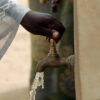
From Resolution to Reality: Delivering Water and Sanitation for “The Africa We Want”
When Africa’s Heads of State and Government gathered in Addis Ababa on 14 February 2026 for the African Union’s 39th Ordinary Session, they did more than adopt another resolution. They made a choice: to place at the centre of the agenda the most fundamental, life-sustaining and strategic resource our continent possesses: water.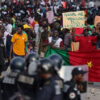
The Ballot Box Illusion: How Authoritarians Repackaged the African Ballot
In many countries across Africa, people have recently lined up to vote. But in country after country, there has been no real choice on offer. As CIVICUS’s 2026 State of Civil Society Report documents, what has frequently been on display is a procedural ceremony of democracy, orderly enough to satisfy observers, but hollow enough to leave those who hold the reins of power untroubled. Laws and structures that were supposed to promote democratic decisions have been manipulated into compliance checks, ticking all procedural requirements while lacking democratic substance. In too many cases, the ballot box has become a public relations exercise.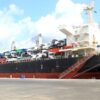
Global Shipping Reforms Cast Shadow Over Tanzania’s Fishing Communities
At dawn, as the sun rises across the Indian Ocean, Venance Shayo perches on the edge of his boat, hauling in a net. The sea gently ripples under the breeze and the sound of revving engines.
Trump’s Apocalyptic Rhetoric Echoes Nuclear Annihilation
It is hard to exaggerate the dire implications of Trump’s April 7 post on Truth Social, stating that a civilization will die tonight, never to be brought back again,” if no deal is reached with Iran. Such a damning statement implies that he would use ‘weapons of mass destruction,’ i.e., nuclear, to execute his threat.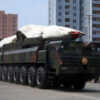
The Middle East War Triggers a Move to Boost North Korea’s Nuclear Arsenal
The ongoing military conflicts in the Middle East—involving the US, Israel, Palestine, Iran and Lebanon—have indirectly bolstered North Korea’s plans to expand its nuclear arsenal.
Guardians of the Sea: How GEF Small Grants Program Enables Young Volunteers Take the Lead in Sea Turtle Conservation
Every winter thousands of sea turtles come ashore at Cox’s Bazar, in the Bay of Bengal, Bangladesh, to lay eggs.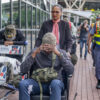
Russia’s African Cannon Fodder
On 7 April, the government of Cameroon published a list of 16 of its citizens confirmed killed fighting for Russia against Ukraine. That means the number of Cameroon citizens killed in this distant war has likely surpassed a hundred, making the country the biggest victim of a Russian recruitment drive increasingly focused on Africa.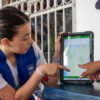
Using Better Data to Break the Cycle of Permanent Crisis
We are stuck in response mode. But what good is an ambulance without a hospital? Climate shocks are intensifying. Conflict is at record levels. Economies are fragile. Humanitarian appeals grow larger each year, while donor countries prioritise domestic and security concerns. One emergency follows another. Recovery slips further out of reach.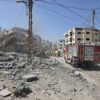
Aid Groups Appeal for Lasting Ceasefire to Address Lebanon’s Catastrophic Humanitarian Crisis
Aid groups have welcomed a ten-day ceasefire agreed between Israel and Lebanon but warn only a permanent halt to fighting can allow for the kind of response needed to address the dire humanitarian situation in the country.
Global Shocks Push Geoeconomics to the Center Stage at Foreign Policy Forum
As war in the Middle East ripples through global markets, policymakers, economists, and industry leaders gathered in Washington this week to agree that economics is no longer separate from geopolitics. It is now its core instrument.
Africa’s Future Depends on Innovation, Data, and Frontier Technologies
Across the continent, GDP has risen on the back of more workers, more capital and a commodity super-cycle, rather than through genuine gains in productivity and innovation. Too little labour has moved out of subsistence agriculture into higher-productivity manufacturing and modern services.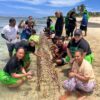
Bridging Knowledge Systems: How Pacific Communities Are Reclaiming Climate Solutions Through Nature
Climate change is no longer a distant threat. Across the Pacific, it is a daily reality reshaping coastlines, livelihoods, and the delicate balance between people and the environment. But in a region long defined by resilience, solutions are not being invented from scratch. They are being remembered, strengthened, and scaled.
AI: ‘African Governments Are Using “smart City” Systems to Monitor Dissent and Consolidate State Control’
CIVICUS discusses the spread of AI-powered surveillance in Africa with Wairagala Wakabi, executive director of the Collaboration on International ICT Policy for East and Southern Africa (CIPESA) and co-editor of Smart City Surveillance in Africa: Mapping Chinese AI Surveillance Across 11 Countries, the latest report by the African Digital Rights Network (ADRN) and the Institute of Development Studies (IDS).
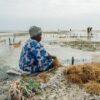
Explainer: How the GEF Funds Global Environmental Action
The Global Environment Facility, widely known as the GEF, plays a central role in financing environmental protection across the world. It supports developing countries in tackling climate change, biodiversity loss, land degradation, pollution, and threats to ecosystems.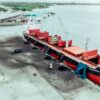
Shipping Industry Seeks Certainty as Experts Back Strong Net-Zero Framework
As global shipping braces for another round of high-stakes negotiations, a volatile mix of rising fuel costs, geopolitical tensions and deep political divisions is testing the fragile consensus around a proposed Net-Zero Framework (NZF) aimed at decarbonising one of the world’s most polluting industries.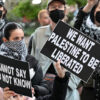
The Five Enablers of the Israeli-Palestinian Conflict
Every powerful actor in the Israeli-Palestinian conflict professes to seek peace. The US and EU repeat the two-state mantra, the Arab states invoke Palestinian rights, AIPAC proclaims its defense of Israel’s security, and Israeli opposition parties promise “responsible” leadership and stability.« Previous Page — Next Page »





The Week with IPS

NEXT STOP - SDGs
Tracking global progress towards a sustainable world
Tracking global progress towards a sustainable world
