Languages
Tuesday, October 20, 2026



News and Views from the Global South
Featured

Strengthening Financial Integrity: Why It Matters and What Needs to Change
A conversation with Toril-Iren Pedersen, Director of the UNDP Global Policy Centre for Governance, and Michael Jarvis, Executive Director of the Trust, Accountability, and Inclusion (TAI) Collaborative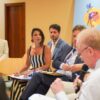
How Santa Marta Finally Made Fossil Fuel Phase-Out Politically Discussable
The First Conference on Transitioning Away from Fossil Fuels in Santa Marta, Colombia, may eventually be remembered as a defining moment in global climate politics, not because it produced a treaty or a formal negotiation outcome, but because it changed the tone, structure, and ambition of the conversation itself.
100 Days, No Outcry – The Cost of Speaking Out
“We’ve abandoned this couple completely; we have not done even 1% of what they did for us all these years!” said journalist Asad Ali Toor.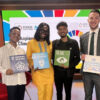
Africa’s Youth are Shaping the Continent’s Climate Future
Africa is on the frontlines of the climate crisis, warming faster than the global average and facing disproportionate climate impacts, despite contributing the least to global greenhouse gas emissions.
The UN NGO Committee: Civil Society’s Gatekeeper in Hostile Hands
In January, the government of Algeria succeeded in locking two civil society groups out of access to the United Nations (UN). It raised questions at the UN Committee on Non-Governmental Organizations, known as the NGO Committee, about two civil society groups with accreditation. It alleged that Italian organisation Il Cenacolo was making politically motivated statements at the UN Human Rights Council and the Geneva-based International Committee for the Respect and Implementation of the African Charter on Human and Peoples’ Rights (CIRAC) was selling UN grounds passes. Four days later, it called a vote to revoke their status. Other states urged delay, but the no-action motion failed, and 11 of the body’s 19 members voted to recommend that the UN’s Economic and Social Council (ECOSOC) revoke Il Cenacolo’s accreditation and suspend CIRAC’s for a year.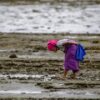
Pacific Ocean Under Pressure — Now a Region Finally Armed With Evidence
For generations, Pacific people have understood the ocean not as a resource but as identity, sustenance, and survival. Today, that relationship is being tested in ways science is only just beginning to fully capture.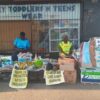
African Countries Up Efforts to Tax High-Income Individuals
African countries are exploring ways to tax high-earning individuals as the continent seeks to expand its revenue collection amid what experts say is a growing gulf between rich and poor.
Migration a Toxic and Divisive Issue in Many Parts of the West
Migration is a strange thing, hard to pin down. It is a complex phenomenon that transforms communities while shaping people’s identities and it is so multifaceted that individuals perceive it and live it in different ways.
Press Freedom: A Story of Lives Lost, Budgets Slashed, Status Eroded
Press freedom is on the retreat across much of the world. As documented by recent global surveys authored by the UN and media institutes, the erosion of an independent, fearless and diversified press is a trend that has worsened for well over a decade.
UN Staff Advised to Keep Off Campaign for New Secretary-General
A longstanding rule bars international civil servants from publicly taking a political stand against member states, even against those accused of human rights violations, war crimes and genocide (and even barring staffers from participating in political demonstrations outside the UN).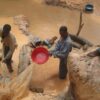
Clean Energy, Digital Technologies Are Coming at a Human Cost, UN Report Warns
A newly released United Nations report has raised urgent concerns that the world’s push toward clean energy and digital technologies is driving a hidden crisis in some of the planet’s most vulnerable regions, where mining for critical minerals is depleting water supplies, damaging health, and deepening inequality.
BULGARIA: ‘We Protested Against a Whole System of Corrupt Governance and State Capture’
CIVICUS discusses Bulgaria’s Gen Z-led protests with Aleksandar Tanev, founder of Students Against the Mafia, an informal student organisation that took part in mass protests against corruption and state capture.

The Ocean Also Has Memories: From Our Territories to the Global Seafood Marketplace
Coming from an island in southern Chile, where the sea is not an industry—but it is daily life, work, food and memory. Growing up in a family that is part of an artisanal fishers’ cooperative. Learning from a young age how to cultivate oysters, work with mussels, and understand the rhythms of the sea.
Pacific Islanders Combat Mercury Poisoning of the Environment
It is an invisible contaminant that has been found in fisheries, an essential part of the food chain for many Pacific Islanders. Mercury, emitted from fossil fuel power generation and other industrial processes around the world, has now penetrated marine ecosystems in the Pacific Islands with detrimental consequences for people’s health and wellbeing.
Seychelles’ Blue Bond: Turning Ocean Vision into Action
As the world prepares for the Global Environment Facility (GEF) meeting in Samarkand next month, Seychelles’ pioneering blue bond offers a compelling lesson in practical ocean finance.
Addressing the Mental Health of Ukrainian Children living on Frontlines of War
“What’s important is to make sure that you can immerse yourself in an environment that is positive for your mental health and wellbeing,” says Olena*.
Solidarity for Whom?
The veil has been lifted—but not the one you think. Not the veil the West has spent decades weaponizing. The veil now exposed is the one that concealed Western feminism’s selective solidarity—its silence on the women it was never truly fighting for. The “othering” of women from the South West Asian and North African region. In other words: us.
American-Israeli War on Iran Risks Fuelling the very Nuclear Proliferation it Claims to Prevent
As delegates from 191 countries, including the five permanent members of the UN Security Council, gathered Monday at UN headquarters for a month of diplomacy at the Review Conference of the Nuclear Non-Proliferation Treaty (NPT), the stakes could hardly be higher.
“In a Field of Lame Horses, the Three-Legged one Might Limp Home in the Race for UN Secretary-General”
The race for the next UN Secretary-General has, so far, attracted only four candidates—perhaps with more to come in an unpredictable contest.
Inside GEF-9: What it is and Why it Could Define the Next Four Years of Environmental Action
The gap between global environmental ambition and real-world progress is widening, with less than five years left to meet key climate and biodiversity targets.
‘Significant Stress’ as UN Prepares for Nuclear Non-Proliferation Treaty Conference
The Eleventh Review Conference of the Parties to the Treaty on the Non-Proliferation of Nuclear Weapons (NPT) will meet at the United Nations in New York from 27 April to 22 May 2026. State parties to the treaty will meet with the urgent aim of finding common ground on the issue of nonproliferation.« Previous Page — Next Page »





The Week with IPS

NEXT STOP - SDGs
Tracking global progress towards a sustainable world
Tracking global progress towards a sustainable world
