Languages
Thursday, November 26, 2026



News and Views from the Global South
Global Geopolitics
ENVIRONMENT: Climate of Change Confronts Wall Street
Stockholders, investors and financial analysts are now demanding to know how climate change will affect companies' bottom line, and a new report reveals large corporations' risks and opportunities.POLITICS-AUSTRALIA: Walking the Tightrope in Asia
The reinforcing of Australia’s relationship with the United States and Japan, combined with the country’s growing ties with China - highlighted by agreements made at APEC - have led some analysts to view Australia’s position in the region as akin to walking a tightrope.ENVIRONMENT: Ozone Deal to Cut Down CO2 Emissions
More than 190 nations agreed this week to combat global warming and accelerate the healing of the ozone layer, although critics say more could have been accomplished.
INDIA/US: Nuke Deal May Trigger Mid-Term Polls
As India's coalition government tries to complete the controversial nuclear cooperation deal with the United States, it finds itself caught between domestic opposition to the agreement from its Left-wing allies and pressure from Washington to seal the deal.POLITICS: Gov’ts Routinely Dodge U.N. Rights Investigators
The United Nations is disappointed that an increasingly large number of member states are either refusing to respond to charges of extra-judicial killings or have turned down requests for visits by U.N. special envoys mandated to monitor arbitrary and summary executions in these countries.TRADE-EU: This Is the Way Some Agreements Should End
Elaborate funeral rituals were performed in central Brussels over the past week to show how a planned free trade accord between the European Union and the Korean government should, in the view of anti-poverty campaigners, be buried.RIGHTS: Disability Treaty Waits for Legal Teeth
Disabled rights groups and U.N. officials hope that the first core human rights treaty of the 21st century, the Convention on the Rights of Persons with Disabilities, could finally assume legal force when world leaders gather here for the 62nd session of the General Assembly next week.ENVIRONMENT: Women Demand Voice in Climate Debate
Calls for increased participation of women in policy-making decisions are on the rise as world leaders prepare to attend an international meeting on climate change to be held at U.N. headquarters next week.ENVIRONMENT-BRAZIL: Earth Summit Score Card, 15 Years On
Fifteen years after the 1992 Earth Summit, Brazil is again playing host to representatives from around the world who are assessing the results of the actions that arose from that landmark conference.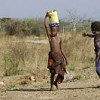
ENVIRONMENT: Scramble for Resources Driving Sudan Conflicts
A U.N. Environment Programme (UNEP) report released here this week emphasises strong linkages between environmental stresses and the ongoing conflict in Sudan.ENVIRONMENT: The Chemical That Must Not Be Named
Delegates from 191 nations are on the verge of an agreement under the Montreal Protocol for faster elimination of ozone-depleting chemicals, but the United States insists it must continue to use the banned pesticide methyl bromide.RIGHTS-SRI LANKA: Consider Sanctions Says Parliamentarian
As the nationalist government of President Mahinda Rajpakse continues to resist calls for a United Nations rights monitoring mission in Sri Lanka an elected Tamil leader said the time may have come to consider international sanctions.
Q&A: War in the Name of Peace
International law is seen by many to have been shunted aside by Western powers when launching their most significant military operations in the past decade.CLIMATE CHANGE: ‘Incentives Offered to Destroy Forests’
Instead of providing positive incentives to tropical nations to conserve their rainforests and so reduce greenhouse gases emissions, the world indirectly gives "perverse incentives" to destroy them by demanding goods produced by intensive logging, a leading environmental activist says.RIGHTS: Hollywood Spotlights Growing Trade in Humans
Kevin Kline, an Academy Award winning movie star, is outraged at the impunity with which human traffickers ply their trade in one of the world's growing multi-billion dollar businesses: the global sex industry.CAMBODIA: Pol Pot’s Lieutenant Nabbed
Finally, the law caught up with the most senior surviving leader of the genocidal Khmer Rouge regime. Nuon Chea, who was the second-in-command to Khmer Rouge leader Pol Pot, was arrested by the Cambodian police on Wednesday.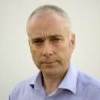
Q&A: ‘A Key Step Towards Abolition’
Amnesty International has been fighting since its foundation for the universal abolition of the death penalty. In the next weeks, the UN General Assembly will be voting on a resolution calling for a global moratorium on executions.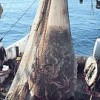
ENVIRONMENT: Experts Call for Action on Ocean Preserves
As much as 50 percent of the world's fish stocks are fully exploited and 17 percent are over-exploited, putting marine biodiversity at severe risk, according to a new report released Tuesday by the Worldwatch Institute.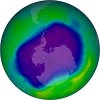
ENVIRONMENT: Ozone Treaty Could Slow Climate Change
Delegates from 191 nations are in Montreal, Canada this week to celebrate and extend the world's most successful environmental treaty, the Montreal Protocol to protect the ozone layer.CORRUPTION: World Bank, U.N. Target Kleptocrats
The United Nations and World Bank launched a bid Monday to strip crooked leaders of the money they steal from poor countries, and to plough the sums into health and development efforts.
Q&A: “It’s a Brave Politician Who Will Talk About Toilets”
When it comes to discussing the critical health problem of inadequate sanitation, few politicians want to take the lead, despite the mountains of scientific evidence that poor hygiene and lack of proper toilet facilities are the cause of many deadly but preventable diseases.« Previous Page — Next Page »


Is the world dominated by three great empires -- the U.S.A, China and the European Union? How much power do the great behemoths of the south -- India, Brazil, and South Africa -- wield? And where does Russia fit in that equation? Are we in the middle of a new Cold War? What are the implications of the armed conflict with Georgia? What about the new axis: Venezuela-Russia? And what role does Turkey play? What about issues like Climate Change and other global forces like the food crisis and the high energy prices? How is all this reshaping the world's forces? IPS looks for some answers.

The Week with IPS

NEXT STOP - SDGs
Tracking global progress towards a sustainable world
