Languages
Sunday, November 29, 2026



News and Views from the Global South
Global Governance
ECONOMY: Migrant Miseries Will Trickle Down Worldwide, U.N. Warns
At least 150 million migrant workers - out of an estimated total of 200 million in the world today - fit the "demographic characteristics of workers who are the most vulnerable" during the current global financial crisis, the U.N. says.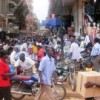
ECONOMY-UGANDA: Traders Go Down as Prices Go Up
With the world economy in the grip of a credit crunch, traders and consumers in Uganda are struggling with price inflation and the depreciation of the country’s currency, the Ugandan shilling, against the dollar. Especially importers have not been able to bring goods in which were ordered when prices were lower.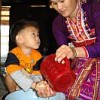
HEALTH-LAOS: Inadequate Sanitation Denting GDP
Poor sanitation and hygiene costs the Lao People's Democratic Republic 193 million dollars per year, an estimated 5.6 percent of gross domestic product, according to figures from the Water and Sanitation Programme (WSP) of the World Bank.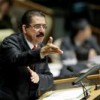
US-HONDURAS: Dictatorships and Double Standards Revisited
When the Honduran military deposed President Manuel Zelaya on Sunday, in an incident that stirred memories of Cold War military coups in Latin America, it also seems to have caused at least some foreign policy commentators here to revert to positions reminiscent of the Cold War.AUSTRALIA: Attacks Expose Ills Of A Much-Touted Education System
The modern façade of its cities, cost-effectiveness and its high standards of education make Australia an attractive destination for foreign students. But the recent spate of attacks on Indian students has exposed the many ills afflicting the Australian education system, threatening its lucrative markets.BURMA: U.N. Chief Comes Calling with Politics on His Mind
The return this week of U.N. Secretary-General Ban Ki-moon to military-ruled Burma gives the mission an air of a high-stakes gamble. On the line is the world body’s credibility to make headway in a country where outside pressure to break a political deadlock is frequently ignored by the military junta.POLITICS: U.N. Decries Aid Shortfall in Afghanistan
The United Nations, which has expressed disappointment over the slow disbursement of development aid to crisis-stricken Afghanistan, has hurled one of its biggest political insults at Western donors: threatening to turn to a U.S. philanthropist for financial assistance.POLITICS: Deposed Honduran President Speaks at U.N.
Just a few days after being expelled from Honduras, the country that he was democratically elected to lead, Jose Manuel Zelaya Rosales addressed the U.N. General Assembly Tuesday, witnessing the unanimous passage of resolution that demands his reinstatement.
AFRICA: Maternal Mortality, A Human Rights Catastrophe
The right to the highest attainable standard of health: not the most fashionable of human rights, but the limits on people's enjoyment of their right to health often coincide with continuing inequalities behind claims of economic growth or political reform.INDIA: Reverse Migration Casts Shadow on Kerala Economy
Recession in petroleum-rich Middle Eastern countries is causing thousands of workers to return to their homes in southern Kerala triggering fears of a negative impact on the local economy.DEVELOPMENT: Investment in Agriculture Falls Alarmingly
The G8 leaders meeting early July must address a crisis resulting from a sharp decline in investment in agriculture, Oxfam demands in a new study.
ZIMBABWE: 'Money Comes First, Health Second'
With half her body immersed in a muddy red pond, Esther Nyarambi closely inspects the contents of her wooden panning dish, locally known as zamba. Having spent the entire day pounding gold-bearing rock, she hopes her efforts will be rewarded with even the smallest nugget of gold.FRANCE: Ambiguous on Nuclear Disarmament
As the international war of words over nuclear programmes heats up, with North Korea threatening to strengthen its "nuclear deterrence" against the United States, countries such as France are taking a position that some analysts describe as ambiguous and hypocritical.SRI LANKA: Journalists Laying Aside Pens Once Again
Sri Lankan journalists are laying aside their pens once again and bracing for renewed confrontation with President Mahinda Rajapaksa’s government after the revival of the repressive Press Council and fresh attacks on the media.POLITICS: Obama Still Buoyed by Extraordinary Global Popularity
Six months into his new job as president of the United States, Barack Obama inspires more public confidence than any other political leader, said a new WorldPublicOpinion.org (WPO) poll released here Monday.POLITICS-US: Playing the Hawk with North Korea
If the Obama administration needed a rogue nation to demonstrate its foreign policy resolve, central casting couldn't have supplied a better candidate than North Korea. The government in Pyongyang routinely promises to unleash destruction of biblical proportions on its enemies. It has pulled out of international agreements, such as the Nuclear Non-Proliferation Treaty (NPT). It has sentenced two U.S. journalists to 12 years of hard labour on the charge of violating its borders. And after conducting two nuclear tests, it now declares itself a nuclear power.CLIMATE CHANGE: 2020 Deadline Is the Crucial “Litmus Test”
"So who here thinks there will be a meaningful deal in Copenhagen?" Few of the more than 600 energy ministers, officials and experts from 80 countries attending the Vienna Energy Conference raised their hands in response to the conference moderator's question about the final round of climate negotiations this December in Copenhagen.POLITICS: U.N. Plan for Financial Crisis Derided as Weak
When the General Assembly adopted a proposed plan of action aimed at overcoming the global financial crisis, one of the political surprises was that all 192 member states gave their blessings to the wide range of proposals spelled out in an "outcome document".MIDEAST: Elderly Receiving Better Care
In a region where indigenous human resources are scarce, the oil-rich Gulf countries are not only mindful of population growth, but are quickly learning to address the concerns of the elderly.US-IRAN: “Obama Effect” Versus “Freedom Agenda”
Two weeks after allegations of fraud in Iran’s presidential elections triggered massive and instantly-iconic protests, partisans here of President Barack Obama and his predecessor, George W. Bush, are debating whose policies deserve more credit for encouraging the Iranian mobilisation.GERMANY: Have no Nuclear Weapons, Just Share Them
Most Germans support nuclear abolition, but the country may still not give up its policy of nuclear sharing.« Previous Page — Next Page »


The Week with IPS

NEXT STOP - SDGs
Tracking global progress towards a sustainable world
