Languages
Sunday, November 29, 2026



News and Views from the Global South
Global Governance
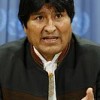
ENVIRONMENT: U.N. to Celebrate “Mother Earth Day”
"Mother Earth is not an object or merchandise. Mother Earth cannot be bought or sold," said Bolivian President Evo Morales, speaking at a heavily-attended news conference here at U.N. headquarters on Earth Day.POLITICS: Iran Hits Back at U.N. Chief Over Racism Meet
An indignant Iran has lodged a "strong protest" over critical statements made by two senior U.N. officials against President Mahmoud Ahmadinejad at an anti-racism conference in Geneva early this week.
CLIMATE CHANGE: Native Peoples Sound Dire Warning
Humanity's hot carbon breath is not just melting the planet’s polar regions, it is disrupting natural systems and livelihoods around the world, indigenous people reported this week at a global meeting on climate change in Anchorage, Alaska.RIGHTS: Racism Conference Recovers from Bad Start
The United Nations racism conference regained its momentum Tuesday with the approval of the final declaration, leaving behind the unpleasantness of the first day, when Iranian President Mahmoud Ahmadinejad made a divisive opening speech.DEVELOPMENT: World Bank Steps Up Funding for “Safety Nets”
The World Bank plans to triple its lending for social safety nets in poor countries to 12 billion dollars over the next two years in order to better protect the most vulnerable people from the worst effects of the global economic crisis, the bank announced Tuesday.DEVELOPMENT: Asian NGOs Must Lead in Asia
In a spirit of South-South Cooperation Asian NGOs must take the lead from international and western NGOs working in war-torn Sri Lanka and across Asia, as they understand the local dynamics and culture much more deeply than anyone else, an experienced Asian NGO leader told IPS.EUROPE: Obama in a New Game Over Missiles and Iran
As the extension of the U.S. missile defence system to Eastern Europe is halted, U.S. President Barack Obama seems inclined to exchange it for Russian cooperation in taming Iran's nuclear ambitions.CHINA: Book Release Stirs Resentment
At first it was nothing out of the ordinary. A book intriguingly titled ‘China Is Not Happy’ was expected to generate a buzz because it claimed to detail the world’s most populous nation and aspiring superpower’s resentment of foreign abuses.RIGHTS: Racism Conference Caught in the Crossfire
The United Nations racism conference, trapped from its rocky start between the caution of Western countries and the inflamed speech of Iranian President Mahmoud Ahmadinejad, could still avoid failure, say independent experts.DEVELOPMENT: IMF, Reform Thyself, Groups Say
Ahead of the annual meetings of the world's biggest international financial institutions this weekend, calls are growing for the United Nations to take new initiatives on financing for development in poor countries.RIGHTS: U.N. Chief Deplores Iranian Statement on Racism
The secretary-general of the United Nations rarely, if ever, lashes out at world leaders - at least not in public - because he is a perceived as a political servant who owes his existence to member states.ENVIRONMENT: Indigenous Peoples Demand Greater Role in Climate Debate
While indigenous peoples from around the world are meeting in this Alaskan city to seek a greater role in global climate negotiations, the rapidly warming Arctic is forcing some Inuit villages to be relocated.DEVELOPMENT: The Second Scramble For Africa Starts
Sub-Saharan African countries have of late become the target of a new form of investment that is strongly reminiscent of colonialism: investors from both industrialised and emerging economies buy or lease large tracts of farm land across the continent, either to guarantee their own food provisions or simply as yet another business.ENERGY: Africa Will Have to Feed EU’s Artificial Biofuels Demand
Earlier in the decade, biofuels were hailed as the energy panacea, the silver bullet to solve oil shortages and abide by environmental concerns. The European Union recently took the lead in imposing the use of these liquid or gaseous fuels made from plants.US-LATAM: We Can't Be Trapped by History
President Barack Obama had promised that his administration would be different. His, he said, would be a listening, caring one, even though like previous United States leaders, he came to the Fifth Summit of the Americas in Trinidad and Tobago bearing gifts - no doubt hoping for support for his new initiatives.RIGHTS: Muslim Concessions Bring Breakthrough on Racism Text
The United Nations anti-racism conference will begin next Monday in a climate of uncertainty, despite last-minute diplomatic negotiations that managed to iron out differences that separated at least two blocs: Western and Muslim states.U.S.: Greens Hail Obama’s OK to Regulate Greenhouse Emissions
U.S. green groups hailed Friday's formal finding by the Environmental Protection Agency (EPA) that carbon dioxide and several other greenhouse gases "endanger" public health and welfare as a landmark – if long overdue – step toward slowing global warming.
MIGRATION: Financial Crisis Eroding Remittance Lifeline
The Geneva-based International Organisation for Migration (IOM) has warned that the current financial crisis is threatening to claim another casualty: international migration.US-IRAN: A Kinder, Gentler Policy?
After an initial period of putting policy-makers in place, the administration of U.S. President Barack Obama is slowly rolling out its strategy for dealing with Iran. But the process is a work in progress, said several experts at a policy conference here, happy to dole out advice for what the administration’s next moves should be.MIDEAST: Gaza Changed Everything, But Its People Still Suffer
Three months after the end of Israel's war against Hamas in Gaza, and nearly four months after former prime minister Ehud Olmert started it, the standoff between Israel and Hamas is as unresolved as ever.RIGHTS: Ivory Tower Not Always a Safe Haven
Universities are places for teaching, studying and learning, but for a prominent scholar in Belarus, researching and publishing on topics that the government considered unpopular led to a progression of abuse that began with being snubbed by academic conferences and isolated at the university and ended with his termination and even death threats.« Previous Page — Next Page »


The Week with IPS

NEXT STOP - SDGs
Tracking global progress towards a sustainable world
