Languages
Sunday, November 29, 2026



News and Views from the Global South
Global Governance
FIJI: Women Sidelined By Military Regime
Fiji, a multi-racial, multi-cultural country of 300 islands in the South Pacific, has undergone another coup - the fourth in 22 years. The women of Fiji want their voices to be heard as they work on ways to bring peace back to their country, and they are asking for the United Nations to support their efforts.ENERGY-BRAZIL: Two-Pronged Policy
The Brazilian government announced it is overhauling the country's energy basket with more emphasis on renewable resources, while continuing to plan for future expansion of local production of traditional fossil fuels, like oil and gas.SRI LANKA: Media Kept on Tight Leash
As the latest round of Asia’s longest-running guerrilla war winds down, scores of journalists here are experiencing intimidation and harassment for being critical of the military campaign against the separatist Liberation Tigers of Tamil Eelam (LTTE).
POLITICS-US: 100 Days of Latitude
One hundred days into his presidency, Barack Obama appears to have largely succeeded in putting U.S. ties with the rest of the world on a significantly more positive track, even as the foreign policy changes he has made thus far have been more rhetorical than substantive.US-IRAN: As Obama Engages, Hawks Soften Rhetoric
As the White House prepares the ground for direct diplomacy with Iran on a handful of issues, a group of Iran hawks gathered in Washington to discuss their views on how to handle what they describe as a "series of provocative actions" by Tehran beyond its ongoing nuclear development.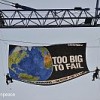
CLIMATE CHANGE: Biggest Emitters Seek an Early Consensus
A two-day meeting in Washington of the 17 nations that collectively emit three-quarters of the world's greenhouse gases concluded Tuesday with optimism that it helped provide a springboard toward more comprehensive talks on a successor to the Kyoto Protocol at the end of the year.HEALTH-ASIA: Swine Flu Threatens To Be Deadlier than Bird Flu, SARS
When the World Health Organisation (WHO) raised the influenza pandemic alert from phase three to an ominous phase four warning this week, it went beyond the alarm associated with the killer avian influenza virus in Asia.
RIGHTS: Indigenous Wisdom Against Climate Change
While industrialised countries like Canada continue to emit ever-higher levels of greenhouse-effect gases, indigenous peoples around the world are working to survive and adapt to an increasingly dangerous climate.MEXICO: Schools Closed Nationwide Due to Flu Epidemic
The deadly new influenza strain that originated in Mexico has led to the closure of schools, universities, museums, libraries, cinemas, theatres and churches here, while it continues to spread to other countries.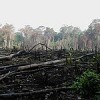
CLIMATE CHANGE: Burden Lies with Rich Polluters, Native People Say
Already suffering significant impacts from climate change, indigenous peoples at the close of an international summit here rejected the concept of carbon trading and offsets. Many also called for a moratorium on all new oil and gas exploration in their traditional territories and the eventual phase-out of fossil fuels.ECONOMY-INDIA: Tax Haven Loot Turns Election Issue*
General elections currently being contested in India have brought an unusual issue to the fore - the repatriation of more than a trillion dollars believed to have been stashed away in Swiss and other tax havens.HEALTH-ASIA: Taiwan Blazes a Trail to Help Drug Users with HIV
Taiwan is emerging as a beacon of hope for countries across Asia grappling to stop the spread of the AIDS epidemic among injecting drug users (IDUs), a major risk group.ENERGY-LATIN AMERICA: US Proposes “Variable Geometry”
The United States will work on energy issues with the other countries of the Americas based on "a variable geometry," allowing governments to choose to cooperate in some areas but not others, said Jeremy Martin, head of the energy programme at the Institute of the Americas at the University of California San Diego.ECONOMY: Crisis Pushing Key Poverty Goals Out of Reach
The global economic crisis has created a "development emergency" that will put at least some of the U.N.'s key poverty-reducing 2015 Millennium Development Goals (MDGs) out of reach for many countries, especially in sub-Saharan Africa and South Asia, according to a new report released Friday by the World Bank and the International Monetary Fund (IMF).HEALTH: Final Push to Control Malaria by 2015
About one million people die every year from malaria, including a child every 30 seconds. Half a billion people are infected annually. Africa alone, according to studies, loses 12 billion dollars in productivity and to treating the disease. And almost all of it is easily preventable.
Q&A: ‘‘Poor Countries Struggle to Mainstream Gender in Trade’’
Trade affects women and men differently. Women's livelihoods, in particular, can be undermined by trade liberalisation. Despite this fact, gender analysis is usually absent from trade negotiations and agreements.CHILE: Scientist Warns of Threats to Rock Glaciers
A new government policy on glaciers adopted by Chile "is a step forward, but it doesn’t resolve all of the problems," German geographer Alexander Brenning, who blames mining companies for threats to this South American country’s rock glaciers, told IPS.POLITICS-US: Overcoming Toxic Legacy of Bush-Style Democracy
A massive overhaul of U.S. development assistance is needed, says a new report from an influential Washington think tank.
ECONOMY: Struggle to Solve Crisis Moves to IMF, World Bank
Efforts to pull the global economy out of its nosedive enter a new phase this weekend amid warnings the decline is steeper than previously thought and signs the cockpit crew continue to jostle for the joystick.DISARMAMENT: New Promise of a Nuclear-Free World
Leading supporters of disarmament see new hope arising from the announcement by the U.S. and Russian presidents that they are willing to replace the Strategic Arms Reduction Treaty (START) with a new one.CENTRAL AMERICA: Protect the Most Vulnerable, ECLAC Says
The global economic crisis has had a severe impact on Central America and the Dominican Republic, and unemployment and poverty will increase significantly, according to a new study by the Economic Commission for Latin America and the Caribbean (ECLAC).« Previous Page — Next Page »


The Week with IPS

NEXT STOP - SDGs
Tracking global progress towards a sustainable world
