Languages
Monday, October 19, 2026



News and Views from the Global South
Peace
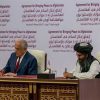
First Vietnam, Then Afghanistan: Is Ukraine Next?
The ongoing war in Ukraine has raised difficult questions for U.S. foreign policy. With U.S. and Russian leaders engaged in direct talks in Saudi Arabia over the future of the conflict, many are left wondering whether the Ukraine crisis could become another Afghanistan or Vietnam—two conflicts where the U.S. pursued peace talks with its adversaries while sidelining local governments, leading to catastrophic outcomes. Drawing lessons from these past negotiations and the eventual collapse of South Vietnam in 1975 and the Republic regime in Afghanistan in 2021, one cannot help but wonder whether Ukraine could face a similar fate unless the U.S. carefully navigates these talks with a more inclusive approach.

“Ukraine Peace Plan” that Involves Meeting Kremlin Demands Is a Trap, Not a Way Out
U.S. President Donald Trump and his special envoy for Ukraine and Russia, Keith Kellogg, have recently expressed confidence and optimism about the prospect of “ending” the war in Ukraine. No details have been made public; however, according to the new administration's vision, both sides must make concessions to achieve peace. Yet it remains unclear not only what the proposed concessions are but also how exactly the US intends to persuade the parties to compromise.
Gaza Humanitarian Aid: How a Lack of Political Will Sabotaged Resolution 2720
Before the three-phased ceasefire deal—proposed by President Joe Biden and dragged over the finish line by the then-incoming Donald Trump administration—silenced the bombs and drones over Gaza and allowed for humanitarian aid to flow into the strip, there was United Nations Security Council Resolution 2720.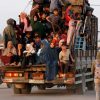
A Lasting Peace Between Israelis and Palestinians
Following the long-sought cease-fire agreement between Israel and Hamas, the major challenge for the Israelis and the stateless Palestinians is how to achieve a lasting peace that will end the disastrous cycle of death, destruction, displacement and despair.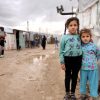
Report Exposes Silent Global Emergency as More Crises-Affected Children Need Urgent Education Support
A report released today on the International Day of Education sounds alarm as the number of school-aged children in crisis worldwide requiring urgent support to access quality education reaches a staggering 234 million—an estimated increase of 35 million over the past three years fueled by intensifying armed conflict, forced displacements, more frequent and severe weather and climatic events, and other crises.
Fallen Black South African Soldiers From World War I Finally Remembered
It was a solemn ceremony on a bright sunny day on the southern tip of Africa, in Cape Town’s company gardens, amid the grass wooden structures that stand out. The 1,700 carefully constructed brown wooden carvings are standing in a line. These structures represent a new Commonwealth War Graves Commission (CWGC) memorial, which honors the contribution of the hundreds of Black South African military laborers of the First World War. The CWGC remembers the fallen soldiers of both World Wars equally with this first permanent redress tribute.
The First Phase of Israel-Palestine Ceasefire Begins
On January 15, 2025, the long-awaited ceasefire proposal between Israel and Hamas was approved, bringing the first bout of relief for the people of the Gaza Strip after 15 months of conflict. This has allowed for the exchange of prisoners and hostages between the two nations as well as a greater flow of humanitarian aid to be directed to Gaza. Although this only accounts for the first phase out of the three phase plan, it is uncertain if Israel will continue to uphold the negotiations of a truce after the first phase is completed.
UN Commits to Supporting Syria in Political Transition, Adapting Humanitarian Support
In overthrowing Bashar al-Assad and his regime, Syria reaches the process of re-affirming its sovereignty, a process that the United Nations chief asserts must be led by the Syrian people.
Is the Time Ripe for an End to the Ukraine War?
Donald Trump, president-elect of the USA, wants to end the Ukraine war within a day, as he has emphasized several times, but without saying how. Despite the brutal clashes on the ground in Ukraine, do negotiations now have a chance? Are we near to a "ripe moment" for negotiations?
Camps of Death, Terror: Syrian Survivors Face Long Road To Recovery
Detained without trial for over three years for trial for allegedly treating "terrorists" (as opponents of former Syrian President Bashar al-Assad were deemed), Alaa al-Khalil, a 33-year-old nurse from the Syrian city of Hama, recounts the agony of her time in a prison cell she shared with at least 35 women.
Nobel Peace Prize Forum Breaks Down Nuclear Risks and Solutions
The existential threat that nuclear weapons present remains as pertinent as ever, even when they have not been deployed in war for nearly 80 years. As some countries seek out nuclear weapons or to upgrade and modernize their existing warheads, global voices in nuclear politics and disarmament warn of the potential risk of a new nuclear arms race amid the weakening of nuclear treaties that prohibit the proliferation and use of nuclear arms.
U.S.-Backed Israel-Hezbollah Ceasefire Comes Into Effect
A ceasefire between Israel and Hezbollah comes into effect early on Wednesday morning (November 27). It is hoped that this will mark an end to a 13-month-long period of hostilities between the two parties in Lebanon. News of the ceasefire came from United States President Joe Biden, who made a televised announcement on Tuesday afternoon that an agreement had been reached between the Israeli and Lebanese governments. Biden remarked that the ceasefire was expected to be a “permanent cessation of hostilities” from both sides of the conflict.
Israel Alienating Allies and Acquiring Adversaries
As a result of its policies and actions in response to the 7 October attack, the Israeli government has not only alienated its allies and acquired adversaries but also found itself isolated diplomatically. The consequences of those developments and realignments have occurred across countries, organizations and groups worldwide.
Israel’s Moves to Ban UNRWA—Signals Uncertainty for Affected Palestinians
The decision of Israel’s parliament, the Knesset, to adopt two laws that would severely limit or outright ban UNRWA has the potential to set a dangerous precedent, where countries can simply implement their own justification to ban the activity of the United Nations, even if it violates their obligations under international humanitarian law. Even with the rest of the world condemning this course of action, for Israel, this has been a long time coming and they are unlikely to back down.
Reviving the Spirit of the Steppe: Kazakhstan Has Hosted the 5th World Nomad Games
In a vibrant display of culture and tradition, Kazakhstan recently hosted the 5th World Nomad Games in Astana, celebrating the enduring spirit of nomadic heritage against a backdrop of modernity and globalization. This biennial event, which drew competitors and spectators from around the globe, served not only as a showcase of traditional sports but also as a poignant reminder of the resilience of a culture that faced near extinction under Soviet rule.
Mortality in the Gaza-Israel War
Following the 7 October 2023 attack on Israel by Hamas-led militants, Israel’s response has led to unprecedented high mortality levels in the Gaza Strip. The Palestinian death toll over the twelve month period is believed to be among the highest such civilian casualty rates in the 21st century.
Guterres Congratulates Nihon Hidankyo For Nobel Prize For Efforts To Rid Humanity of Nuclear Weapons
The United Nations Secretary General António Guterres congratulated grassroots Japanese organization Nihon Hidankyo on being awarded the 2024 Nobel Peace Prize.
UN, Lebanon Launch $426 Million Humanitarian Emergency Appeal
The escalating hostilities between Israel and Lebanon have already threatened the safety and security of more than 1 million civilians, urging Lebanon’s government and the United Nations to take swift humanitarian action and call for international support.
‘Australia Must Turn Its Climate Rhetoric into Action’
CIVICUS discusses the recent Pacific Islands Forum (PIF) meeting in Tonga with Jacynta Fa’amau, Pacific Campaigner at 350.org, a global civil society organisation campaigning for climate action.

Bangladesh’s Chief Advisor Addresses UNGA Calling for International Cooperation, Freedom and Rights
In his first major address at the United Nations, the Chief Advisor of Bangladesh’s interim government, Dr. Muhammad Yunus, appealed to the international community to engage with a ‘new Bangladesh’ in the shared efforts to cooperate on global issues. Yunus arrived earlier in the week to attend the 79th United Nations General Assembly (UNGA) in New York. In the four days he was here, Yunus held meetings with a range of world leaders, notably UN Secretary-General António Guterres and US President Joe Biden. This would indicate there is good support for him and what he represents. On Friday, Yunus addressed the General Assembly, speaking in his native language, Bangla.
Activists Call on World to ‘Imagine’ Peace, End Nuclear Arms
In any discussion of world peace and the future of humanity, the issue of nuclear arms must be addressed, and now. That was the message from a range of delegates at the “Imaginer la Paix / Imagine Peace” conference, held in Paris September 22 to 24, and organized by the Sant’Egidio Community, a Christian organization founded in Rome in 1968 and now based in 70 countries.« Previous Page — Next Page »





The Week with IPS

NEXT STOP - SDGs
Tracking global progress towards a sustainable world
Tracking global progress towards a sustainable world
