Languages
Wednesday, September 30, 2026



News and Views from the Global South
Active Citizens

From Rotten Tomatoes to AI: Ugandan Commonwealth Youth Award Winner Takes Aim at Hunger Across Africa
Before anyone called her an innovator, before artificial intelligence entered the conversation, before solar-powered cold rooms, before the language of sustainable development, Shifra Ainomugisha knew food loss in its painful form.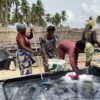
In West Africa’s Benin, Women Make Centuries-Old Salt Production Methods Sustainable
It is barely noon, and a group of women sit near the beach on the outskirts of Djégbadji village, in West Africa’s Benin, sifting through mounds of salt harvested from the Gulf of Guinea’s ocean.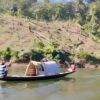
New GEF Project Raises Hope for Change in India’s Indigenous Lake Community
At dawn, when the waters of Dumboor Lake lie still under a pale grey sky, Santo Chakma, 63, nudges his narrow wooden boat into a reservoir that swallowed his childhood.
WORLD CUP: ‘FIFA Has Placed Itself on the Side of the Polluters, Not the Rest of the Planet’
CIVICUS speaks about the climate impacts of the 2026 World Cup with Frank Huisingh, founder of Fossil Free Football, a fan-led group that campaigns to end fossil fuel sponsorship in football and make the game more sustainable.

Hong Kong: No Safety in Exile
When performance artist Sammu Chen tried to tie a red thread to a streetpost, plainclothes police stopped him before he could finish. Chen has twice been detained for his symbolic acts of commemoration of the 4 June 1989 Tiananmen Square Massacre, when Chinese authorities killed hundreds, perhaps thousands, to crush democracy protests.
RightsCon’s Cancellation Signals a Growing Threat to Human Rights and Digital Freedoms
RightsCon, the world’s leading summit on human rights in the digital age, has served for over a decade as a vital global gathering, bringing together civil society, academics, technologists, policymakers, and the private sector in cross-border collaboration. The abrupt cancellation of RightsCon 2026, following intervention by Zambia’s government just days before the convening was due to commence in Lusaka, should concern us all.
In Sikkim, Snow Leopards and Communities Share the High Mountains
The tea arrives before the conversation starts. Jayanta Mukhia sets two cups on the wooden table and pulls up a chair across from the couple who arrived that afternoon with trekking poles and rucksacks. They have come to walk the Goechala trail into the heart of Khangchendzonga National Park in India. They will leave in two days. Before they go, she has something to tell them.
GLOBAL TAX TREATY: ‘Without Sustained Pressure from Organised Movements, the Political Space to Win Simply Doesn’t Open’
CIVICUS discusses a proposed United Nations (UN) tax treaty with Jenny Ricks, General Secretary of Fight Inequality Alliance, a global movement that organises to counter the concentration of power and wealth in the hands of a small elite.

New Caledonia’s Election to Set the Stage for New Talks With France on Its Political Future
The French overseas territory of New Caledonia in the Pacific will hold elections on 28 June in the wake of the latest agreement on its political status with France being rejected. The representatives elected in the three provincial assemblies and territorial congress will then determine a new round of negotiations as the mission of achieving consensus on New Caledonia’s future continues.
Systematic Vilification of Russian LGBTQ+ Community Pushes Them Underground
LGBTQ+ people in Russia are being forced to increasingly use self-censoring strategies in their daily lives as they struggle with systemic vulnerability, one of the largest surveys of the LGBTQ+ community in the country has shown.
Erdoğan’s Race to Avoid Orbán’s Fate
When Hungary’s Prime Minister Viktor Orbán lost by a landslide to a unified opposition in April, Turkey’s President Recep Tayyip Erdoğan was watching. The lesson he drew was not that he should be more moderate; it was that he needed to crack down harder. He had already arrested Istanbul Mayor Ekrem İmamoğlu, the opposition Republican People’s Party (CHP)’s leading presidential contender, in March 2025. After Orbán’s defeat, he has accelerated his campaign to fracture the opposition and rewrite the rules before the next election in 2028.
BOTSWANA: ‘Court Rulings Matter, but It’s Sustained Civic Action That Turns Them into Real Protection’
CIVICUS discusses Botswana’s decriminalisation of same-sex relations with Faith Gunda, a Botswana-based law student and human rights defender, a member of the CIVICUS Protest Lab and co-founder of Sisterhood Chain International, a solidarity initiative that supports grassroots groups and amplifies young women’s voices.
India: How a Tool Bank Beats Poverty in Rural Maharashtra
Dharashiv is one of the poorest districts in the western Indian state of Maharashtra. Located in the semi-arid region of Marathwada, it has no major river and is not blessed with good reservoirs.
Trump Administration Weaponises Sanctions Against Human Rights
For a few days in May, Francesca Albanese could live more easily. On 13 May, a US federal judge ruled that sanctions the Trump administration imposed on her violated her right to free expression. The government was forced to remove the UN Special Rapporteur on the Occupied Palestinian Territories from its sanctions list. But the reprieve lasted barely a week. On 27 May, after an appeals court suspended the ruling, the US Treasury restored sanctions.
GAZA: ‘If Civilians Can Get This Close to Establishing a Humanitarian Corridor, Then Governments Can Do It’
CIVICUS discusses the interception of the Global Sumud Flotilla on its mission to bring humanitarian aid to Palestinians in Gaza with Musa Roshdy, a humanitarian activist who took part in the flotilla.
UN Climate Resolution: Time to Protect Activists
Ahead of World Environment Day, the UN General Assembly made a vital commitment to protect people from climate impacts, adopting a resolution on the climate change obligations of states. The resolution follows up on the International Court of Justice (ICJ) advisory opinion issued last year, which found that states have a legal duty to prevent activities that cause environmental harm. Most states voted for the resolution despite a concerted campaign by the Trump administration to block it.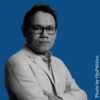
PERU: ‘For 20 Years, Voters Have Had to Choose the Lesser of Two Evils’
CIVICUS discusses the outlook ahead of Peru’s runoff presidential election with David Hidalgo, journalist and executive director of OjoPúblico, a Peruvian digital investigative journalism outlet.

Filipino Indigenous Leader Takes Ancient Wisdom to the Global Stage
Every year, when dark clouds gather above the dense forests of the Philippines, 56-year-old Mini Baeyens, of the Aplay Kankanaey tribe, vigilantly watches the sky.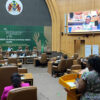
How the Global Anti-Rights Movement Is Targeting Women’s Rights in Africa Through Family Laws
The theme of Africa Day 2026, “63 years of unity, integration and development," offers a stark reminder of the gap that often exists between rhetoric and reality. While commendable regional legal frameworks have advanced legal protections for millions of women and girls, injustice remains written into the fabric of national family laws in many African countries, entrenching gender inequality in the home.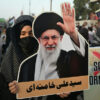
Iran War Deepens Activist Dangers
Narges Mohammadi, awarded the Nobel Peace Prize for her human rights activism in Iran, has been allowed to go home. After guards found her unconscious in her cell, the apparent victim of a heart attack, she was granted temporary release from prison and transferred to a hospital. However, she still faces the threat of being taken back to jail once her condition has improved.
Brazil’s Indigenous Communities Receive $9M in GEF Funding to Protect Lands, Traditions Under Threat
On Brazil’s northeastern coast, the Indigenous community, Tremembé da Barra do Mundaú, lives on a preserved stretch of land shaped by mangroves, dunes, and deserted beaches. The group of around 160 families is led by women and depends on the 3,500-hectare territory for fishing and subsistence farming.« Previous Page — Next Page »


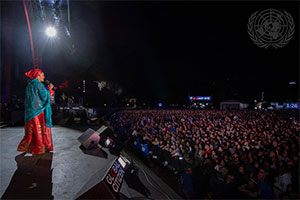 Global Citizen Festival in New York. Credit: UN Photo/Eskinder Debebe
Active citizens are committed to social change because they know that it is achievable. However, major political challenges face active citizens across the world. For example, in authoritarian regimes in Latin America where the hegemonic party has been in power for decades on end, protestors and human rights activists face enormous repression and struggle to materialize their advocacy into concrete results. The same can be said for Africans, where a shift towards elected government in recent decades has yet to translate into an effective voice in decision-making. Now, the Strengthening Citizen Demand for Good Governance, which uses evidence-based approaches – funded by DFID's Governance and Transparency Fund – seeks to raise their voices.
In 2025, the CIVICUS Monitor’s People Power Under Attack report revealed that civic freedoms are severely limited in 122 of 198 countries and territories, and only 7.2% of the global population now lives in countries where civic space is open. Through partnership with the Overseas Development Institute (ODI) and CIVICUS, IPS reporters across the continent will seek to define the extent and limits of state capability, government accountability and the responsiveness of leaders to the needs of citizens.

The Week with IPS

NEXT STOP - SDGs
Tracking global progress towards a sustainable world
Tracking global progress towards a sustainable world
