Languages
Thursday, October 8, 2026



News and Views from the Global South
Active Citizens

‘Zambia Has Environmental Laws and Standards on Paper – the Problem Is Their Implementation’
CIVICUS discusses environmental accountability in Zambia with Christian-Geraud Neema, Africa editor at the China Global South Project, an independent journalism initiative that covers and follows China’s activities in global south countries.
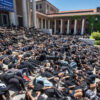
The Fight Against Femicide: Victories and Setbacks in 2025
Hours before world leaders gathered in Johannesburg for the 2025 G20 summit in November, hundreds of South African women wearing black lay down in a city park for 15 minutes — one for each woman who loses her life every day to gender-based violence in the country. The striking visual protest was organised by a civil society organisation, Women for Change, which also gathered over a million signatures demanding the government declare gender-based violence (GBV) a national disaster. Hours later, the government acquiesced.
‘People Reacted to a System of Governance Shaped by Informal Powers and Personal Interests’
CIVICUS discusses Generation Z-led protests in Bulgaria with Zahari Iankov, senior legal expert at the Bulgarian Centre for Not-for-Profit Law, a civil society organisation that advocates for participation and human rights.
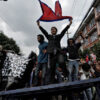
A Grim Year for Democracy and Civic Freedoms – but in Gen Z There Is Hope
2025 has been a terrible year for democracy. Just over 7 per cent of the world’s population now live in places where the rights to organise, protest and speak out are generally respected, according to the CIVICUS Monitor, a civil society research partnership that measures civic freedoms around the world. This is a sharp drop from over 14 per cent this time last year.
In Kenya, Smallholder Farmers Push Back Against Corporate Control of Agriculture
For the past two years, Samuel Ndungu, a smallholder farmer, has been growing organic food and supplying it to the local market in Githunguri, just outside Nairobi.
‘From the Moment They Enter Libya, Migrants Risk Being Arbitrarily Arrested, Tortured and Killed’
CIVICUS discusses migrants’ rights in Libya with Sarra Zidi, political scientist and researcher for HuMENA, an international civil society organisation (CSO) that advances democracy, human rights and social justice across the Middle East and North Africa.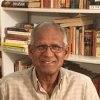
Downward Spiral of Bangladesh Politics and Economy
Who Should be Blamed ?
Bangladesh in recent years started drawing global attention for its success in emerging out of poverty through economic growth and agricultural development. From early 2000 until 2023, while population growth continued to decline from 1.2 in 2013 to 1.03 in 2023, this growth has been the powerful driver of poverty reduction since 2000. Indeed, agriculture accounted for 90 percent of the reduction in poverty between 2005 and 2010 (World Bank).

Rescued from Fire: the World in 2025
Our traditional “year-ender” usually kicks off with a grim litany of world disasters and crises over the past 12 months, highlights IPS partners and contributors and culminates in a more positive-sounding finale. This time I’d like to begin on a more personal note intended also as a metaphor.
Myanmar’s Sham Election: Trump Legitimises Murderous Military Dictatorship
Myanmar is heading for an election, beginning on 28 December, that’s ostensibly an exercise in democracy – but it has clearly been designed with the aim of conferring more legitimacy on its military junta.
‘We Need a New Global Legal Framework That Rethinks Sovereignty in the Context of Climate Displacement’
CIVICUS discusses climate displacement and Tuvalu’s future with Kiali Molu, a former civil servant at Tuvalu’s Ministry of Foreign Affairs and currently a PhD candidate at the University of the South Pacific in Fiji and the University of Bergen in Norway. His research focuses on state sovereignty and climate change in the Pacific.
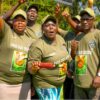
Kenyan Court Restores Seed Freedom: Landmark Ruling Boost for Food Security and Sovereignty
For years, smallholder farmers across Kenya have been engaged in a legal battle with the government over a law that criminalizes the practice of saving, sharing and exchanging indigenous seeds.
Killer Robots: The Terrifying Rise of Algorithmic Warfare
Machines with no conscience are making split-second decisions about who lives and who dies. This isn’t dystopian fiction; it’s today’s reality. In Gaza, algorithms have generated kill lists of up to 37,000 targets.
Refugees Forced to Fill Gaps as Funding, Power and Legal Recognition Move Out of Reach
The global refugee system is entering a period of deep strain. The delivery of protection and assistance is undergoing a transformation due to funding cuts, institutional reforms, and shifting donor priorities.
As Attacks on Women Defenders Intensify, so Must Our Support
A global crackdown on civic freedoms is intensifying – and women are on the frontlines of the attack. CIVICUS’s 2025 People Power Under Attack report analyses the extent to which freedoms of association, expression and peaceful assembly are being respected or violated. The report reveals that people in 83 countries now live in conditions where their freedoms are routinely denied, compared to 67 in 2020. In 2020, 13 per cent of the world’s population lived in countries where civic freedoms were broadly respected; now it’s more like 7 per cent. Among the most documented violations in 2025 were detention of human rights defenders, journalists and protesters, and women human rights defenders (WHRDs) were among the most affected.
‘Once Conversations about Democracy and Equality Begin, They Are Very Hard to Silence’
CIVICUS discusses restrictions on civic space in Thailand and the detention of activist and human rights lawyer Arnon Nampa with Akarachai Chaimaneekarakate, Advocacy Lead at Thai Lawyers for Human Rights (TLHR).
CIVICUS 2025 Report Reveals Widespread Attacks on Civic Freedoms Worldwide
Over the course of 2025, global civic space conditions have deteriorated sharply, with most countries experiencing some degree of obstructed civil liberties. As authoritarian governments strengthen their hold and have even escalated the use of military force to suppress public dissent, civilians report facing increasing limitations of freedoms of association, peaceful assembly, petition and religion, as well as notable crackdowns on press freedoms.
Thousands Gather in Nairobi as Science Meets Diplomacy for Planet Protection
“There will never be a better time than now to invest in a stable climate, thriving ecosystems, and resilient lands, or in sustainable development that delivers for all,” said Amina J. Mohammed, the deputy Secretary-General of the United Nations, during the opening plenary of the seventh meeting of the UN Environment Assembly (UNEA-7) taking place from December 8 to 12, 2025.
The New Fragility: Peacebuilding Meets Digital Democracy
Established democracies are exhibiting governance stresses that were once associated primarily with fragile and conflict-affected states. Polarisation is weakening institutional trust, fragmenting civic norms, and reducing societies’ ability to solve problems collectively. This is the new fragility. At the same time, governments and civil society organisations are adopting digital tools to support public participation. These deliberative technologies hold real promise, but in polarised environments they also carry risks. Their success depends on the same principles that have guided peacebuilding efforts for decades.

In Zimbabwe, School Children Are Turning Waste Into Renewable Energy-Powered Lanterns
When going home after school, Monica Ben not only takes with her a pen and exercise books but also a lantern to light the dark room and completes her daily homework in Mashonaland East province.
From Village Vision to Vital Innovation: How One Student is Revolutionizing Healthcare in Malawi
In the quiet hills of Chamhanya Gondwe village in Malawi’s Mzimba district, a young boy once watched his community struggle with limited access to healthcare.
‘Seven Million People Have Taken to the Streets to Stand up for Democracy’
CIVICUS discusses US civil society action under the second Trump administration with Bridget Moix, General Secretary of the Friends Committee on National Legislation, the oldest faith-based lobbying organisation in the USA, advocating for peace, justice and environmental stewardship. Bridget has participated in the No Kings movement, a nationwide grassroots response to democratic backsliding and attacks on rights.
« Previous Page — Next Page »





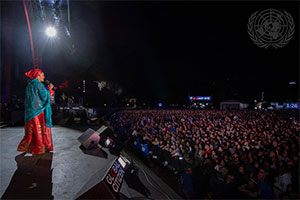 Global Citizen Festival in New York. Credit: UN Photo/Eskinder Debebe
Active citizens are committed to social change because they know that it is achievable. However, major political challenges face active citizens across the world. For example, in authoritarian regimes in Latin America where the hegemonic party has been in power for decades on end, protestors and human rights activists face enormous repression and struggle to materialize their advocacy into concrete results. The same can be said for Africans, where a shift towards elected government in recent decades has yet to translate into an effective voice in decision-making. Now, the Strengthening Citizen Demand for Good Governance, which uses evidence-based approaches – funded by DFID's Governance and Transparency Fund – seeks to raise their voices.
In 2025, the CIVICUS Monitor’s People Power Under Attack report revealed that civic freedoms are severely limited in 122 of 198 countries and territories, and only 7.2% of the global population now lives in countries where civic space is open. Through partnership with the Overseas Development Institute (ODI) and CIVICUS, IPS reporters across the continent will seek to define the extent and limits of state capability, government accountability and the responsiveness of leaders to the needs of citizens.

The Week with IPS

NEXT STOP - SDGs
Tracking global progress towards a sustainable world
Tracking global progress towards a sustainable world
