Languages
Monday, November 23, 2026



News and Views from the Global South
Africa
FILM-RWANDA: Genocidaires Face Off With Their Victims
In 1994, hundreds of thousands of Tutsi were slaughtered by their Hutu neighbours, friends, and family members across Rwanda. Nine years later the killers came home from prison to live side by side again with their victims.
SOUTH AFRICA: Visa Waiver ‘‘Encumbering’’ Zimbabwean Trade
The South African government’s removal of visa requirements for Zimbabweans in April was aimed at easing entry for people still reeling from the crisis in Zimbabwe. But, for Alice Kakwindi, Grace Chimhosva and other cross-border traders, entering South Africa has subsequently turned into a nightmare.EGYPT: Muslim Brotherhood on the Mat
Several leading members of the Muslim Brotherhood opposition movement stand accused of plans to form an "international network of organisational cells." Its leaders say the charges are blatant fabrications.
SUDAN: Civilians Under Siege in Refugee Camps
A report by the United Nations that the Sudanese Air Force bombed northeastern Chad near a refugee camp has sparked strong condemnation from the Save Darfur Coalition (SDC) following military and paramilitary attacks over the past week.
TOURISM: ‘‘Uganda Not Just About Idi Amin, Civil War and AIDS’’
Ugandans are unhappy with their tourism authority as they believe that their country’s warm climate and exceptional species, such as the mountain gorilla, should attract as many tourists as neighbouring Kenya. To compound matters, the global economic crisis has shrunk tourist arrivals from Europe.
ZAMBIA: Controversial Chinese Firm Given Another Copper Mine
The desperate need to find an alternative investor for the closed Luanshya Copper Mines (LCM) in Zambia’s Copperbelt has not prevented some Zambians from fiercely opposing the government’s decision to let Chinese-owned Non-Ferrous Metals Mining Company (NFCA) run the mine.RIGHTS: Historic Court Under the Spotlight in New Film
The International Criminal Court has struggled since its inception to realise its core mandate to prosecute the world’s worst human rights offenders, putting on trial propagators of genocide, war crimes and the inductors of child soldiers into civil conflict.AFRICA-US: Growing Drug Trade Linked to Terror Groups
Drug trafficking was once thought to be a largely Latin American problem, but the international community increasingly finds itself fighting this phenomenon in Africa.ENERGY: South African Government Edging Towards Renewable Sources
South Africa is slowly moving towards exploring renewable energy sources, having set itself a target of three percent of energy being generated from renewable sources by 2013.TRADE: ‘‘You Can’t Smoke Cigars in Brussels and Bulldoze Us’’
Namibia will sign an economic partnership agreement (EPA) with the European Union (EU) when the outstanding contentious issues have been resolved through new wording in the texts of the interim EPA, says the country’s trade and industry minister Hage Geingob.
EGYPT: ‘They Ogle, Touch, Use the Filthiest Language Imaginable’
As night falls over Egypt’s capital, youth gather along the banks of the Nile where a carnivalesque atmosphere prevails.ECONOMY: 'Africa Should Seize Control over its Development'
Colonisation can be blamed for Africa's underdevelopment but today Africans must take their fate in their own hands and become ambitious. The continent badly needs industrialisation but it has fallen back into the trap of merely exporting commodities because of booming prices.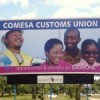
TRADE: COMESA on Track with Establishing Customs Union
Zimbabwe will finally host the 13th Common Market for Eastern and Southern African (COMESA) summit in the resort town of Victoria Falls in June where the regional grouping is expected to launch its customs union.AFRICA: ‘‘Invest in Job Creation to Buffer Global Crisis’’
African governments should invest in creating jobs, providing social services and building food security to shield people against the effects of the global economic and financial crisis. They should also develop micro-credit facilities to make money available to small businesspeople and boost economies.TRADE: Southern Africa Still Kicking Against Controversial EPA
High-level talks at a Southern Africa Development Community (SADC) meeting in Gaborone last week failed to produce an agreement on the signing of the interim economic partnership agreement (EPA) with the European Union.
WATER-ANGOLA: Smart Relief Needed as Floodwaters Fall
The flood waters are starting to recede as the rainy season ends for another year, but while the emergency is over in southern Angola, the long term outlook is bleak.
POLITICS-MAURITANIA: 'Justice and Equality for All'
As Mauritania prepares for presidential elections on June 6, women's groups have outlined a clear and compelling agenda for women. The trick will be getting the country's mostly male politicians to listen.
Q&A: "A Threat to One is a Threat to All"
On May 24, one of the leading advocates of Africa's unity and liberation, Tajudeen Abdul Raheem, was killed in a car accident in Nairobi, Kenya.EGYPT: Financial Crunch Squeezes Suez
At the Suez Canal, one of Egypt's fiscal mainstays, the threat of Somali piracy pales in comparison with the potential knock-on effects of the global economic depression.RIGHTS: More Calls to Ban Zimbabwe’s Blood Diamonds
Amid allegations of human rights abuses and government corruption, international calls are growing to ban or restrict the trade in diamonds from politically unstable Zimbabwe.
POLITICS-DRC: Debate Over Truth Commission
The search continues for the best way to expose the truth surrounding crimes committed in the Democratic Republic of Congo (DRC), not least in Ituri, in the north-east of the country, a region which where years of atrocities and massive human rights violations have gone unpunished.« Previous Page — Next Page » *#*

The Week with IPS

NEXT STOP - SDGs
Tracking global progress towards a sustainable world
