Languages
Monday, November 23, 2026



News and Views from the Global South
Africa
LIBYA: ‘‘King of Kings’’ Gaddafi Tries to Flex Regional Muscles
Former pariah and now Europe’s cautious partner, Libya’s leader Muammar Gaddafi seems determined to flex new-found diplomatic muscles on issues ranging from trade to regional security, North Africa observers say.ZIMBABWE: Little Interest in Trade Fair Despite Political Changes
The Zimbabwe International Trade Fair (ZITF) was until a few weeks ago - and for the first time since its inauguration half a century ago - on the verge of being postponed because of a lacklustre response from exhibitors to what was once southern Africa's premier showcase of trade opportunities.POLITICS-SOUTH AFRICA: ANC Scores Another Victory: Now Deliver, Voters Say
As results of South Africa's fourth democratic elections held on Apr. 22 come in, the ruling African National Congress (ANC) is poised to return to power in the 400 seat National Assembly. The party is also on course to emerge as the governing party in all but one of the nine provinces. The main opposition party, the Democratic Alliance, is likely to take the Western Cape.SOUTH AFRICA: Activists Ask Government to Integrate Men and Boys in Gender Policies
Gender activists are calling on the new South African government to improve the country’s gender legislation. Current gender policies focus on women, ignoring the rights, roles and responsibility of men and boys, they say.
HEALTH-ZAMBIA: Sanitation Backlog To Blame for High Child Mortality
Dehydration caused by severe diarrhoea is a key cause of infant deaths in Zambia, a country with one of the highest child morality rates in the world, according to a new report by Zambia’s health department.SOUTH AFRICA: Election Will Not Bring an End to Political Turmoil
South Africa's fourth democratic election will not bring an end the political turmoil that has beset the country since 2007 when former president Thabo Mbeki suspended the country's head of public prosecutions and was replaced by Jacob Zuma as leader of the ruling ANC.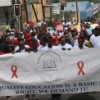
SWAZILAND: Govt Pleads for More Time On Free Primary Education
"This demonstration is close to my heart because the cause we’re fighting for affects me directly," said Thabile Ngwenya, a teacher at a rural primary school teacher in central Swaziland.
Q&A: Russian Company Is Ready to Excavate African Potential
At a glance, trade between Russia and African states is still at low levels, which experts attribute to an inadequate flow of information and lack of interaction.HEALTH-SWAZILAND: TB: ‘Indeed We Have a Problem’
The Swazi government's slow response to a fast-growing tuberculosis epidemic has eroded the possibility of controlling it.
WATER-SOUTHERN AFRICA: Strengthening River Basin Management
Many of the adverse effects of floods which swamped northwest Botswana in early March could have been avoided if the Okavango River Basin Commission (OKACOM) had an early warning system in place.
SOUTHERN AFRICA: Climate Change to Shrink Agricultural Production by Half
Environmental researchers predict Southern Africa will be hit heavily by climate change over the next 70 years. Agricultural production is projected to be halved - a development that will threaten the livelihoods of farmers in a region where 70 percent of the population are smallholder farmers.SOUTH AFRICA: Communities Draft Health Map to Push for Better Services
The quality of South African public health services cannot improve if community-based organisations (CBOs) are not given a greater role in shaping, developing and implementing national and provincial health policies.
SOUTH AFRICA: Thousands of Traders Might Lose Jobs as Market Turns into Mall
Hundreds of traders at the Early Morning market in Durban fear the municipality’s plans to turn the area into an upscale shopping mall that will cost them their livelihoods. The redevelopment is one of many currently underway in South Africa’s urban centres to upgrade city infrastructure for the 2010 Soccer World Cup.DEVELOPMENT: The Second Scramble For Africa Starts
Sub-Saharan African countries have of late become the target of a new form of investment that is strongly reminiscent of colonialism: investors from both industrialised and emerging economies buy or lease large tracts of farm land across the continent, either to guarantee their own food provisions or simply as yet another business.
Q&A: Joint Responsibility for Changing the Global Economy*
African trade ministers who met in Addis Ababa at the African Union (AU) in March urged world leaders to "place African economic development at the centre of international efforts to build strategies towards the recovery of the global economy'' ahead of the G20 summit in London.ENERGY: Africa Will Have to Feed EU’s Artificial Biofuels Demand
Earlier in the decade, biofuels were hailed as the energy panacea, the silver bullet to solve oil shortages and abide by environmental concerns. The European Union recently took the lead in imposing the use of these liquid or gaseous fuels made from plants.AFRICA: Developing Stronger Protection Against Gender-Based Violence
When heads of districts describe efforts to fight sexual violence as a waste of resources, it raises questions about the leadership’s commitment to deal with the matter.
RIGHTS-SOUTH AFRICA: Migrants Don’t Vote
In May 2008, South Africa was rocked by the worst xenophobic attacks that the country has ever seen. Less than a year later, the issue is almost invisible from the national election campaign.WATER-GUINEA BISSAU: Neglecting Infrastructure at the People’s Peril
The most recent cholera outbreak in Guinea-Bissau killed 225 people before it was brought under control in February; 14,000 people were infected by the water-borne disease, most of them in the capital, Bissau.
POLITICS: U.N. Staff Seeks Answers in 2007 Algiers Bombing
Why is the U.N. keeping its report on the 2007 terrorist attack in Algeria secret? The world body’s staff union says it wants to know.POLITICS: Spotlight on Gender Equality at IPU Meeting in Addis Ababa
The Inter Parliamentary Union (IPU) started its assembly in the Ethiopian capital on Apr. 5 with a debate called by women parliamentarians.« Previous Page — Next Page » *#*

The Week with IPS

NEXT STOP - SDGs
Tracking global progress towards a sustainable world
