Languages
Monday, November 23, 2026



News and Views from the Global South
Africa
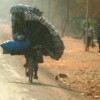
ECONOMY-DR CONGO: Joblessness Rises As Global Crisis Hits Mining
It is busy at the gates of Bralima brewery in Lubumbashi, the capital of Katanga province in the Democratic Republic of Congo (DRC). About 60 men are waiting at the doors, hoping for them to open and someone to offer them work. Their numbers have grown since the global economic crisis which has caused the collapse of the local mining industry.SOMALIA: U.S. Advised to Back Reconciliation Efforts
Two years after the administration of President George W. Bush backed Ethiopia's invasion of Somalia, President Barack Obama is being urged to pursue a much more flexible policy toward the East African nation than his predecessor and let Somalis, including Islamist leaders who were targeted by the invasion, sort things out for themselves.ZIMBABWE: Unity Govt – Guarded Optimism At Local Level
Zimbabwe's power sharing deal comes as the country's Movement for Democratic Change (MDC) controlled urban councils are facing a multitude of challenges after years of what they claim is interference in the running of their affairs by the Zimbabwe African National Union-Patriotic Front (ZANU-PF).ECONOMY-SOUTH AFRICA: 'We Need Interventions'
The markets will be hanging on Trevor Manuel's every word when South Africa's minister of finance delivers his thirteenth Budget Speech on February 11. Expectation is even greater among poor communities, the unemployed and workers as the world's longest serving finance minister signals his government's economic plans in the face of the global economic crisis.
Q&A: ‘An Opportunity to Do Things Differently’
As Zimbabwe's government of national unity begins its work, gender activists are pushing for a greater place for women in decision-making.TRADE: Financial Crisis Makes Liberalisation Less Rosy
With the current economic crisis, questions are being asked about the viability of further liberalisation as envisaged in the Doha Round at the World Trade Organisation (WTO). In particular, the North’s pressure on poor countries to open financial markets may be ‘‘obsolete’’ because of the role of the financial sector in the crisis.ECONOMY: Germany Helping South Africa With 2010 Soccer World Cup?
As the building of new soccer stadiums and transport infrastructure in South Africa steams ahead, little seems to have come of the agreed assistance by the host of the 2006 FIFA World Cup, Germany, to the 2010 FIFA World Cup host, South Africa.TRADE: South Africa in Growing Conflict With EU
Brussels officials have rejected calls from three southern African governments for a reassessment of a new trade accord with the European Union.
POVERTY: Cash Transfers Transform Lives of Malawi’s Poor
Malawi has taken major strides towards reducing poverty and hunger in the country. Government’s cash transfer scheme has managed to reach many of those usually unable to access grants due to lengthy and complicated bureaucratic processes and assessments.ZIMBABWE-POLITICS: Thou Shalt Not Give Up Your Right…
Among the vital tasks spelled out in the Global Political Agreement (GPA) that frames Zimbabwe's power-sharing government is the drafting of a new constitution. Even before the process begins, it is under challenge from Zimbabwean civil society.
WEST AFRICA: Female Genital Mutilation Knows No Borders
Laws against female genital mutilation are driving the practice underground and across borders, says UNIFEM.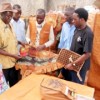
TRADE-UGANDA: ‘‘Green’’ Burial Cloth Gets New Lease on Life
Bark cloth, a fabric historically used by the Buganda in central Uganda to wrap their dead before burial, is making a comeback in the form of trendy crafts, clothing and household goods.ZIMBABWE: Obama Cautious on Power-Sharing Deal
As the Zimbabwean parliament approves the power-sharing deal between President Robert Mugabe and opposition leader Morgan Tsvangirai, the new administration of U.S. President Barack Obama says it will look for concrete change in the way the country is governed before deciding U.S. policy.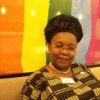
Q&A: Fighting to Free Those Found ‘‘Guilty’’ of Homosexuality
In 2003, Alice Nkom made a decision that has put her on a collision course with the police, prosecutors and judges of Cameroon. Nkom, who has been a barrister at the Cameroonian Bar for 40 years, was chatting with some young men whom she considers her own children.ZAMBIA-POLITICS: Grumbling Over Constitutional Review
Two years into its work, the Zambia's National Constitutional Conference (NCC) is finding it difficult to get wide public acceptance.
MEDIA-SOUTH AFRICA: Battle Over Future of Public Broadcaster
A powerful coalition of civic organisations is calling for a complete overhaul of the legal framework of the South African Broadcasting Corporation (SABC) to force it to fulfil its public broadcasting mandate.
Q&A: ‘Development Must Adapt to Water Resources We Have’
Environmental experts warn that one of the first effects of climate change will be scarcity of water, especially throughout the African continent. Already depleted water resources will become even more scarce.EDUCATION-ZAMBIA: Communities Doing it For Themselves
"My mother has no job and she cannot afford the cost of educating me and my sister at the government school," says 12-year-old Muyunda Nyamba. But the little boy is one of 37,000 children from Zambia's poorest neighbourhoods beginning the new school year calendar at community-run schools.
POLITICS-MADAGASCAR: Scores Dead in Political Violence
"The capital has never known such stillness," Marie Ratonvonirina said of the one-day stayaway declared by the mayor of Antannanarivo, Andry Rajoelina, on Jan. 29.COTE D’IVOIRE: Formal Economy Returns to the North
Mamadou Dembélé has removed all the contraband products he has sold for the past in six years at his shop in Bouaké in central Ivory Coast. This is due to the gradual return of government control in the area - occupied by the rebellion launched in the country in September 2002.
ZIMBABWE: Teachers' Strike Infringes Children’s Right to Education
The crisis of Zimbabwe’s education sector is deepening by the day, as the country’s schools remain closed due to the unremitting teachers strike.« Previous Page — Next Page » *#*

The Week with IPS

NEXT STOP - SDGs
Tracking global progress towards a sustainable world
