Languages
Sunday, October 11, 2026



News and Views from the Global South
Armed Conflicts

UN Conference Recommits to Solidarity With Rohingyas, People of Myanmar
The international community convened for a high-level meeting at UN Headquarters, this time to mobilize political support for the ongoing issue of the persecution of the Rohingya Muslims and other minorities in Myanmar.
Nuclear Testing Threats are Returning & Saber Rattling is Getting Louder, warns UN Chief
Is the unpredictable Trump administration toying with the idea of resuming nuclear tests? The New York times reported April 10 that some of Trump’s senior advisers had proposed the resumption of “test denotations for the sake of national security". The last such US explosion took place in 1992.
UN80: Three Tests to Make Reform About People, Not Spreadsheets
This September the UN turns 80, but the lessons of peace, justice, and cooperation are still unfinished. The world today faces the flames of inequality, conflict, ecological collapse and growing digital threats. In short, the very problems the UN was created to solve are once again staring us in the face.
UN Member States Convene To Discuss Urgent Need for Equity in NCD and Mental Health Responses
World leaders convened in New York to deliberate over the efforts needed to address non-communicable diseases. On September 25, the United Nations (UN) convened a high-level meeting on the prevention and control of noncommunicable diseases (NCDs) and the promotion of mental health and well-being during the 80th session of the General Assembly (UNGA80).
UN at 80: Civil Society Must Have a Say in the Struggle for Renewal
As the high-level opening week of the UN General Assembly unfolds, with heads of states delivering often self-serving speeches from the UN’s podium, the organisation is undergoing one of its worst set of crises since its founding 80 years ago. This year’s General Assembly – ostensibly focused on development, human rights and peace – comes as wars are raging across multiple continents, climate targets are dangerously being missed and the institution designed to address these global challenges is being hollowed out by funding cuts and political withdrawals.
Attention World Leaders: Prevent Nuclear War, End Arms Race & Abolish Nuclear Weapons
In 2013, frustrated at the lack of progress on nuclear disarmament, the United Nations General Assembly declared September 26 as the International Day for the Total Elimination of Nuclear Weapons. This international day provides an opportunity to enhance public awareness and education about the threat posed to humanity by nuclear weapons and the necessity for their total elimination.
Record Number of Women Living Within Striking Distance of Military Conflicts
The battlefield is no longer distant; for millions of women, it’s next door. An estimated 676 million women – nearly 17 percent of the global female population – lived within 50 kilometres of a deadly conflict last year, according to a new report from the Peace Research Institute Oslo (PRIO). That is the highest figure recorded since the end of the Cold War.
Prospects for the Upcoming High-Level Conference on Rohingya
Last month marked eight years since hundreds of thousands of Rohingya were forcibly displaced from Myanmar’s Rakhine State to Bangladesh by the Myanmar military.
‘The State Cannot Pardon Itself for Violating Human Rights’
CIVICUS discusses Peru's new amnesty law with Nadia Ramos Serrano, founder and researcher at the Leadership Centre for Women of the Americas, a civil society organisation working on democratic development and the role of women in politics.
Mamdani’s Stand on Genocide is More Important than the Dynamics of Arresting Netanyahu
No leader responsible for mass atrocities enjoys greater impunity on the international stage than Benjamin Netanyahu. This is due to the strange stranglehold of the pro-Israel lobby on the two major political parties in the United States.
World Leaders Should Commit to Human Rights, International Justice
World leaders gathering at the United Nations General Assembly from September 22-30, 2025, should commit to protecting the UN from powerful governments seeking to defund and undermine the organization’s capacity to promote human rights and international justice, Human Rights Watch said today.
UN Independent Commission Finds That Israeli Forces Have Committed Genocide in Gaza
On September 16, the Israeli military began its ground offensive in Gaza City, accompanied by intensified bombardment of residential areas and a surge in civilian displacement. Concurrently, the United Nations Independent International Commission of Inquiry on the Occupied Palestinian Territory, including East Jerusalem and Israel, issued a report in which it found that Israel is responsible for committing genocide in Gaza, citing deliberate efforts to destroy Palestinian life, carried out with near-total impunity.
‘The Authoritarian Regime Uses Collective Punishment to Discourage Any Challenge to Its Authority’
CIVICUS discusses the deaths of Indigenous activists in custody in Tajikistan with Khursand Khurramov, an independent journalist and political analyst.

Struggle For Water Continues Following Israeli Attacks on Lebanon
Just under a year into a fragile ceasefire, 150,000 people in southern Lebanon continue to deal with the potentially lethal aftermath of Israeli bombing, highlighting the devastating long-term effects of conflict.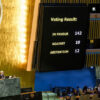
The Cruel Deceptions of Peace in Palestine
In a long past due move, the UN General Assembly voted 142-10 to approve a plan called “The New York Declaration” that hopes to revive the long dead Two State Solution for Palestinian Independence.
Why Collective Healing is Central to Peacebuilding
 Wars and oppression leave behind not just rubble and graves. They leave behind invisible wounds, profound trauma carried by survivors. And most often, women carry the largest burden. They are targeted not only because of their gender, but because surviving and leading threaten structures based on patriarchy and domination.
UN Warns of Escalating Humanitarian Emergency in Haiti As Armed Gang Violence and Aid Deepen Crisis
In recent months, the humanitarian crisis in Haiti has taken a considerable turn for the worse, with armed gangs continuing to exert dominance over nearly 90 percent of the capital, Port-Au-Prince. Rising violence, the collapse of essential services for millions, and severe cuts to humanitarian funding have left the international community struggling to provide immediate relief and find a sustainable, long-term solution.
Israel, Hamas, the US and Qatar—Unraveling the Mess
Israel’s brazen attack on Hamas’ negotiating team in Qatar while they were deliberating a new ceasefire with Israel raises serious questions not only about the legality of the attack, which violated international laws and norms, and concerns over Qatar’s sovereignty, but also the potential regional and international fallout.
Afghanistan’s Overlapping Crises Deepen Following 6.0 Magnitude Earthquake
Over the past week, Afghanistan’s humanitarian situation has deteriorated significantly following the August 31 earthquake, which measured over 6.0 in magnitude and caused an immense loss of life and widespread destruction of critical infrastructure. Compounded by the nation’s fragile economy, severe shortages of essential resources, and persistent access challenges, humanitarian organizations have found it increasingly difficult to reach vulnerable communities—especially women and children.
Global Military Spending Shows Misalignment of Priorities, says UN Secretary General
Global military spending has been on the rise for more than 20 years, and in 2024, it surged across all five global regions in the world to reach a record high of USD 2.7 trillion. Yet, such growth has come at the cost of diverting financial resources away from sustainable development efforts, which the United Nations and its chief warn puts pressure on an “already strained financial context.”
Palestinians Pushed into Deeper Crisis with Israeli Displacement Order on Entire Gaza City
Israel’s intent to displace around 1 million civilians, half of whom are living in famine, is impossible and illegal Oxfam said, while the Israeli military continued to flatten Gaza City building by building as its mass forced displacement of civilians in the city gains terrifying momentum.« Previous Page — Next Page »





Armed conflicts are a sad constant on daily front pages worldwide. Wars, civil wars, revolts, coups, genocides, ethnic and political violence, and global terrorism capture our attention for the geopolitical landslides, human suffering, food crises and streams of migration that follow in their wake. As in times of natural disaster, man-made crises claim frequent casualties among the poor, women and children. IPS examines emerging and ongoing armed conflicts around the world with an eye on the underlying social and political dynamics, and special focus on the lived experiences of those most affected by armed conflict.

The Week with IPS

NEXT STOP - SDGs
Tracking global progress towards a sustainable world
Tracking global progress towards a sustainable world
