Languages
Friday, November 20, 2026



News and Views from the Global South
Armed Conflicts
CAMBODIA: Justice In Sight for Khmer Rouge Victims
An experiment in international justice finally gets under way on Feb. 17 when a war crimes tribunal begins in Cambodia to prosecute the notorious jailer of the genocidal Khmer Rouge regime.
DR-CONGO: How Many More Will Be Raped?
As people around the world celebrate their loved ones on Valentine's Day weekend, activists are working to ensure that the ongoing horrors of the conflict in the Democratic Republic of Congo (DRC) are not forgotten.
INDIA: Awaiting Pakistan’s Official Response to Mumbai Attacks
Five weeks after India handed over a dossier to Islamabad containing detailed evidence on the Nov. 26-29 Mumbai terror attacks, Pakistan has finally promised an official response, based on investigations by its Federal Investigation Agency (FIA).SOMALIA: U.S. Advised to Back Reconciliation Efforts
Two years after the administration of President George W. Bush backed Ethiopia's invasion of Somalia, President Barack Obama is being urged to pursue a much more flexible policy toward the East African nation than his predecessor and let Somalis, including Islamist leaders who were targeted by the invasion, sort things out for themselves.MEDIA: Climate of Fear Pervades Many Newsrooms
In Latin America, the Middle East and Southeast Asia, journalists are becoming increasingly vulnerable to physical violence as a result of their work, says a U.S.-based media watchdog in a new report released Tuesday.US-MIDEAST: Anti-Hamas Policies Stymie Gaza Recovery
Despite a desperate need to rebuild the Gaza Strip, viewed by many as a key ingredient to reuniting the Palestinian territories and building a two-state peace deal with Israel, it appears that the U.S. and the international community are poised to continue old, politically-charged policies that will impede progress.COLOMBIA: Ex-Hostage Says FARC Killed 11 Captives
"Why did they kill them? Out of physical cowardice. It's what we call murder. Sheer physical cowardice. It's what we call a war crime," said former lawmaker Sigifredo López, just freed by the FARC, about the massacre of his 11 colleagues on Jun. 18, 2007, when they were hostages of the Colombian guerrillas.MIDEAST: A Truce Too Big to Fail?
The tandem un-negotiated ceasefires that Israel and Hamas announced Jan. 18 across the Gaza-Israel front line remain fragile. Local and international efforts to consolidate the truce have stalled, and officials and analysts around the world warn of a high risk of further escalation.
COLOMBIA: Freed Hostage Calls for Peace Negotiations
"At one point I thought we weren't going to find him," said Colombian Senator Piedad Córdoba about Alan Jara, the latest hostage to be freed as a goodwill gesture by insurgents after more than seven-and-a-half years as their captive in the jungle.POLITICS: U.N. Chief Sets Bar High in Aftermath of Gaza
When Ban Ki-moon visited Gaza after the destructive bombing of a U.N. compound last month, the usually reticent secretary-general lashed out at the Israelis, accusing them of using "excessive force" and describing the assault as "an outrageous and totally unacceptable attack against the United Nations".
SRI LANKA: Tamils Fearful For the Future
As Sri Lanka celebrates 61 years of independence from British colonial rule on Wednesday, the enthusiasm is understandably not shared by minority Tamils living under the military jackboot in the north of the country.RIGHTS: ICC Investigating Israel War Crimes Charges
The International Criminal Court (ICC) in The Hague announced a preliminary analysis Tuesday into whether Israel committed war crimes during the recent Gaza war, following the Palestinian National Authority's (PNA) move to recognise the ICC's authority in the West Bank and Gaza Strip.
U.S.: More Troops, More Worries, Less Consensus on Afghanistan
Even as U.S. President Barack Obama prepares to deploy more military forces to Afghanistan - what he has called "the central front" in former President George W. Bush's "global war on terror" - a consensus on overall U.S. strategy there remains elusive.COLOMBIA: One More Day’s Delay for Civilian Hostages
Alan Jara, the former governor of the central province of Meta, was released by Colombian guerrillas on Tuesday, instead of Monday as originally scheduled. Former regional lawmaker for the western province of Valle del Cauca, Sigifredo López, was scheduled to have been freed on Wednesday, but his handover has now been postponed until Thursday.
MIDEAST: Gaza Reemerging From the Ashes
The United Nations is urgently appealing for 613 million dollars to aid more than a million desperate civilians in the ruins of Gaza, where schools, hospitals, houses, factories and even farmland were obliterated during the three-week assault by Israeli air and ground forces.RIGHTS-NEPAL: Law on Disappearances Provokes Outcry
Despite loud opposition, the Maoist-led coalition government of Prime Minister Pushpa Kamal Dahal has vowed to push through an ordinance to resolve the cases of hundreds of people ‘disappeared’ during the decade-long people's war waged between Maoist rebels and the forces of the former monarchy.
INDIA: WSF Must Address Terrorism Says Mumbai
Civil society in this port city, victim of the Nov. 26-29 terrorist attacks and host to the 2004 World Social Forum, has one question to ask - will the movement seriously address terrorism?THAILAND: Malay-Muslims Complain in Court of Torture
A year after they were allegedly subjected to torture by the Thai army, two young men from the country’s troubled southern provinces have done what no other victim of similar abuse in the area has dared to do - go to court.
SRI LANKA: India Speaks Up For Embattled Tamils
As humanitarian agencies warned of a major crisis unfolding in Sri Lanka, Indian Foreign Minister Pranab Mukherjee made a quick dash Colombo to extract promises concerning the safety of some 250,000 ethnic Tamils trapped in fighting between separatist rebels and government troops.
DEVELOPMENT: Urgent Aid Sought for Victims of “Silent” Crises
The United Nations children's agency UNICEF said Tuesday that it must raise over a billion dollars this year to meet the basic needs of women and children in disaster zones worldwide, most of them in sub-Saharan Africa.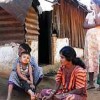
RIGHTS-SRI LANKA: 'Plight of Tamils Similar to Gaza Civilians'
While the Sri Lankan army has announced the capture of Mullaitivu, the last bastion of the Liberation Tigers of Tamil Eelam (LTTE), the plight of more than 250,000 civilians caught in the fighting continues to be as grim as that of civilians in Gaza, say those involved in humanitarian work.« Previous Page — Next Page »


Armed conflicts are a sad constant on daily front pages worldwide. Wars, civil wars, revolts, coups, genocides, ethnic and political violence, and global terrorism capture our attention for the geopolitical landslides, human suffering, food crises and streams of migration that follow in their wake. As in times of natural disaster, man-made crises claim frequent casualties among the poor, women and children. IPS examines emerging and ongoing armed conflicts around the world with an eye on the underlying social and political dynamics, and special focus on the lived experiences of those most affected by armed conflict.

The Week with IPS

NEXT STOP - SDGs
Tracking global progress towards a sustainable world
Tracking global progress towards a sustainable world
