Languages
Sunday, November 22, 2026



News and Views from the Global South
Economy & Trade

The Recent Mauritius Oil Spill in Policy and Historical Context
On July 25 2020 the Japanese bulk carrier MV Wakashio with 3,894 tonnes of fuel aboard ran aground off the cost of Mauritius. By 9 August over 1000 tonnes of oil had seeped into the pristine waters off the coast of this beautiful island haven. This spill was so large that it was even visible from space https://www.livescience.com/mauritius-oil-spill-from-space.html
Defying Predictions, Nepal’s Remittances Still High
Despite dire predictions about a drastic drop in remittances that Nepal gets from its workers abroad due to the Covid-19 induced economic downturn, money transfers have hit Rs875 billion which is only 0.5% less than the preceding year.
World Bank’s ‘Mobilizing Finance for Development’ Not Financing Development
The World Bank leadership must urgently abandon its ‘Maximizing Finance for Development’ (MFD) hoax. Instead, it should resume its traditional multilateral development bank role of mobilizing funds at minimal cost to finance developing countries.
A Not-To-Do List for Guyana’s New Administration When It Comes to Oil
Just over five years ago, a major oil discovery occurred on the northeastern coast of South America. There have been a series of additional discoveries ever since. But this time it was not Venezuela. It was Guyana.
Fueling Pacific Economic Engines with Open Data in Times of Covid-19
Throughout my career, I have always championed the value of open data, especially geospatial and earth observation data for the social, environmental and economic growth that it brings. Access to timely and accurate data is critical to maximizing the efficiency of development programmes and is a critical economic as well as scientific imperative for our region.
The Abraham Accord: Will it Bring Peace or Perpetuate Pain in Palestine?
There is not much good news for President Donald Trump of the United States these days. If electoral polls have any credibility, he is staring at the face of almost certain defeat in the elections come November. So, when the so-called Abraham Accord between Israel and the United Arab Emirates (UAE) was sealed in a telephone call between him and the leaders of Israel and the UAE, signalling a sliver of silver lining in the otherwise hovering dark clouds over him, Trump was ecstatic. A Trump twitter called it a “HUGE breakthrough among “three GREAT friends!”.
A Historical SPC Tuna Tagging Cruise
 The Pacific Community (SPC) 7-week research expedition to monitor the health of world’s largest tuna fishery has departed from Honolulu on Saturday 15 August 2020 despite the significant challenges presented by COVID-19. With most research and fisheries observer programmes currently suspended, the importance of this cruise cannot be overstated. Half of the world's tuna catch comes from the Western & Central Pacific, providing a critical source of protein and export revenue for Pacific Island Nations.

Tourism Trauma and COVID-19
Pandemic-related lockdowns, flight cancellations, and border closures may be putting a crimp on summer vacation plans. However, the precipitous drop in tourism will have an outsized impact on countries that rely on foreign travelers—with potentially large-scale effects on their economies’ national accounts.
Put Gender Equality at the Heart of the Post-COVID-19 Economic Recovery
The pandemic is disproportionately affecting women workers. Governments should prioritize policies that offset the effects the COVID-19 crisis is having on their jobs.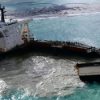
Mauritius Oil Spill Puts Spotlight on Ship Pollution
Small island nations face an existential and developmental threat from ship-source pollution endangering their vulnerable marine ecosystems and ocean economies. An effective international legal regime can help.
I Came to Work in Qatar to Pursue My Dreams, But My Life is a Nightmare
Like thousands of migrant workers from Africa and Asia, I am finally in the land of my dreams, Qatar. I knew working here would be tough, but I thought I would be able to regularly send money home to my family and live decently.
Future of Education Is Here
There are moments when the world has no choice but to come together. Those moments become historic turning points. This is one of them. We are now faced with the greatest education emergency of our time. Over one billion children are out of school. The COVID-19 pandemic has created an unprecedented crisis of such magnitude and depth that the next generation might neither have the capacity and tools, nor the will, to rebuild - let alone build back better.
Pacific Tuna Tagging Expedition Overcomes COVID Challenge
Despite the significant challenges presented by COVID-19, the Pacific Community (SPC) 7-week research expedition to monitor the health of world’s largest tuna fishery will depart from Honolulu on Saturday 15 August 2020.
Lack of Human Capital is Holding Back Latin America’s Growth
In 1990, Latin America’s average GDP per capita was a little over a quarter of the United States’ income level, while emerging and developing Asian countries’ GDP per capita was only 5 percent. In 2019, Asian countries had grown fourfold, but Latin America was still at the same level.
Call for Urgent Action by 275 World Leaders on Global Education Emergency In Face of Covid19
We write to call for urgent action to address the global education emergency triggered by COVID-19. With over 1 billion children still out of school because of the lockdown, there is now a real and present danger that the public health crisis will create a COVID generation who lose out on schooling and whose opportunities are permanently damaged. While the more fortunate have had access to alternatives, the world’s poorest children have been locked out of learning, denied internet access, and with the loss of free school meals - once a lifeline for 300 million boys and girls - hunger has grown.
ISDS Enables Making More Money from Losses
With the Covid-19 contagion from late 2019 spreading internationally this year, governments have responded, often in desperation. Meanwhile, predatory international law firms are encouraging multimillion-dollar investor-state dispute settlement (ISDS) lawsuits citing Covid-19 containment, relief and recovery measures.
Sri Lankan Parliamentary Polls: The Return of the Rajapaksa Raj
Sri Lanka is a country endowed with abundant natural beauty. The serenity of its geographical bounties matched the peaceful nature of its polity in the aftermath of the passage of power to local political leaders with the withdrawal of the British from the island in 1948. Its Constitution was crafted by some of the brightest legal minds of the British Commonwealth. The nation seemed well on the path to prosperity and progress. So much so, that once Lee Kuan Yew looked upon that country as a model for Singapore, with its commonly shared experience, to emulate.
Enough Is Not Enough – Call for Urgent Change in Mexican Economic Policy
A group composed by women and men, called Nuevo Curso de Desarrollo (New Course for Development) based at the National University of Mexico recently published a document to propose a set of measures to change the current economic policy in Mexico. This proposal responds to a diagnosis of the current situation: at this point of the year, the serious social damage inflicted by the health and economic crisis can already be observed. As we know, in Mexico as in many other countries, there was a great economic disruption caused by COVID. Millions of people ceased to receive income from their work. However, the Mexican government has not carried out sufficient support measures to compensate for these losses. The result is easy to guess: many households have been rapidly impoverished. It is estimated that between 10 and 16 million people in April earned much less to the point of not being able to acquire the basic food basket , a situation that has continued for many of them during May, June and July. And while it is true that more and more workers are returning to their jobs, the losses caused have not been repaired.
Getting India’s Construction Workers Their Entitlements
Basant Lal Chaudhary migrated from his village of 1,200 people in Madhya Pradesh, to a city of 90,000 people in Jammu and Kashmir in 2016. He last worked as a construction worker, before the COVID-19 lockdown forced him out of employment.“I used to earn a daily wage of INR 350. That was my only source of income,” he shares. During the lockdown, he along with others who worked with him, are finding it difficult to make the ends meet.”I don’t know whether I will be able to find work here anytime soon.”
Young South Africans are Shut Out From Work: They Need a Chance to Get Digital Skills
Most young people from disadvantaged backgrounds in South Africa continue to be denied access to information and communications technology because of poor infrastructure and the digital divide.
Debt Hawks Detract from Urgently Needed Fiscal Recovery Efforts
Developing country debt has continued to grow rapidly since the 2008-2009 global financial crisis (GFC). Warnings against debt have been reiterated by familiar prophets of debt doom such as new World Bank chief economist, Carmen Reinhart, once dubbed the ‘godmother of austerity’.« Previous Page — Next Page »


 UN Commission on International Trade Law Holds Colloquium on Harmonizing Law in Age of Digital Trade and Finance. Credit: UN Photo/Manuel Elías
Trade has historically been a geopolitical tool that can both be used to propel development as well as entrench inequalities. In various nations in East Asia and Latin America, increased trade, as often seen in export booms, has allowed them to achieve influential standings within the global economy. On the other hand, many low-income countries in Sub-Saharan Africa, Asia, and Latin America struggle to maintain a robust trade performance, and oftentimes are subjugated to exploitative trade dynamics through intense extraction of their natural resources. In recent decades, international trade has reached a new era as emerging economies across the world are rising in economic preeminence. Stable international trade is crucial to world peace as global interconnectedness facilitates reliable diplomacy. Nevertheless, significant challenges are on the rise. Notably, a major wave of United States tariff escalations in January 2025 lifted US import taxes to their highest level since the 1930s, changing market dynamics and forcing renegotiations with global trading partners.These articles are aimed at informing readers about the complexities of trade and its varying effects on development, with a special focus on the consequences of the global economic crisis, the potential of fair trade and the gender implications of trade policies.
Updated by Yilan Batista and Shuli Wong August 2026

The Week with IPS

NEXT STOP - SDGs
Tracking global progress towards a sustainable world
Tracking global progress towards a sustainable world
