Languages
Sunday, November 22, 2026



News and Views from the Global South
Economy & Trade

Myths of Soft Budget Constraints
In recent decades, many contemporary macroeconomic and financial problems have been blamed on ‘soft budget constraints’ (SBCs), with the term becoming quite popular in the economics lexicon, financial media and political discourse.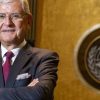
INTERVIEW: the top diplomat shepherding the General Assembly through its 75th year
The Turkish diplomat elected to be the president of the 75th session of the UN General Assembly, Volkan Bozkir, is taking on the role as the Organization grapples with an unprecedented pandemic, and questions surrounding the future direction it should take.
The Debt the Government Does Not Want to Recognize
The national occupation and employment survey prepared by INEGI, with figures updated to July 2020, shows an improvement that has occurred in the last two months. However, the employment situation, compared with the data existing before the pandemic still shows serious problems:
Q&A: Land Restoration can Help Restore Post-COVID-19 Economy
Investing in sustainable land management and land restoration will help build economies post-COVID-19 and help poor people increase their incomes as the destruction of global food chains by the pandemic provides a chance for ensuring diversity in production through ensuring the inclusion of local producers.
Failing Africa’s Farmers, Starving the Continent
African organizations are demanding answers after a recent report found that Alliance for a Green Revolution in Africa (AGRA) strategies have failed spectacularly to meet its goals of increasing productivity and incomes for millions of small-scale farming households by 2020 while reducing food insecurity on the continent.
Financing Economic Recovery
As the socio-economic impacts of the COVID-19 pandemic spread across the length and breadth of Asia and the Pacific, finance ministries are continuing their relentless efforts to inject trillions of dollars for emergency health responses and fiscal packages. With continued lockdown measures and restricted borders, economic rebound seems uncertain.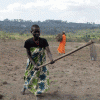
UN’s First-Ever Food Systems Summit to Fight Impending Emergency
Food systems involve all the stages that lead up to the point when we consume food, including the way it is produced, transported, and sold. Launching a policy brief on food security in June, UN chief António Guterres warned of an “impending food emergency”, unless immediate action is taken.
Regressive Taxation Must Be Reversed
With many in the world experiencing declining living standards, there has been growing frustration. Many hope that progressive taxation will improve things. While some economies once had progressive tax systems, recent decades have seen regression.
COVID-19: Lessons from the Losses
If countries considered Universal Health Coverage (UHC) a central policy in their health systems, the COVID-19 has surely demonstrated the need for its urgent and widespread roll out. The pandemic has upended world systems in a manner that no scientists or sophisticated global intelligence could have foreseen.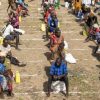
COVID-19: Without Help, Low-Income Developing Countries Risk a Lost Decade
While the COVID-19 crisis is sending shockwaves around the globe, low-income developing countries (LIDCs) are in a particularly difficult position to respond. LIDCs have both been hit hard by external shocks and are suffering severe domestic contractions from the spread of the virus and the lockdown measures to contain it. At the same time, limited resources and weak institutions constrain the capacity of many LIDC governments to support their economies.
“Hidden” Costs of Our Food Systems
Five years after the adoption of the 2030 Agenda we are far from achieving the Sustainable Development Goals (SDGs). According to the recently launched SOFI Report (The State of Food Security and Nutrition in the World 2020), we are not on track to eradicate poverty, hunger and malnutrition. On the contrary, with the current trends, the global number of undernourished people in 2030 would exceed 840 million. Moreover, WHO has reported alarming rates of overweight and obesity, globally affecting 39% and 13% of the adult population, respectively.
A Pandemic Cannot Justify Child Labour
For the past five months, our screens have been flooded with distressing imagery of one catastrophe after another: From the impact of the COVID-19 pandemic on vulnerable communities, to cyclones in West Bengal, Odisha, and Maharashtra.
It Is Time to End the Controversial World Bank’s Doing Business Report
On 27 August the World Bank announced that it will suspend the Doing Business Report over data irregularities, until it conducts a review and audit. The halting of the report was welcomed by trade unions, academics and human rights groups.
Technology Meets Creativity on Women’s Empowerment Platform
Eight years ago, at the age of eleven, Fuzia co-founder Riya Sinha decided to start a writing club for school girls. Stemming from this initiative a few years later Sinha, along with co-founder Shraddha Varma, decided to start the online platform for women. Their story and Fuzia's DNA are intrinsically wrapped around each other – and highlight how even in the age of feminism where women’s voices tend to be drowned out, a platform for them can become a global success.
Trump Undermines WHO, UN System
After accusing the World Health Organization (WHO) of pro-China bias, President Donald Trump announced US withdrawal from the UN agency. Although the US created the UN system for the post-Second World War new international order, Washington has often had to struggle in recent decades to ensure that it continues to serve changing US interests.
Energy Cooperatives Swim Against the Tide in Mexico
A Mexican solar energy cooperative, Onergia, seeks to promote decent employment, apply technological knowledge and promote alternatives that are less polluting than fossil fuels, in one of the alternative initiatives with which Mexico is seeking to move towards an energy transition.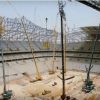
Nepal Welcomes Qatar Labour Reform
Even as Nepali workers stranded overseas face confusion and uncertainty during the Covid-19 crisis, labour reforms in Qatar – including an increase in the minimum wage announced in Doha on Sunday — may have lasting implications for migrants there.
Powerplay in Paradise: Sino-Indian Tussle in the Maldives
The Maldives is a picturesque country of merely 515,000 people located just beyond the southern tip of the South Asian land mass, in an idyllic Indian ocean setting. The nation is spread across 26 pretty atolls, comprising about 1192 islets, not all still inhabited. These are lapped by crystal blue waters containing flora and fauna of remarkable magnificence. Its scenic bounties attract droves of tourists who frolic in the sands, sun and the sea in salubrious languor. It has a thriving fishing, garment and tourism industry which have recently helped it graduate out of the United Nations list of Least Developed Countries (LDCs).It is so tiny that used to be said that the catch of a single large fish any day could cause a remarkable jump in its Gross National Product (GDP) numbers. It is not without reason that the archipelago has often been compared to a paradise.
Looking Back to Look Forward: What Does the Next Normal Look Like?
In the last 100 years there have been seven crises that have had a truly global impact. Two global wars (1914-18 & 1939-1945); two global health pandemics, the Spanish Flu (1918) and HIV/AIDS (1980s onwards); one major political crisis (1989 – the end of the cold war); and two financial crises (1929 and 2008).
Semiarid Regions of Latin America Cooperate to Adapt to Climate
After centuries of poverty, marginalisation from national development policies and a lack of support for positive local practices and projects, the semiarid regions of Latin America are preparing to forge their own agricultural paths by sharing knowledge, in a new and unprecedented initiative.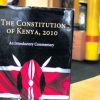
Katiba at 10: A Landmark Constitution and a Blueprint for Deepening Democracy
On 27 August 2020, we mark the tenth anniversary of the New Constitution of Kenya – a landmark social contract inspired by citizens’ desire for a country characterised by participatory governance, inclusive development, human rights and the rule of law.« Previous Page — Next Page »


 UN Commission on International Trade Law Holds Colloquium on Harmonizing Law in Age of Digital Trade and Finance. Credit: UN Photo/Manuel Elías
Trade has historically been a geopolitical tool that can both be used to propel development as well as entrench inequalities. In various nations in East Asia and Latin America, increased trade, as often seen in export booms, has allowed them to achieve influential standings within the global economy. On the other hand, many low-income countries in Sub-Saharan Africa, Asia, and Latin America struggle to maintain a robust trade performance, and oftentimes are subjugated to exploitative trade dynamics through intense extraction of their natural resources. In recent decades, international trade has reached a new era as emerging economies across the world are rising in economic preeminence. Stable international trade is crucial to world peace as global interconnectedness facilitates reliable diplomacy. Nevertheless, significant challenges are on the rise. Notably, a major wave of United States tariff escalations in January 2025 lifted US import taxes to their highest level since the 1930s, changing market dynamics and forcing renegotiations with global trading partners.These articles are aimed at informing readers about the complexities of trade and its varying effects on development, with a special focus on the consequences of the global economic crisis, the potential of fair trade and the gender implications of trade policies.
Updated by Yilan Batista and Shuli Wong August 2026

The Week with IPS

NEXT STOP - SDGs
Tracking global progress towards a sustainable world
Tracking global progress towards a sustainable world
