Languages
Tuesday, October 6, 2026



News and Views from the Global South
Education Cannot Wait. Future of Education is here
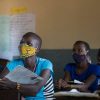
Education Cannot Wait Develops Groundbreaking Curriculum for Crisis-Affected Adolescents – Derived from Viktor Frankl’s Seminal Work ‘Man’s Search for Meaning’
Education Cannot Wait (ECW) – the United Nations global fund for education in emergencies – is developing a curriculum derived from the seminal work of world-renowned psychiatrist and Holocaust survivor Viktor Frankl’s “Man’s Search for Meaning”, and its related branch of psychotherapy, Logotherapy. The curriculum, which has been preliminary field-tested in Uganda, aims to fully tap into the resilience of girls and boys living in crisis settings.
Education Cannot Wait for Refugee Children in Crisis, says Yasmine Sherif
With financing, the number of out-of-school refugees could be reduced to zero, Yasmine Sherif, Director of Education Cannot Wait (ECW) says, as the world commemorates World Refugee Day.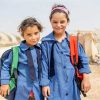
World Refugee Day
"Education will prepare refugee children and youth for the world of today and of tomorrow. In turn, it will make the world more resilient, sustainable and peaceful." ~ Filippo Grandi, UN High Commissioner for Refugees
Central Sahel: Ground Zero in Tackling Climate Change Through Education
The climate crisis is amplifying the effects of instability and violence in the world’s poorest countries. Nowhere is this more visible than in Africa’s Central Sahel region, where increasing temperature, floods, droughts and other climate change-induced disasters are triggering conflicts, displacement, and pushing girls and boys into the shadows.
Justice Delayed Is Justice Denied: Their Education Cannot Wait
The right to an inclusive quality education is not a privilege. It is a human right. Delaying or ignoring the right to an education equals failing to protect human rights. The longer we wait, the less we contribute to justice.
Education Cannot Wait Investments Transform Children’s Lives in Somalia
Ten-year-old Sabah Abdi from Ali Isse, a small rural village on the Somaliland-Ethiopian border, scored well in her recent exams, placing third overall in her local village school of 400 students. Yet is was just three years ago Sabah spent her days helping with household chores and herding goats, rather than studying because her pastoralist family could not afford her school fees.
ECW Interviews Save the Children Uk’s Chief Executive Kevin Watkins
Kevin Watkins is the Chief Executive of Save the Children UK. Kevin joined Save the Children in September 2016, after spending three years as Executive Director of the Overseas Development Institute.
Africa’s Forgotten Crisis
A few weeks ago, I traveled with the UN High Commissioner for Refugees Filippo Grandi to the Modale refugee site in the Nord-Ubangi province of the Democratic Republic of the Congo (DRC). What we witnessed there was a profound humanitarian crisis that has left 4.7 million children and youth in need of urgent, life-saving, life-changing educational support.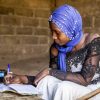
Radio-Based Learning Gets Its Day in the Sun in Mali
Persistent insecurity in central and northern Mali has helped fuel a protracted humanitarian crisis, disrupting access to education, health and other services, and displacing more than 300,000 people – more than half of them children.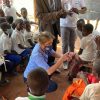
Q&A: Reflecting on Five Years of Educating Children in the Throes of Crises, Emergencies and Displacement
Education Cannot Wait (ECW), the global fund that brings teaching and learning to children in emergencies and protracted crises, is observing five years of reaching boys and girls in some of the world’s hardest-hit conflict and disaster zones.
Reimagining Education with Imagination
The month of May marks mental health awareness month or mental health awareness week in several countries around the world. Many people will be reading posts and blogs about the importance of getting more sunshine and exercise to avoid the blues, about ways to deal with the stress of the pandemic, about dealing with everyday challenges that disrupt our striving for happiness.
ECW Interviews Melissa Fleming, United Nations Under-secretary-general for Global Communications
Melissa Fleming is the United Nations Under-Secretary-General for the Department of Global Communications – taking up her functions as of 1 September 2019 – and oversees operations in 60 countries and platforms that reach millions of people in multiple languages.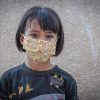
Education Cannot Wait Enhances Mental Health and Psychosocial Support for Crisis-affected Children and Youth in the Middle East and North Africa
Approximately 100 million children are out of school in the Middle East and North Africa as a result of the COVID-19 pandemic, armed conflicts and protracted crises. To provide these girls and boys with the mental health and psychosocial support they need to deal with the trauma and stress of these multiplying crises, Education Cannot Wait (ECW) announced today US$250,000 in new funding to support the Norwegian Refugee Council’s Better Learning Programme in the Middle East.
Refugee Children Explain How Education Helped Put Their Trauma Behind Them
Eighteen-year-old Chuol Nyakoach lives in the Nguenyyiel Refugee Camp in Gambella, Ethiopia. Chuol is grateful that despite the trauma she has already experienced in her young life, she is able to continue her education in the refugee camp. Learning has given her a reason to wake up every day.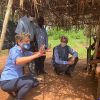
Education Cannot Wait Calls on World Leaders to Urgently Fund Education in the Democratic Republic of the Congo with US$45.3 Million
Education Cannot Wait (ECW) Director Yasmine Sherif today called on world leaders to urgently support the children and youth in desperate need of education support in the Democratic Republic of the Congo (DRC), affected by new emergencies and multiple protracted crisis.
Invest in the Humanity of Those Left Furthest Behind
“To deny people their human rights is to challenge their very humanity,” Nelson Mandela once said. Today, the humanity of 128 million children and adolescents living in countries is impacted by armed conflicts, forced displacement and climate-induced disasters, where virtually every single one of their human rights are being challenged. The most central one, and in all too many cases, their only hope - their inherent right to an inclusive quality education, as enshrined in international human rights conventions - is brutally challenged, if not also willfully ignored or denied.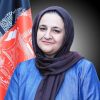
Education Cannot Wait Interviews Afghanistan’s Minister of Education Rangina Hamidi
H.E. Rangina Hamidi is the first female Minister of Education of Afghanistan in the last 30 years. Minister Hamidi was born in Kandahar, Afghanistan, fled with her family to Pakistan in 1981 during the Soviet Occupation and eventually immigrated to the United States. She attended high school in the United States and received her B.A. degree with a double major in Religion and Gender Studies at the University of Virginia.
Rohingya Children Find Refuge in Education
Although learning centres in Cox’s Bazar Kutupalong Refugee Camp are closed because of the COVID-19 pandemic, Mariom Akhter, a Rohingya mother of four, is grateful not only for the schooling her children have had but the training sessions she as a parent was able to attend. The skills she learnt has helped her assist her children with their education at home in a crisis. It’s something she’s likely needed to help her children with over the last few weeks after a Mar. 22 fire spread through the camp, destroying the shelters of at least 45,000 people as well as important infrastructure, including hospitals, learning centres, aid distribution points and a registration centre. At least 15 people were reported dead and 400 missing.
Fulfilling the Right to Education for Children Left Furthest Behind in Burundi’s Crisis
On 5 December 2019, heavy rainfall triggered landslides in Cibitoke province in northwestern Burundi. Twenty-seven people were killed and almost 2,000 were forced to relocate. Along with the lives and homes lost, the school in the Nyamakarabo village was also destroyed. Today, some children in the village walk over two hours a day to attend an over-crowded school in a neighboring village. Others have yet to step back in a classroom.COVID-19 Education Response: Education Cannot Wait and Partners Reach over 9 Million Vulnerable Children and Youth
As the world marks the one-year anniversary of the COVID-19 pandemic on 11 March 2021, initial progress reports on Education Cannot Wait’s (ECW) COVID-19 emergency responses to date show that the Fund and its partners have already reached over 9 million vulnerable girls and boys in the midst of the worst education crisis of our lifetime.
ECW Interviews Youth Refugee Advocate Nujeen Mustafa
Nujeen Mustafa is a Syrian refugee, youth advocate and champion for children with disabilities for the UN Refugee Agency. At just sixteen years old, Nujeen Mustafa made the 3,500-mile journey from Syria to Germany in a steel wheelchair. Nujeen was born with cerebral palsy and spent the majority of her life confined to her apartment in Aleppo, Syria, where she taught herself English watching shows on TV.« Previous Page — Next Page »





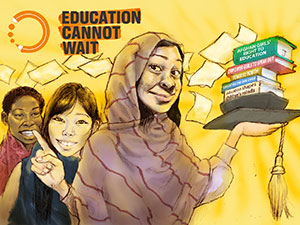
Education Cannot Wait has reached 5 million children and youth since its inception. Yet, the scale and the depth of the education emergency in crisis-affected countries needs to be matched by adeguate and scaled up financial investments to end the learning crisis for those left furthest behind, and to swiftly shift the course towards the SDGs. With 20 times more funding, the estimated 75 million children and youth can be reached. Indeed, financing stands between what is possible and what is not for these vulnerable girls and boys.
- Videos -
- Quote cards -


The Week with IPS

NEXT STOP - SDGs
Tracking global progress towards a sustainable world
Tracking global progress towards a sustainable world
