Languages
Tuesday, October 13, 2026



News and Views from the Global South
Financial Crisis
DEVELOPMENT: Financial Crisis Threatens Women’s Meagre Gains
The spreading global financial crisis - which has taken a heavy toll of international bankers, investors and speculators - is also having a devastating impact on some of the most vulnerable and marginalised groups in society, including women and children.ECONOMY-JAPAN: Small, Medium Firms Hit by Credit Crunch
He was left devastated and robbed of his dream to open a restaurant in Tokyo after two Japanese banks refused to give him a small loan.
ENVIRONMENT: ‘‘Climate Change Does Not Wait For Recessions’’
Lack of money and technical know-how makes it difficult for poor farmers to participate in the Kyoto Protocol’s carbon trading mechanism aimed at reversing global warming. Meanwhile, the global economic crisis may further undermine investment in carbon trade in African countries.WORLD-ECONOMY: Not The End of Neoliberalism Yet
The economist and author Prof Patrick Bond warns that the optimism about the dawn of a post-neoliberal era is premature and that ‘‘a more dangerous and painful’’ period may be ahead before any real change to the current global economic regime will be possible.RIGHTS-US: Few Safety Nets for Women of Colour
As hundreds of activists from around the world descend on the United Nations Monday for a major two-week meeting on women's rights and equality, the economic crisis here in the host country is continuing to have an especially heavy toll on women of colour.ENERGY-CHINA: On Oil Shopping Spree
The major coup scored by Chinese diplomats in sealing a string of bulk volume energy deals in the past few weeks signals a new phase in Beijing’s energy diplomacy, deployed to secure long-term resources for the country’s power-hungry economy, according to analysts here.U.S.: Diplomatic, Aid Spending Set to Rise Under Obama Budget
While most mainstream press reaction to President Barack Obama's whopping 3.5-trillion-dollar 2010 budget has naturally focused on its far-reaching - even historic - implications for the U.S. domestic economy, experts here say it also marks at least the beginning of potentially important shifts in U.S. foreign policy.ECONOMY: Africa Is of ‘‘Strategic Importance’’ to Gulf States
According to a recent article in the Harvard Business Review, the average annual return on investment in Africa is between 65 and 70 percent higher than in any other country, including China.ECONOMY: As the EU Regulates, or Does Not
Faced with a crisis that sent shockwaves through the markets and continues to cause immense pain in the real economy, the European Commission charged eight bankers and economists with drafting a blueprint for how financial regulation should be approached in the future. It might seem odd, then, that all members of this panel, which presented the results of its discussions this week, have displayed an aversion to regulation in the past.
CUBA: Raul Castro’s First Year – Whispers of Change
As Cuban President Raúl Castro completes his first year in office, although a few of the "structural and conceptual" changes he promised have materialised, the pace of reform remains slow, deflating expectations and contributing to pessimism among the people of this Caribbean island nation.TRADE: 'Gulf States’ Technology Can Be Swapped for Africa’s Food'
Countries in the Gulf and in Africa can form mutually beneficial partnerships, with Africa supplying fertile arable land and the Gulf investing in technology, fertiliser and other agricultural inputs.POLITICS: Shadow Meet to Challenge Elites at Americas Summit
The organisers do not expect newly elected U.S. President Barack Obama to attend their parallel three-day meeting, even though he is likely to be in Trinidad and Tobago at the official Fifth Summit of the Americas in April.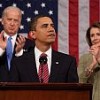
ECONOMY-US: Job Creation Key to Recovery, Obama Stresses
In his first speech before a joint session of Congress, U.S. President Barack Obama gave a hopeful assessment of the country’s future and defended his economic recovery plan to get there.UKRAINE: Between the Kremlin and a Hard Place
Ukraine's internal political problems and tensions with Russia threaten its path to stability and its candidacy for NATO and the EU, warns a new Council on Foreign Relations (CFR) report.RUSSIA: Problems Rise With Falling Oil Prices
The Russian economy is plunging into a crisis as oil prices fall and the government digs deep into its reserve fund.ECONOMY-BOTSWANA: Job Losses Show ‘‘Diamonds Are Not Forever’’
‘‘The situation is now very bad, very bad for workers. It is no longer about the workers alone, it is about the government, the companies, everyone. We need to talk. Dialogue is the only solution.’’
LATIN AMERICA: Recession Challenges Fair Trade
The world economic recession is threatening the progress Latin America has made in fair trade. The leaders of this alternative form of exchange are making emergency contacts in order to assess the situation and come up with strategies to confront it.ECONOMY-US: Squatters See Silver Lining in Foreclosed Homes
With foreclosures skyrocketing and U.S. families sinking deeper into poverty, a number of organisations are turning to a new strategy to end homelessness: moving families into vacant, foreclosed houses that are currently owned by banks or the government.
VENEZUELA: Ten More Years, If He Can Woo a Divided Country
Venezuelan President Hugo Chávez won Sunday's referendum with 54 percent of the vote, which will allow him to stand for reelection indefinitely. But he will have to exercise leadership over a country that is stubbornly split in two.ECONOMY-CHINA: Consumption Coupons Sans Protectionism?
Under pressure to address trade imbalances by boosting domestic demand, China has approved the handing out of consumption coupons. The measure, touted as China’s antidote to economic recession, is free of protectionist overtones like the contentious "buy American" in the U.S. economic stimulus bill.CHINA-US: Clinton Urged to Press Beijing on Human Rights
Seven major U.S. and international rights groups are calling on U.S. Secretary of State Hillary Clinton to make human rights issues a top priority in her meetings in Beijing next week with Chinese officials.« Previous Page — Next Page »





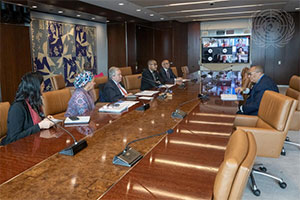 Secretary-General Meets with Members of Debt Expert Group. Credit: UN Photo/Eskinder Debeb
Financial crises are often defined by banking panics, recession, loss of market value, and deflation. Various financial crises at the turn of the 20th century, such as the Asian Crisis of 1997-1998 and the 2007-2008 Global Financial Crisis, have had immense impacts on the world economy. The COVID-19 pandemic also caused a financial crisis when mass lockdowns triggered staggering unemployment rates, a stagnation of economic growth, and led to the 2020 stock market crash. With the Russian invasion of Ukraine, the world has also witnessed a global energy crisis with shortages and increased prices in oil, gas, and electricity markets. According to UNCTAD’s World of Debt 2025, global public debt surpassed $100 trillion in 2024, with developing country debt growing twice as fast as developed economies since 2010. Burdens of debt servicing come with economic slowdowns and demands of austerity from lenders, with some economists arguing that this will lead to a new “lost decade” for the Global South. IPS brings you worldwide coverage of these financial developments and how we should manage these crises.

The Week with IPS

NEXT STOP - SDGs
Tracking global progress towards a sustainable world
Tracking global progress towards a sustainable world
