Languages
Tuesday, November 17, 2026



News and Views from the Global South
Financial Crisis
TRADE: 'Gulf States’ Technology Can Be Swapped for Africa’s Food'
Countries in the Gulf and in Africa can form mutually beneficial partnerships, with Africa supplying fertile arable land and the Gulf investing in technology, fertiliser and other agricultural inputs.POLITICS: Shadow Meet to Challenge Elites at Americas Summit
The organisers do not expect newly elected U.S. President Barack Obama to attend their parallel three-day meeting, even though he is likely to be in Trinidad and Tobago at the official Fifth Summit of the Americas in April.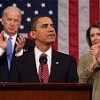
ECONOMY-US: Job Creation Key to Recovery, Obama Stresses
In his first speech before a joint session of Congress, U.S. President Barack Obama gave a hopeful assessment of the country’s future and defended his economic recovery plan to get there.UKRAINE: Between the Kremlin and a Hard Place
Ukraine's internal political problems and tensions with Russia threaten its path to stability and its candidacy for NATO and the EU, warns a new Council on Foreign Relations (CFR) report.RUSSIA: Problems Rise With Falling Oil Prices
The Russian economy is plunging into a crisis as oil prices fall and the government digs deep into its reserve fund.ECONOMY-BOTSWANA: Job Losses Show ‘‘Diamonds Are Not Forever’’
‘‘The situation is now very bad, very bad for workers. It is no longer about the workers alone, it is about the government, the companies, everyone. We need to talk. Dialogue is the only solution.’’
LATIN AMERICA: Recession Challenges Fair Trade
The world economic recession is threatening the progress Latin America has made in fair trade. The leaders of this alternative form of exchange are making emergency contacts in order to assess the situation and come up with strategies to confront it.ECONOMY-US: Squatters See Silver Lining in Foreclosed Homes
With foreclosures skyrocketing and U.S. families sinking deeper into poverty, a number of organisations are turning to a new strategy to end homelessness: moving families into vacant, foreclosed houses that are currently owned by banks or the government.
VENEZUELA: Ten More Years, If He Can Woo a Divided Country
Venezuelan President Hugo Chávez won Sunday's referendum with 54 percent of the vote, which will allow him to stand for reelection indefinitely. But he will have to exercise leadership over a country that is stubbornly split in two.ECONOMY-CHINA: Consumption Coupons Sans Protectionism?
Under pressure to address trade imbalances by boosting domestic demand, China has approved the handing out of consumption coupons. The measure, touted as China’s antidote to economic recession, is free of protectionist overtones like the contentious "buy American" in the U.S. economic stimulus bill.CHINA-US: Clinton Urged to Press Beijing on Human Rights
Seven major U.S. and international rights groups are calling on U.S. Secretary of State Hillary Clinton to make human rights issues a top priority in her meetings in Beijing next week with Chinese officials.ECONOMY: EU Divided Over Regulation
The global recession has exposed the ideological fissures at the highest level of officialdom in the European Union.
Q&A: Development Cooperation Needs Greater Equity
As the economic meltdown spreads to the far corners of the world, developing nations are increasingly strengthening their social and economic ties, bolstering the growing new concept of South-South cooperation - in trade, investment, transport, health care, education, climate change, communications and disaster reduction.DEVELOPMENT: Swiss Aid Growing Despite Depression
The global economic and financial crisis has raised questions about whether the level of official development aid from the rich world will be maintained in future, at a time when the needs of the developing and emerging countries are growing as a result of the crisis.
ECONOMY-DR CONGO: Joblessness Rises As Global Crisis Hits Mining
It is busy at the gates of Bralima brewery in Lubumbashi, the capital of Katanga province in the Democratic Republic of Congo (DRC). About 60 men are waiting at the doors, hoping for them to open and someone to offer them work. Their numbers have grown since the global economic crisis which has caused the collapse of the local mining industry.LABOUR-JAPAN: Brazilian Japanese Organise Against Joblessness
Rodney Freitas, 24, is happy to see Brazilians of Japanese descent organising themselves at time when Japan’s economy is cooling down and many are in danger of losing jobs or are already unemployed.TRADE: Financial Crisis Makes Liberalisation Less Rosy
With the current economic crisis, questions are being asked about the viability of further liberalisation as envisaged in the Doha Round at the World Trade Organisation (WTO). In particular, the North’s pressure on poor countries to open financial markets may be ‘‘obsolete’’ because of the role of the financial sector in the crisis.ECONOMY-US: Advocacy Groups Fear New Wave of Homeless
Homeless advocates in the United States say if the new Congress and the Barack Obama administration do nothing, many more low-income people already teetering on the brink could end up living on the streets over the next two years.U.S.: Hawks Urge Boosting Military Spending
Despite a shrinking national economy and a record defence budget, U.S. neo-conservatives and other right-wing hawks are mounting a spirited - if misleading - campaign to persuade Congress that the military should get a bigger slice.ECONOMY-CANADA: Conservatives’ Budget Skimps on Stimulus
Canada's reluctance to institute a full stimulus package in the recent federal government budget has international parallels, says Armine Yalnizyan, a senior economist at the Canadian Centre for Policy Alternatives.ECONOMY: Greece Melts More than Most
The financial meltdown has finally visited Greece. European Commission figures leave no space for political manoeuvring by the Greek government, the usual way to deal with EC control and counsel.« Previous Page — Next Page »


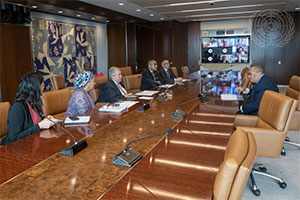 Secretary-General Meets with Members of Debt Expert Group. Credit: UN Photo/Eskinder Debeb
Financial crises are often defined by banking panics, recession, loss of market value, and deflation. Various financial crises at the turn of the 20th century, such as the Asian Crisis of 1997-1998 and the 2007-2008 Global Financial Crisis, have had immense impacts on the world economy. The COVID-19 pandemic also caused a financial crisis when mass lockdowns triggered staggering unemployment rates, a stagnation of economic growth, and led to the 2020 stock market crash. With the Russian invasion of Ukraine, the world has also witnessed a global energy crisis with shortages and increased prices in oil, gas, and electricity markets. According to UNCTAD’s World of Debt 2025, global public debt surpassed $100 trillion in 2024, with developing country debt growing twice as fast as developed economies since 2010. Burdens of debt servicing come with economic slowdowns and demands of austerity from lenders, with some economists arguing that this will lead to a new “lost decade” for the Global South. IPS brings you worldwide coverage of these financial developments and how we should manage these crises.

The Week with IPS

NEXT STOP - SDGs
Tracking global progress towards a sustainable world
Tracking global progress towards a sustainable world
