Languages
Friday, November 20, 2026



News and Views from the Global South
Global Geopolitics
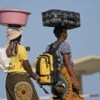
RIGHTS: Africa’s Success Stories in Gender Empowerment
Whenever gender empowerment is a vibrant topic of discussion internationally, some of the countries in Europe, Asia and Latin America are invariably singled out for their success stories in politics, education, health care or civil liberties even as Africa is mostly left out of political reckoning - and wrongly so.ASIA: Religious Advocates Heed the Call of New Media
Not even religious advocates and leaders and can say no to the power of online media, whose call they are heeding in order to spread various messages of spirituality.FINANCE: Self-Policing of Extractive Industries a “Dismal” Failure
An international initiative that seeks to reform how governments profit from their natural resources should not reduce its existing standards of membership solely because candidate countries have been reluctant or incapable of meeting them, Human Rights Watch (HRW) said on Tuesday.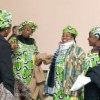
RIGHTS: “Famine Marriages” Just One Byproduct of Climate Change
The negative fallout from climate change is having a devastatingly lopsided impact on women compared to men, from higher death rates during natural disasters to heavier household and care burdens.
ENVIRONMENT: Violent Backlash Against Climate Scientists
Climate change science has come under full-scale attack in a last-ditch effort to delay or prevent action by the U.S. government against global warming, experts warn.
RIGHTS: Middle East Women Ahead But Not Home
Male leaders fail to break the Mideast impasse. Enter women from Israel and the Palestinian territories working together. And... it would have been nice to say they succeeded where the men failed.RIGHTS: Fewer Jobs, Less Money, Same Old Story
"What do I get from them? Nothing but bullsh*t," says Nupur Acharya, reflecting about how she is treated by her husband and two grown sons on daily basis.RIGHTS: This Eerie Economic Calm
The problem now, almost, is to find a way to relive the peak of that economic crisis of September 2008. The current move back to business of old – on the face of it anyhow – could well turn out to be a longer-running difficulty than the crisis it supposedly left behind. A difficulty far greater for women than for men.
RIGHTS: Burmese Rape Survivors Speak Out
"Seven Burmese military soldiers attacked me and three of my friends," said Chang Chang, from the northern Kachin State of Burma.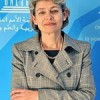
Q&A: Qualified Women Have Better Chance in Top Jobs
Irina Bokova, who was elected director-general of the U.N. Educational, Scientific and Cultural Organisation (UNESCO) last September, heads the Paris-based agency at a time when the world body has placed a high priority on gender empowerment.
BIODIVERSITY: CITES Faces Political Storm over Tuna Ban
The vast majority of the species protected by the Convention on International Trade in Endangered Species of Wild Fauna and Flora, or CITES, live on land, but as marine species come under increasing pressure from unsustainable fishing and a range of climate change-related threats that focus is beginning to shift.US-TURKEY: Armenian Genocide Vote Threatens Ties at Key Moment
Thursday's vote by a Congressional committee condemning the deaths of up to 1.5 million Armenians during World War I as "genocide" is almost certain to complicate U.S. ties with Turkey, a long-time strategic ally and increasingly influential player in the Middle East and central and southwest Asia.RIGHTS: U.S. Criticised over Soaring Housing Costs
On Friday, the richest and most powerful country on earth was the subject of a damning report submitted to the U.N. Human Rights Council in Geneva.
CLIMATE CHANGE: Arctic Shelf Leaking Potent Greenhouse Gas
The frozen cap trapping billions of tonnes of methane under the cold waters of the Arctic Ocean is leaking and venting the powerful greenhouse gas into the atmosphere, new research shows.EUROPE: Economists Blame Germany for Mediterranean Crisis
Germany’s obsession with maintaining a trade surplus, in line with its mercantilist traditions, is one cause for the severe economic crisis that has gripped several Euro-Mediterranean countries, say economists.
RIGHTS-CHINA: For Dissident’s Wife, A Time of Waiting
Long before Liu Xiaobo, China’s most prominent political dissident and co- author of the Charter 08 call for political reform, was sentenced to 11 years in prison for "incitement to subvert state power," his wife, Liu Xia, had accepted his fate.
RIGHTS: Arab Women Caught Between Extremes
The status of women in a predominantly male-chauvinistic Arab world continues to fluctuate from one extreme to another.US-IRAN: Debate Over Military Action Against Iran Gains Steam
While the ongoing U.S. military "surge" in Afghanistan continues to capture the headlines, Iran's nuclear programme – and how best to deal with it – is rapidly emerging here as this year's biggest foreign policy challenge.RIGHTS: U.N. Women’s Agency Remains Politically Paralysed
A longstanding proposal for the creation of a special U.N. agency for women - officially called a "gender entity" - is apparently moving at the sluggish pace of a paralytic snail.
ENVIRONMENT: Wanted – An Effective Multilateral System
The echoes of failure still sounding from the Copenhagen summit on climate change in December are spurring efforts to reform the international legal framework. Civil society groups are demanding a new, more agile system that is both influential and effective.POLITICS: U.S. Still Noncommittal on Landmine Treaty
As the 11th anniversary of the Mine Ban Treaty entering into effect came and went Monday, the United States remained one of only 37 countries to have yet to sign on to the agreement.« Previous Page — Next Page »


Is the world dominated by three great empires -- the U.S.A, China and the European Union? How much power do the great behemoths of the south -- India, Brazil, and South Africa -- wield? And where does Russia fit in that equation? Are we in the middle of a new Cold War? What are the implications of the armed conflict with Georgia? What about the new axis: Venezuela-Russia? And what role does Turkey play? What about issues like Climate Change and other global forces like the food crisis and the high energy prices? How is all this reshaping the world's forces? IPS looks for some answers.

The Week with IPS

NEXT STOP - SDGs
Tracking global progress towards a sustainable world
Tracking global progress towards a sustainable world
