Languages
Tuesday, September 29, 2026



News and Views from the Global South
Global Governance

Nuclear Disarmament Conversations Cannot Lose Traction
In recent days, nuclear state leaders have flouted the regulations and norms around nuclear non-proliferation and are flirting more openly with nuclear might in the name of projecting strength.
Western Sahara: Half a Century of Occupation and One Last Betrayal
Ehmudi Lebsir was 17 when he trudged more than 50 kilometres across the desert to stay alive. Half a century on, the Sahrawi refugee still has not gone home to what was then Spanish province of Western Sahara.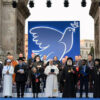
At Rome’s Colosseum, Faith Leaders Confront a World at War — and Dare to Speak of Peace
In the shadow of Rome’s Colosseum — once a monument to imperial violence — religious leaders from across the world gathered this week to deliver a message that felt both ancient and urgent: peace must once again become humanity’s sacred duty.
Rajagopal PV’s Blueprint for Another World: Peace
"If nations can have defense ministries, why not peace ministries?" asks Rajagopal PV, the soft-spoken yet formidable founder of Ekta Parishad. "We are told to see issues through a gender lens—why not a peace lens? Why can’t we imagine a business model rooted in non-violence or an education system that teaches peace?”
The Biggest Single Contributor to the UN Budget is also the Biggest Single Defaulter
The United States, the largest single contributor to the UN budget, is using its financial clout to threaten the United Nations by cutting off funds and withdrawing from several UN agencies. In an interview with Breitbart News U.S. Representative to the United Nations, Ambassador Mike Waltz said last week “a quarter of everything the UN does, the United States pays for”.
US Threatens to Resume Nuclear Testing while Past Tests Have Devastated Victims Worldwide
The lingering after-effects of nuclear tests by the world’s nuclear powers have left a devastating impact on hundreds and thousands of victims world-wide.
A Power Imbalance Frozen in Time: The Case for Security Council Reform
In June 2025, the international community celebrated the 80th anniversary of the signing of the United Nations Charter. On October 24, we celebrated UN Day, commemorating its ratification. This is an opportune moment to reflect on how far we have come, and the ground we have yet to traverse.
The Only Remaining Colony in Africa Continues its Struggle for Independence
The African continent has long been monopolized by European colonial rulers, with France having the largest number of colonies, ruling over 35 territories, followed by Britain with 32. A bygone era of colonial rule on the continent, “once carved up and ruled by European powers hungry for imperial glory,” has virtually ended—almost.
When Taliban Shut Down the Internet, Women Lost their Lifeline to Aid, Education & Each Other
When the Taliban recently cut off the Internet and phone networks across Afghanistan, millions of women and girls were silenced. For those with connectivity, the blackout severed their last link to the outside world – a fragile connection that had kept education, work, and hope alive.
Explaining Strong Credit Growth in Brazil Despite High Policy Rates
At 15 percent, Brazil’s monetary policy interest rate (called Selic) is one of the highest among major economies. Yet in 2024, bank credit grew by 11.5 percent and corporate bond issuance rose by 30 percent.
Is the UN “Bloated, Unfocused, Outdated and Ineffective”?
The US hostility towards the UN is threatening to escalate, as a cash-starved world body is struggling for economic survival. Addressing the UN’s Administrative and Budgetary Committee last week. Ambassador Jeff Bartos, U.S. Representative for U.N. Management and Reform said: “President Trump is absolutely right – the United Nations can be an important institution for solving international challenges, but it has strayed far from its original purpose”.
The Inescapable Reality the Israelis Must Face
The ceasefire agreement and the release of Israeli hostages and Palestinian prisoners are only the first steps on the long and treacherous road that could end the calamitous, decades-long Israeli-Palestinian conflict. In my recent article, “A Rare Alignment:The World Stands Ready, Are the Palestinians?”
With Ceasefire in Effect, Tonnes of Aid Expected to be Delivered into Gaza
After two years of conflict with Israel, Hamas has released the remaining 20 living hostages, while Israel has freed 250 Palestinian prisoners and over 1,700 detainees who have since returned to Gaza. Following a ceasefire agreement that took effect on October 10, Israeli forces are set to withdraw from designated areas within the Gaza Strip as humanitarian organizations mobilize to assist Palestinians in urgent need.
From Burundi to Washington: Recognizing the Warning Signs
I moved to the United States in 2012 with great reluctance. I wasn’t sure why I should uproot myself to a country thousands of miles away from my hometown. The move reminded me of a childhood I hadn’t fully embraced—growing up in faraway countries like Russia and China, making constant adjustments, encountering racism, forging and losing friendships along the way. I had promised myself I would not impose the same cycle on my children.
It’s Time to Unbury the IMF’s Hidden Gold
Countries across the Global South face an accelerating climate crisis, tepid growth, and unsustainable levels of debt. Yet hopes of finding support at the International Monetary Fund’s (IMF) Annual Meetings in Washington are dim. The IMF is tightening its purse strings — even as it leaves untouched a vast treasure of more than 3,000 tons of gold that offers a prime opportunity to stabilize the global economy.
From Algorithms to Accountability: What Global AI Governance Should Look Like
Recent research from Stanford’s Institute for Human-Centered AI warns that bias in artificial intelligence remains deeply rooted even in models designed to avoid it and can worsen as models grow. From bias in hiring of men over women for leadership roles, to misclassification of darker-skinned individuals as criminals, the stakes are high.
Strengthening East Asian Cooperation via ASEAN?
Global South cooperation arrangements must evolve to better respond to pressing contemporary and imminent challenges, rather than risk being irrelevant straitjackets stuck in the past.
Quo Vadis UN @80?
The United Nations turned 80 this year. What should have been a moment of pride and celebration at the high-level session of the UN General Assembly in September 2025 turned instead into an occasion of bitter irony.
Breaking the Silence in Tokyo: A Kazakh Filmmaker Confronts the Nuclear Scars Through Her Documentary “Jara”
[caption id="attachment_192574" align="alignleft" width="300"]Aigerim Seitenova stepped forward in a black T-shirt and green skirt to introduce her 31-minute documentary, “Jara – Radioactive Patriarchy: Women of Qazaqstan.” The screening event was co-organized by the Kazakh Nuclear Frontline Coalition (ASQAQQNFC), the Soka Gakkai Peace Committee, and Peace Boat, with support from Japan NGO Network for Nuclear Weapons Abolition (JANA).

Abusive Governments Set to Win Seats in Human Rights Council
Egypt and Vietnam are on track to secure seats on the United Nations Human Rights Council despite being woefully unfit for membership. The UN General Assembly will elect members to the UN’s premier rights body in a noncompetitive vote on October 14, 2025.
UN’s Cost-Cutting Mergers Come Under Scrutiny While Search for Locations Worldwide Continues
Faced with a severe liquidity crisis and a hostile Trump administration, the UN continues to merge some of its multiple agencies, and move them out of New York, relocating to Europe, Africa, Asia and the Middle East. Perhaps the first two agencies to be merged will be UN Women (created in 2010) and the UN Population Fund (created in 1967), with some staffers moved to Bonn and others to Nairobi.« Previous Page — Next Page »


The Week with IPS

NEXT STOP - SDGs
Tracking global progress towards a sustainable world
Tracking global progress towards a sustainable world
