Languages
Monday, August 17, 2026



News and Views from the Global South
Global Governance
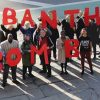
Enough is Enough: End Nuclear Testing Once and For All
In 2009 the United Nations General Assembly proclaimed 29 August the International Day Against Nuclear Tests. This date recalled the official closing of the Semipalatinsk nuclear weapons testing site in today’s Kazakhstan on 29 August 1991; that one site alone having seen 456 nuclear test explosions between 1949 and 1989.
VIETNAM: ‘Human Rights Conditions Will Likely Worsen as the Country Descends into a Police State’
CIVICUS discusses recent leadership changes in Vietnam with David Tran, coordinator of the Alliance for Vietnam’s Democracy, a civil society platform that promotes democracy in Vietnam and the region through international cooperation and the strengthening of local civil society.
Signs of Progress on Peace-Positive Climate Adaptation
The consequences of climate change are disproportionately impacting fragile and conflict-affected settings (FCS). Climate shocks can exacerbate security risks in FCS, conflict and instability compromise a region’s ability to adapt to climate change, leaving its population ever more vulnerable to future climate shocks.
Is the UN Ready for a Second Trump Presidency?
The Communist Manifesto of a bygone era, authored by Karl Marx and Friedrich Engels, begins with an implicit warning: "A specter is haunting Europe—the specter of Communism." And today another specter is haunting-- this time at the United Nations — the specter of a second Trump presidency.
Nicaragua, China, India among 55 Nations Restricting Freedom of Movement
At least 55 governments in the past decade have restricted the freedom of movement for people they deem as threats, including journalists, according to a Freedom House report published last Thursday.
Conditions Grow Dire in Myanmar
On August 21st, Spokesperson for the Secretary-General Stéphane Dujarric spoke at a press briefing at the United Nations Headquarters about the ongoing Rohingya genocide taking place in Myanmar. Dujarric detailed high levels of hostility and displacement in the Shan, Mandalay, and Rakhine regions, which have significantly intensified since late June of this year.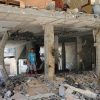
Gaza War: Displaced Palestinian Families Struggle to Access Basic Services
The latest Israeli evacuation order on August 17 led to the displacement of over 13,000 individuals, Secretary General’s spokesperson Stéphane Dujarric told a press conference at the UN headquarters.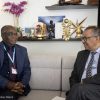
Conditions In Zimbabwe Worsen From El Niño Drought
Half of Zimbabwe's crops were destroyed and about 7.6 million people are at risk of acute hunger as a result of the El Niño weather phenomenon.
Bridging the Gap: How Self-Awareness Can Unleash Youth Potential
Imagine a world where every young person has the tools they need to succeed, regardless of their age, area of residence, ethnicity, college name, or the title on their resume. It’s a world where dreams are limitless, and potential knows no bounds.
Biden’s Convention Speech Made Absurd Claims About His Gaza Policy
An observation from George Orwell -- “those who control the present, control the past and those who control the past control the future” -- is acutely relevant to how President Biden talked about Gaza during his speech at the Democratic convention Monday night.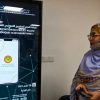
Mauritania Pilots Digital ID App
Governments are increasingly adopting the digital public infrastructure (DPI) approach to deliver public services. An essential component of this is digital identity. Digital identities are often designed to provide a seamless experience for users which ought to be secure, user-friendly, and preserve privacy.
Kazakhstan Takes Lead in Global Push for Nuclear Disarmament Amid Heightened Tensions
In a world increasingly shadowed by the threat of nuclear conflict, Kazakhstan is stepping up its efforts in the global disarmament movement. On August 27-28, 2024, in collaboration with the United Nations Office for Disarmament Affairs (UNODA), Kazakhstan will host a critical workshop in Astana. This gathering, the first of its kind in five years, is set to reinvigorate the five existing Nuclear-Weapon-Free Zones (NWFZs) and enhance cooperation and consultation among them.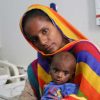
How Extreme Heat Intensifies Health Problems and Hunger
In May, temperatures soared above 52° Celsius (125.6° Fahrenheit) in Pakistan’s southern province of Sindh. To cope, Samina Kanwal, a community health worker with Action Against Hunger, began work at 7:00 am — the earliest time possible given neighborhood security protocols — to travel door-to-door helping vulnerable with the health consequences of extreme heat including heatstroke, difficulties with brain function, and even hunger.
2023 Deadliest Year for Aid Workers– & 2024 Could be Even Worse, Predicts UN
Back in August 2003, the United Nations faced one of its violent tragedies when a terrorist attack on the UN headquarters in the Iraqi capital of Baghdad claimed the lives of 22 people. Among those killed was Sergio Vieira de Mello of Brazil, the UN envoy in Iraq and High Commissioner for Human Rights, who had a long and distinguished UN career stretching over 30 years.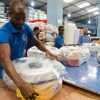
How the Private Sector Can Create Jobs and Drive Development in Western & Central Africa
Every year in Western and Central Africa, 6 million young people enter the labor force, while only about half a million new jobs are created. This enormous jobs deficit means that most entrants into the workforce work in the informal sector, with insecure income, low quality employment, and very little hope of escaping poverty.
WFP in Gaza: ‘We Need a Long Ceasefire That Leads to Peace so We Can Operate’
Corinne Fleischer, WFP’s regional director for the Middle East, North Africa and Eastern Europe, describes Gaza as “a terrible situation getting worse.” Over the past two weeks, 21 United Nations World Food Programme (WFP) food distribution points have been closed under evacuation orders.
The Plight of Women Three Years after Taliban Takeover in Afghanistan
I’ve just come back from the north of Afghanistan. I asked the women I met what they want the world to know about their lives. One woman, Nasima told me: “I was married at 16. I couldn’t finish school. My hope was that my daughter’s life would be better. Now I’m worried her life is going to be worse. To those who are still listening to our voices, please help us fight for our freedom.”
Handling Financial Crises in the South
When history repeats itself, the first time is a tragedy; the next is a farce. If we fail to learn from past financial crises, we risk making avoidable errors, often with irreversible, even tragic consequences.
South Sudan: World’s Youngest Nation at a Crossroads
Thirteen years since becoming an independent state, South Sudan faces profound humanitarian challenges. South Sudan’s first Independence Day was imbued with a great sense of hope.
Killings of Palestinian Journalists Continue –Aided by Uninterrupted Flow of US Arms
The growing number of killings of Palestinian journalists in Gaza has triggered a demand for a cut-off in US arms supplies to Israel. Sarah Leah Whitson, Executive Director, Democracy for the Arab World Now (DAWN), told IPS despite pleas of the international community to suspend arms to Israel in the face of its unprecedented atrocities against Palestinians in Gaza, including the killing of over 165 Palestinian journalists, it beggars the imagination that Biden is now seeking to sell Israel new weaponry to facilitate even more slaughter.
Will the New Cybercrime Treaty be Used as a Tool for Government Repression?
A new UN Cybercrime Treaty, which is expected to be adopted by the UN General Assembly later this year, is being denounced by over 100 human rights activists and civil society organizations (CSOs) as a potential tool for government repression. The treaty is expected to be adopted by a UN Ad Hoc Committee later this week and move to the 193-member General Assembly for final approval.« Previous Page — Next Page »


The Week with IPS

NEXT STOP - SDGs
Tracking global progress towards a sustainable world
Tracking global progress towards a sustainable world
