Languages
Wednesday, October 28, 2026



News and Views from the Global South
Global Governance

The Search is On for the Next U.N. Secretary General in a Turbulent World
AS THE WORLD HURTLES TO HELL (albeit in a SpaceX rather than a hand basket), it might seem of only academic interest which cipher vegetates on the 38th floor of the U.N. Headquarters. However, the choice is due by the end of the year, unless, as has happened in the past, the Security Council is veto-bound and asks António Guterres to stay on as interim Secretary General.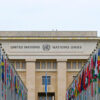
Trump’s Cuts are Pushing the UN out of Geneva. That may be a Win
The $1.2 billion renovation of the Palais des Nations was intended to reaffirm Geneva's centrality to the multilateral system. Instead, the city’s international quarter is emptying.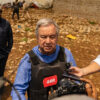
Faced with a Cash Crisis, UN is Urging Senior Staff to Forgo First Class & Business Class Travel
The United Nations has had a longstanding tradition, described by some as a “privilege”, where most senior staffers are entitled to highly-expensive First Class or Business Class seats on trips worldwide.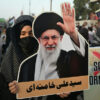
Iran War Deepens Activist Dangers
Narges Mohammadi, awarded the Nobel Peace Prize for her human rights activism in Iran, has been allowed to go home. After guards found her unconscious in her cell, the apparent victim of a heart attack, she was granted temporary release from prison and transferred to a hospital. However, she still faces the threat of being taken back to jail once her condition has improved.
Scarcity of Treatment Makes Syrians More Vulnerable to Mental Health Crisis
The protracted years of conflict in Syria have inflicted profound scars that transcend physical destruction, permeating the psychological well-being of millions.
TRANSNATIONAL REPRESSION: ‘China Feels Emboldened to Globalise Its Political Red Lines’
CIVICUS discusses the cancellation of RightsCon 2026 with Barbora Bukovská, Senior Director for Law and Policy at ARTICLE 19, a human rights organisation that works on freedom of expression and information around the world.
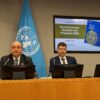
Countries Unevenly Impacted by Global Economic Shocks from Mideast Conflict
The ongoing crisis in the Middle East and the closure of the Strait of Hormuz continue to put immense stress and risk on the global economy.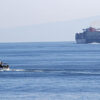
The Iran War Exposes the Fragility of Our Fuel-Dependent Food System
Sharp surges in energy, fertilizer, and food prices triggered by the ongoing conflict in the Persian Gulf strikingly illustrate the deep interconnections between geopolitical conflict, food insecurity, and the fragility of fossil fuel–dependent food systems.
The 3Ds for a Credible Post-2030 Development Agenda
Just four years of the Agenda 2030 for Sustainable Development remain. What comes after 2030 is already a political battleground.
Governing the Ungovernable
Where does real power reside in the UN development system? A new policy brief from Cepei, a Colombian development policy institute, and the German Institute of Development and Sustainability (IDOS), presented earlier in May, poses this deceptively simple question. The answer matters because institutions that cannot govern fairly or transparently struggle to sustain legitimacy, and legitimacy is essential for peace.
The World Bank Wants to Change the Way It Manages Complaints: The Fixes That Could Make It Better
The World Bank made history in 1994 by creating the Inspection Panel, the first independent accountability mechanism, at any international organisation. Its function is to investigate complaints from communities who allege they were harmed because the bank failed to comply with its own policies and procedures.
Stop the Madness: Civil Society Cannot Thrive on Burnout
In an era when civil society funding is in decline, it’s time to rebel against a broken system.
Media As Bedrock for Developing Russian-African Relations
Under the auspices of the Faculty of Journalism of Lomonosov Moscow State University, the Russian-African Club, in late April, held its IV International Forum of Journalists from Russia and Africa, which marked another historical milestone. According to an established annual tradition, discussions were focused on aspects of the media, its structure, current performance, information contents, and challenges as well as future perspectives.
The Global Epidemic of Violence in an Age of Impunity
Violence has metastasized into humanity's baseline condition. Yet international institutions remain paralyzed by vetoes and rivalry, offering hollow declarations while dehumanization becomes normalized. Coordinated action, not gestures, is desperately needed.
The Iran War Is Costing Children’s Lives in Somalia
When war erupted in the Middle East in late February, the most visible consequences were playing out in the Persian Gulf, with smoke rising from Dubai's Jebel Ali port and shipping traffic across one of the world's most critical maritime routes grinding to a near halt.
Nuclear ‘Close-Calls’ Prove Deterrence No Guarantee for Peace
The consequences of nuclear warfare would transcend borders and the impact would be felt across generations. Yet knowing this, member states, including nuclear-armed states, are increasingly flouting the nuclear taboo, while also relying heavily on deterrence to prevent fallout.
The Mideast Conflict Spreads—Beyond the Strait of Hormuz & towards the UN Cafeteria
The 10-month-old Middle East conflict—which has triggered a rise in the cost of living worldwide, and an increase in the prices of food, groceries and gasoline—is likely to impose burdens on hundreds of UN staffers, delegates, journalists and civil society representatives-- and thousands more, during the General Assembly sessions beginning September.
Data Gaps are Hiding the Most Excluded Children
In 2024, 273 million children, adolescents, and youth were out of school globally as per the UNESCO Institute for Statistics. While that is a staggering number, the figure is incomplete. The 2026 Global Education Monitoring report warns that the global out of school population may be undercounted by at least 13 million once humanitarian sources are used to correct data gaps in conflict-affected contexts.
Strengthening Financial Integrity: Why It Matters and What Needs to Change
A conversation with Toril-Iren Pedersen, Director of the UNDP Global Policy Centre for Governance, and Michael Jarvis, Executive Director of the Trust, Accountability, and Inclusion (TAI) Collaborative
The UN NGO Committee: Civil Society’s Gatekeeper in Hostile Hands
In January, the government of Algeria succeeded in locking two civil society groups out of access to the United Nations (UN). It raised questions at the UN Committee on Non-Governmental Organizations, known as the NGO Committee, about two civil society groups with accreditation. It alleged that Italian organisation Il Cenacolo was making politically motivated statements at the UN Human Rights Council and the Geneva-based International Committee for the Respect and Implementation of the African Charter on Human and Peoples’ Rights (CIRAC) was selling UN grounds passes. Four days later, it called a vote to revoke their status. Other states urged delay, but the no-action motion failed, and 11 of the body’s 19 members voted to recommend that the UN’s Economic and Social Council (ECOSOC) revoke Il Cenacolo’s accreditation and suspend CIRAC’s for a year.
Migration a Toxic and Divisive Issue in Many Parts of the West
Migration is a strange thing, hard to pin down. It is a complex phenomenon that transforms communities while shaping people’s identities and it is so multifaceted that individuals perceive it and live it in different ways.« Previous Page — Next Page »





The Week with IPS

NEXT STOP - SDGs
Tracking global progress towards a sustainable world
Tracking global progress towards a sustainable world
