Languages
Thursday, November 26, 2026



News and Views from the Global South
Global
MIDEAST: Netanyahu Plants Trees and More on Occupied Land
When Benjamin Netanyahu dug a spade here and in another West Bank settlement this week, some thought the Israeli Prime Minister was actually digging a hole into current United States-sponsored peace efforts.AFGHANISTAN: Officials’ Optimism on Economy Belies Deep Poverty
Afghanistan may be one of the poorest countries in the world, but official figures do not quite paint a picture of a country deep in the throes of poverty and underdevelopment.VIETNAM: Pro-Democracy Activists’ Trial Sparks Flurry of Blogs
This month’s trial of four pro-democracy activists in this major Vietnamese city has generated a flurry of online posts from concerned citizens seeking to express their sentiments against the country’s communist regime though knowing full well the risks involved.HEALTH: Rotavirus Vaccine Making Headway in Africa
New vaccination programmes against rotavirus are starting to have a positive impact, and could eventually prevent hundreds of thousands of child deaths a year, according to a new report.
WORLD SOCIAL FORUM: Crisis Could Usher In Another World
In the societies of the future, young people may not start to work until the age of 25, there will be lifelong education for everyone, with university graduation as the starting point rather than the end goal, while working hours could be reduced to 12 hours a week for all.POLITICS: U.N. Faulted for Toothless Sanctions in Civil Wars
The United Nations estimates that at least 40 percent of civil wars during the last 60 years have been fought either over natural resources - including diamonds, gold, timber, oil, gas, and cocoa - or sustained by revenues from rich minerals and commodities.U.S.: Obama Faces Increasingly Daunting Picture Overseas
While President Barack Obama's first State of the Union Address Wednesday night will almost certainly focus on the economy, unemployment, and other pressing domestic issues, an increasingly worrisome international situation is likely to be tugging at the back of his mind.RECESSION AND RECOVERY: Diamonds Are for the Poor – Part 3
Diamonds haven't been among the first concerns at the World Social Forum these last 10 years. But through the recession and the still tottering recovery, a new sparkle in that business is pointing the way to a brighter world that is also better in a WSF sort of way.RECESSION AND RECOVERY: Cities Going One Way, Nations Another – Part 2
Some signs are emerging of a new trend shown up by the recession: local governments (and the people) are going one way, national ones another.RECESSION AND RECOVERY: The Lucky Are Unemployed – Part 1
The agreed, if dubious, solution to the financial crisis was to get people and governments - in the richer countries - to borrow more in order to spend more. What is not in doubt is the growing numbers of people who will be able to neither borrow nor spend.ASIA: As Economy Turns, Turning Off Stimulus Tap Is a Challenge
As the global financial crisis triggered alarms across Asia, Singapore responded with a government programme to aid its vulnerable workforce. The affluent city- state pumped in three billion U.S. dollars in an employment protection programme.CLIMATE CHANGE: ‘Copenhagen Accord Not Legal, Kyoto Protocol Is’
While the BASIC bloc countries - Brazil, South Africa, India and China - will submit their plans for voluntary mitigation actions by the Jan. 31 deadline stipulated by the Copenhagen Accord, they have taken care to emphasise that the agreement, reached at the end of the December climate change summit in the Danish capital, has no legal basis.ENVIRONMENT: Indian Glaciologist Fires Back at Climate Sceptics
"It is a fact that global warming is happening. If the Arctic Sea ice is melting, how can the Himalayan glaciers not be melting?" glaciologist Syed Iqbal Hasnain asked indignantly.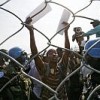
HAITI: Military Playing Large Role in Relief Efforts
As international attention turns to the long-term reconstruction of earthquake-stricken Haiti, U.N. officials pledged that the Haitian government would have full involvement and authority over the process.BIODIVERSITY: Words Are Not Enough
Words are not enough to stop the rapidly unraveling web of life, agreed heads of state and international conservation organisations at a high-level meeting that ended here last Friday.
DEVELOPMENT: Yemen to Lead South in U.N. Negotiations
The republic of Yemen, categorised by the United Nations as one of the world's "least developed countries" (LDCs), will lead the largest single coalition of developing nations this year: the 130-member Group of 77 (G77).
Q&A: “U.S. Should Invest in New U.N. Women’s Agency”
One year after U.S. President Barack Obama's inauguration, how has his administration fared in terms of advancing an agenda for women's rights around the world?Q&A: ‘Saving Tigers is Good for Ecosystems, Biodiversity’
The first Asian ministerial meeting to protect the tiger, one of the world’s most storied animals, is poised to test a new commitment between government leaders, the World Bank and the global conservationist movement.
WORLD SOCIAL FORUM: Back Seat Driver of Social Change
The World Social Forum (WSF) is only "a tool" and must not be confused with the global movement for another world, says Chico Whitaker, one of the founders of this meeting which is celebrating its tenth year with a seminar to assess its track record Jan. 25-29, in its southern Brazilian place of origin, Porto Alegre.WORLD SOCIAL FORUM: Positive Reviews, On Balance
Nearly a decade after its inception, and in spite of some reverses, on balance the World Social Forum (WSF) has proved a resounding success as a platform for planet-wide debate, from the point of view of the people most affected by the world's problems.CLIMATE CHANGE: After Copenhagen, Back to Basics for BASIC Bloc
As environment ministers from Brazil, South Africa, India and China (BASIC) prepared to meet in the Indian capital on Sunday to draw up a post-Copenhagen strategy, there were great expectations on the role they could play in pushing a consensus on how the world should go about dealing with climate change.« Previous Page — Next Page »


The Week with IPS

NEXT STOP - SDGs
Tracking global progress towards a sustainable world
