Languages
Saturday, October 24, 2026



News and Views from the Global South
Humanitarian Emergencies
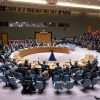
U.S. Passes on UN Ukraine Resolution amid the Humanitarian Crisis
From late 2024 to early 2025, the humanitarian situation in Ukraine has taken a turn for the worst, with poverty, violence, displacement, and damage to critical infrastructures having grown in intensity. Following the 2022 invasion of Ukraine by Russia, tensions have grown among member states of the United Nations (UN) on how to resolve the Russo-Ukrainian War.
The Impact of US Funding Freeze on Civil Society Around the World
The U.S. administration has the prerogative to review and adjust public expenditure policies, including foreign aid. However, this power must be exercised responsibly, adhering to national and international legal frameworks, including the principles of human rights law.
African Leaders Challenged To Unite Against Energy Transition Mineral Oppressors
Renewable energy and climate change activists have challenged African heads of state to take a united stance to safeguard essential mineral resources, particularly in the Democratic Republic of the Congo (DRC) and other parts of the continent, which are selfishly exploited by foreign miners with disregard for poverty-stricken local communities.
DAWN Calls on ICC to Investigate U.S. Officials for War Crimes in Gaza
On February 24, the human rights organization Democracy for the Arab World Now (DAWN) called on the International Criminal Court (ICC) to investigate former U.S. President Joe Biden, Secretary of State Antony Blinken, and Secretary of Defense Lloyd Austin, among other U.S. government officials, for aiding and abetting Israeli war crimes that deliberately infringed on human rights in the Gaza Strip. This poses significant implications for the future of U.S. foreign policy and the role of impunity in world conflicts.
CARICOM Leaders Take Steps to Tackle Crime, Climate, Trade and Food Crises
CARICOM leaders wrapped up a crucial meeting on February 21, reaffirming their commitment to tackling pressing regional challenges with unity and resolve. From crime and security to education, trade and climate change, the leaders highlighted the need for decisive action amid global uncertainties.
Humanitarian Groups Face Challenges in Reaching the Sudanese Displaced Population
In the final quarter of 2024 ,there has been an escalation in the Sudanese civil war, with armed clashes between the Rapid Support Forces (RSF) and the Sudanese Armed Forces (SAF) having grown in brutality. Heightened insecurity has pushed millions of people into displacement, hunger, and poverty. Additionally, the continued hostilities have made it difficult for humanitarian organizations to scale their responses up.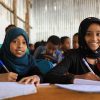
World Day of Social Justice Statement by Education Cannot Wait Director Yasmine Sherif
The central theme of this year’s World Day of Social Justice is to “strengthen a just transition for a sustainable future.” Education is the very foundation for achieving social justice. Without an education we cannot end extreme poverty and advance economic growth. Without an education we cannot empower young girls to become teachers, doctors, nurses, lawyers, engineers, let alone financially self-reliant. Without an education we cannot achieve good governance, the rule of law and peaceful co-existence.
The Arab States Must Stop Trump– and Netanyahu– in Their Tracks
When the Arab states convene an emergency session in Egypt to address Trump’s/Netanyahu’s plans to take over Gaza and exile the Palestinians, they must warn Trump that acting on this plan will usher in a catastrophic conflagration that could engulf the entire Middle East.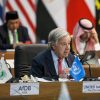
Trump’s War on Global Governance: Lessons from the Past on How to Fight Back
US president Donald Trump’s recent actions seem designed to reassert American power and demonstrate that it is still the dominant global power and is capable of bullying weaker nations into following America’s lead.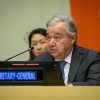
A Full Implementation of the Israel-Hamas Ceasefire is Uncertain
On January 19, Israel and Hamas implemented a ceasefire agreement that would end the fighting in Israel and Palestine, see the return of hostages and prisoners, and begin a period of recovery and reconstruction for Palestine. Although the past several weeks have seen a relatively smooth transition and a cessation of hostilities, the prospect of a long-term implementation of the ceasefire remains fragile and there is significant risk of a return to warfare and heightened instability across the Middle East. With the humanitarian situation in Gaza improving for the first time in 16 months, it is imperative that the ceasefire remains in effect.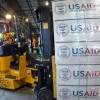
Human Rights, Healthcare Disrupted in Eastern Europe With USAID Funding Freeze
As the full effects of the US decision to freeze foreign aid funding begin to be felt across the world, organizations in Eastern Europe and Central Asia (EECA) are warning years of work in everything from delivering life-saving healthcare to defending human rights and strengthening democracy could be undone.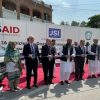
Afghan Refugees, Among Others, Feel the Impact of USAID Funding Freeze
“I was shocked when told by a security guard that the clinic has been closed down. I, along with my relatives, used to visit the clinic for free checkups,” Jamila Begum, 22, an Afghan woman, told IPS.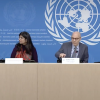
Bangladesh: UN Human Rights Denounces Former Government’s Violations Against Protestors
A new report from the UN Human Rights Office confirms that Bangladesh’s former government coordinated and committed human rights violations against its civilians to suppress the protest movement in July last year, with the high commissioner calling for justice and serious reform to end the cycle of violence and retribution.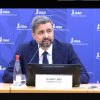
Race Against Time as Hunger, Poverty Rise Amid Growing Global Uncertainties
Nearly one in 11 people in the world and one in five people in Africa go hungry every day, a crisis primarily driven by chronic inequality, climate change, conflict and economic instability. At the current pace, hunger and extreme poverty rates show little sign of drastically receding by 2030.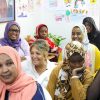
Gender Inequality in Science Limits Progress Towards Solving Complex Global Challenges
Today is the International Day of Women and Girls in Science and a time to take stock of progress, successes, and setbacks towards open and gender-inclusive science. Gender equality remains elusive in science, as only one in three scientists is a woman. Not only do these inequalities hold women back, but they also limit scientific progress.
Not an Option. A Call for Action
A global alert is not an option. It requires global action. Over the past three years, the number of crisis-impacted school-aged children in need of urgent quality education support has grown by an alarming 35 million, according to Education Cannot Wait’s new Global Estimates Report.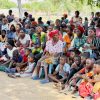
Namibia’s Drought Crisis: Building Resilience for Women and Girls
Communities in the Kavango West region of northern Namibia have firsthand experience of the severe impacts of climate change. The dry, cracked soil and emaciated livestock provide a constant reminder of the lack of access to water in this part of the country.
Belarus: Brutal Repression Continues Post Presidential Election, Say Human Rights Groups
In the months leading up to presidential elections at the end of January, Belarus’s authoritarian leader Alexander Lukashenko ordered the release of hundreds of political prisoners. Some observers saw this as a sign that the man who had led the former Soviet state for the last three decades could be planning a relaxation of his regime’s brutal repressions in return for a lessening of Western sanctions.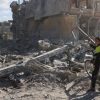
Forcing Palestinians Out of Gaza is A Recipe for Unimaginable Disaster
Even after Trump declared that he wanted to take back the Panama Canal, acquire Greenland by force, if necessary, and rename the Gulf of Mexico to the Gulf of America, I could not, like many others, imagine that his madness could reach a new unfathomable height.
Tanzanians with HIV Left in Crisis as USAID Funding Ends
At 9 a.m. on Monday, Mariam Msemwa clutched her clinic card tightly as she stood in line at Bagamoyo District Hospital’s HIV Clinic in Tanzania’s coastal region. The 19-year-old had been here many times before, picking up monthly doses of antiretroviral (ARV) drugs that kept her alive. But today was different.When she reached the counter, the nurse flatly told her. “There’s no more free medication, ” she said. “You’ll have to buy it yourself.”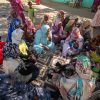
Ending FGM Requires Strengthening Partnerships and Advocacy Efforts
February 6 is the International Day of Zero Tolerance for Female Genital Mutilation (FGM). A practice deemed a gross violation of human rights, tragically the practice persists across multiple countries in Africa, the Middle East, and Asia. Over 230 million women and girls alive today have been subjected to this gruesome practice, and experts warn that at least 27 million more could endure this by 2030.« Previous Page — Next Page »





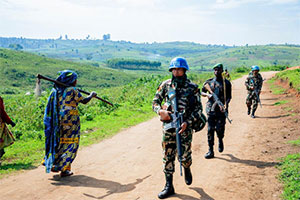 MONUSCO Peacekeepers and FARDC Soldiers Patrol Fataki Area. Credit: UN Photo/Jorkim Jotham Pituwa
Conflict, human rights violations, natural disasters, and famine have been at the forefront of concerns for humanitarian organizations. The escalation of humanitarian crises has led to over 239 million people in need of humanitarian assistance at the start of 2026, as estimated by OCHA’s Global Humanitarian Overview. The 2025 humanitarian appeal received only $12 billion, the lowest funding in over a decade, which has left 24 million fewer people reached in comparison to 2024. Conflict has remained the primary driver of crisis.
Humanitarian emergencies massively impact progress towards the Sustainable Development Goals (SDGs), adversely affecting economic development, inequality, education, planetary well-being, and poverty. Millions of people are faced with reduced access to essential services, including shelter, food, healthcare, and access to clean drinking water. UN Organizations such as UNHCR and the United Nations Children’s Fund (UNICEF) are committed to providing direct relief to affected communities when state governments cannot.
The United Nations 2024 Summit of the Future discussed measures that will be taken to reduce global inequality and promote peacekeeping efforts around the world. The recent UN Climate Change Conference (COP30) in Belém, Brazil, agreed to mobilize $1.3 trillion annually for climate action by 2035, operationalize the loss and damage fund, and triple adaptation finance. However, a fossil fuel transition commitment was not secured, despite climate change and the greenhouse effect being major contributors to humanitarian crises worldwide.
Countries across the world have also rallied to end humanitarian crises, as witnessed in conflicts such as Palestine and Ukraine. IPS is committed to providing relevant and in-depth reports of humanitarian emergencies around the world and their implications.

The Week with IPS

NEXT STOP - SDGs
Tracking global progress towards a sustainable world
Tracking global progress towards a sustainable world