Languages
Monday, September 28, 2026



News and Views from the Global South
Humanitarian Emergencies
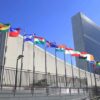
The United Nations in a Time of Opportunity & Uncertainty: a Time to Choose
On 15 September 1953, Vijaya Lakshmi Pandit of India was elected the eighth president of the UN General Assembly — the first woman to hold the UN's second-highest position. Since then, only four women have followed her. Since its founding, the UN has had nine Secretaries-General. All men. Now, 81 years after the UN's founding, we have a historic opportunity to correct that record. It is time to entrust the UN leadership to a woman of the Global South who shapes a more inclusive, effective and forward-looking UN.
The Americas have the Tools to Eliminate HIV, but Gaps in Access & Coverage remain, says PAHO
The Region of the Americas has more tools than ever before to prevent, diagnose, and treat HIV, yet many of them are still not reaching everyone who needs them, Pan American Health Organization (PAHO) Director Jarbas Barbosa said during the opening session of the International AIDS Conference (AIDS 2026).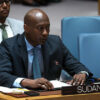
Sudan’s War Economy: Funded by Gum Arabic and Gold
In the three years since the outbreak of the Sudanese Civil War, the humanitarian crisis has deteriorated significantly, with the United Nations underscoring a blatant disregard for international humanitarian law among warring parties. This includes the deliberate targeting of civilians in residential areas, widespread sexual violence, and attacks on critical infrastructure that have hindered aid efforts and pushed communities to the brink of collapse. To manage rising military expenses, the warring parties have increasingly relied on the exploitation of trade routes and territories, prompting humanitarian experts to express concern about a persistent, self-sustaining “war economy.”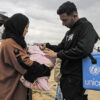
Ongoing Need for Humanitarian Assistance in the Occupied Palestinian Territory
On Monday July 20, a team from the United Nations Office for the Coordination of Humanitarian Affairs (OCHA) visited two displacement sites in Gaza where they found two family tents decimated by domestic fires. This incident is indicative of the increasing frequency of domestic fires in Gaza.
U.S.-Saudi Nuclear Agreement Opens Door to Civilian Nuclear Cooperation, with One Major Caveat
On Wednesday, July 22, the U.S. Secretary of Energy, Chris Wright, and Saudi Arabia’s Minister of Energy, HRH Prince Abdulaziz bin Salman bin Abdulaziz signed a civilian nuclear cooperation agreement, best known as a 123 agreement, as well as an accompanying bilateral safeguards agreement, according to the U.S. Department of Energy and the Saudi Ministry of Energy.
UNHCR: 75 years on, the Refugee Convention Remains a Lifeline for Millions
Seventy-five years after the Refugee Convention was opened for signature on 28 July 1951, it remains the foundation of the international refugee protection system and one of the most consequential international legal instruments ever adopted.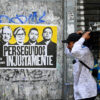
Guatemala: A Narrow Opening in a Captured Justice System
José Rubén Zamora, founder of elPeriódico, Guatemala’s now-defunct leading investigative newspaper, spent 1,295 days in detention before a court granted him house arrest on 12 February. He endured long stretches of solitary confinement in a military jail, held in near-constant darkness and subjected to treatment that six UN experts warned could amount to torture. His offence was simply doing his job. For decades, he exposed the corrupt dealings of Guatemala’s economic and political elites. Prosecutors are still trying to send him back to prison.
From Castel Gandolfo to Campidoglio: Call for Human Dignity to Be at the Heart of the AI Revolution
After two days of debate at an international conference devoted to the challenges of artificial intelligence (AI), nuclear war and global security, Nobel laureates, former heads of state and government, scientists, human rights defenders, religious leaders and representatives of civil society adopted a joint declaration, calling for it to be based on human dignity.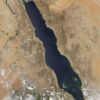
The Houthis Don’t Need to Close the Bab el-Mandeb Strait to Strangle the Suez Canal
With regional friction between Iran and the Gulf monarchies escalating, Houthi leadership in Yemen has proclaimed a total maritime blockade against all vessels linked to Saudi shipping. While this declaration does not constitute a verified military obstruction of the Bab el-Mandeb Strait, it significantly heightens the risk of volatility at the Red Sea’s southern gateway, potentially severing the primary arterial link to the Suez Canal.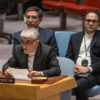
Food and Transport Costs through Strait of Hormuz Remain High, Burdening Vulnerable Economies
Prior to the latest round of hostilities between the United States and Iran, freight traffic had been increasing in the Strait of Hormuz, and negotiations were underway for a new agreement to fully restore trade through this channel.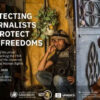
Trump’s Authoritarian Gambit to Muzzle the Foreign Press
Under a new rule proposed by the Department of Homeland Security, the duration of “I visas” for foreign media will be slashed from renewable multi year periods—often up to five years—to a maximum of 240 days, and just 90 days for Chinese journalists. Renewals would no longer be a routine administrative step tied to continued employment and compliance with the law, but a discretionary privilege the government can grant or withhold at will.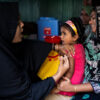
Children in Conflict Zones and Remote Areas Bear the Brunt of Global Immunization Gaps
Despite growing up and working in vastly different geographic regions and environments — one shaped by decades of armed conflict and political instability, and the other by remote, hard-to-reach areas — both Sagal and Johao encounter children daily who have never been vaccinated. Sagal and Johao are members of UNICEF’s Global Youth Health Advisory Group, where they advance children’s health by shaping UNICEF’s strategies, policies, and campaigns, while working directly in their own countries to connect community realities to global conversations about children's health.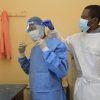
Africa’s Health Defenses Have Improved But Its Funding Has Not
In September 2024, an outbreak of Marburg virus disease in South Ethiopia was confirmed, contained, and declared over within three months.
US Plans to Restrict Visas to Foreign Journalists Come Under Fire
A proposal to restrict US visas to foreign journalists assigned to cover the US has triggered a strong protest from the New York-based Foreign Press Association (FPA).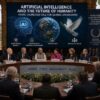
Artificial Intelligence and the Future of Humanity: Nobel Laureates Call for Global Safeguards
"I’m sorry, Dave. I’m afraid I can’t do that.” By bringing the supercomputer HAL 9000 to life in his 1968 film 2001: A Space Odyssey, American director Stanley Kubrick created one of the most powerful symbols of the fear of artificial intelligence (AI) escaping human control.
Communities vs. Datacentres
Few things unite Donald Trump’s most ardent supporters with the Democratic Party’s progressive wing, but datacentres are one of them. Across the USA, communities are joining forces across the political divide to oppose developments few want but governments seem determined to impose.
Three years of War in Sudan: A Crisis the World Can’t Ignore
Three years into the war in Sudan, survivors and human rights defenders are struggling to respond to overwhelming needs amid widespread violence, displacement, and limited global attention. As horrific violations and abuses intensify and those documenting them become targets, calls for accountability and sustained international engagement grow more urgent.
Autonomous Weapons: The Wave of the Future in Military Conflicts Worldwide
As the international community continues to weigh the good, the bad and the deadly in artificial intelligence (AI), which is spreading far and wide with apparently no guardrails, the United Nations is taking a closer look at the impact, both positive and negative, of AI.
UN Raises Alarm Over A Sharp Rise in Human Rights Abuses and Cholera-Related Deaths in Sudan
Throughout 2026, the humanitarian crisis in Sudan has deteriorated significantly, prompting the United Nations (UN) to raise alarm over the escalation of human rights violations. Persistent clashes between the Sudanese Armed Forces (SAF) and the Rapid Support Forces (RSF) continue to cause mass civilian casualties, drive widespread displacement, and obstruct the delivery of life-saving aid. As a result, war-torn communities are being pushed further into catastrophe, struggling with severe shortages of essential basic services and the rapid spread of infectious disease.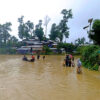
Where did the Billion Dollar Funding for Rohingya Refugees Go?
Landslides and flooding triggered by heavy monsoon rains swept through the world’s most densely populated concentration of refugee camps this week, killing at least 14 Rohingya refugees, most of them women and girls.
AI Helping Modernize Trade Across Asia and the Pacific, Though Adoption Gaps Remain
Artificial intelligence is reshaping trade processes across Asia and the Pacific. However, despite growing interest, most economies have yet to deploy the technology at scale, according to a new study by the United Nations Economic and Social Commission for Asia and the Pacific (ESCAP) and the Asian Development Bank (ADB).« Previous Page — Next Page »


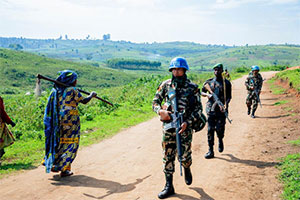 MONUSCO Peacekeepers and FARDC Soldiers Patrol Fataki Area. Credit: UN Photo/Jorkim Jotham Pituwa
Conflict, human rights violations, natural disasters, and famine have been at the forefront of concerns for humanitarian organizations. The escalation of humanitarian crises has led to over 239 million people in need of humanitarian assistance at the start of 2026, as estimated by OCHA’s Global Humanitarian Overview. The 2025 humanitarian appeal received only $12 billion, the lowest funding in over a decade, which has left 24 million fewer people reached in comparison to 2024. Conflict has remained the primary driver of crisis.
Humanitarian emergencies massively impact progress towards the Sustainable Development Goals (SDGs), adversely affecting economic development, inequality, education, planetary well-being, and poverty. Millions of people are faced with reduced access to essential services, including shelter, food, healthcare, and access to clean drinking water. UN Organizations such as UNHCR and the United Nations Children’s Fund (UNICEF) are committed to providing direct relief to affected communities when state governments cannot.
The United Nations 2024 Summit of the Future discussed measures that will be taken to reduce global inequality and promote peacekeeping efforts around the world. The recent UN Climate Change Conference (COP30) in Belém, Brazil, agreed to mobilize $1.3 trillion annually for climate action by 2035, operationalize the loss and damage fund, and triple adaptation finance. However, a fossil fuel transition commitment was not secured, despite climate change and the greenhouse effect being major contributors to humanitarian crises worldwide.
Countries across the world have also rallied to end humanitarian crises, as witnessed in conflicts such as Palestine and Ukraine. IPS is committed to providing relevant and in-depth reports of humanitarian emergencies around the world and their implications.

The Week with IPS

NEXT STOP - SDGs
Tracking global progress towards a sustainable world
Tracking global progress towards a sustainable world