Languages
Sunday, November 15, 2026



News and Views from the Global South
Humanitarian Emergencies

The SDGs, COVID-19 and the Global South: Insights from the Sustainable Development Report 2020
COVID-19 has claimed more than 550,000 lives and disrupted the entire world, sparing no region. As of July 2020, the number of daily new confirmed cases and deaths due to COVID-19 are growing rapidly in Latin America and the Caribbean, especially in Brazil and Mexico but also in many African countries as well as India. As highlighted in a recent article, these numbers are likely underestimated given the reduced testing capacity in many low and middle-income countries.
Covid-19 Cannot Be Defeated by a Divided World
Announcing an independent evaluation of the global Covid-19 response on 9th July, World Health Organization (WHO) Director-General Dr Tedros Adhanom Ghebreyesus asked why it has been “difficult for humans to unite and fight a common enemy that is killing people indiscriminately?”.
IPS Webinar: Gender Equality Crucial in ‘Building Back Better’ Post-COVID-19
While men are more likely to die from COVID-19, women are facing the full blow of the socio-economic fallout from the ongoing pandemic as well as seeing a reversal in equality gains made over the last two decades, says an all-women panel of international thought leaders, who met virtually during a discussion convened by IPS.
Q&A: Understanding COVID-19’s Impact on Food Security and Nutrition
While it is too early to assess the full impact of the global COVID-19 lockdowns, at least 83 million to 132 million more people may go hungry this year -- 690 million people were classified as hungry in 2019 -- as the pandemic has highlighted the vulnerabilities and inadequacies of global food systems.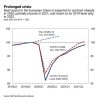
Toward a More Resilient Europe
Europe, like the rest of the world, faces an extended crisis. An element of social distancing—mandatory or voluntary—will be with us for as long as this pandemic persists. This, coupled with continued supply chain disruptions and other problems, is prolonging an already difficult situation. Based on updated IMF projections released last month, we now expect real GDP in the EU to contract by 9.3 percent in 2020 and then grow by 5.7 percent in 2021, returning to its 2019 level only in 2022. If an effective treatment or vaccine for COVID 19 is found, the recovery could be faster—but the opposite would hold true if there are large new waves of infection.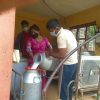
Heifer Nepal Farmers Persevere During COVID-19 Pandemic
For nearly three months, the government of Nepal implemented a strict lockdown to combat the spread of COVID-19. And while it slowed the spread of the virus, it also put a tremendous economic burden on many families nationwide. As of June 15, the country transitioned to a “soft lockdown,” easing some restrictions such as allowing private vehicles to operate on an odd/even-day scheme. But the economic effect is already being seen.
Teleworking Is Not Working for the Poor, the Young and the Women
The COVID-19 pandemic is devastating labor markets across the world. Tens of millions of workers lost their jobs, millions more out of the labor force altogether, and many occupations face an uncertain future. Social distancing measures threaten jobs requiring physical presence at the workplace or face-to-face interactions. Those unable to work remotely, unless deemed essential, face a significantly higher risk of reductions in hours or pay, temporary furloughs, or permanent layoffs. What types of jobs and workers are most at risk? Not surprisingly, the costs have fallen most heavily on those who are least able to bear them: the poor and the young in the lowest-paid jobs.
Beware the ‘Hunger’ to Access Indigenous Peoples’ Land and Resources for Post-COVID-19 Recovery
When governments and states begin their recovery journey from the economic downturn caused by the coronavirus pandemic, there might be a heightened threat to indigenous peoples, their land and resources. “The fear is [that] the economic recovery is based on access to land and natural resources,” Lola García-Alix, senior advisor on Global Governance at the International Work Group for Indigenous Affairs (IWGIA), told IPS.
Digital Agriculture Linking Indian Farmers to Consumers Can Impact Food Security
Digital technologies in agriculture are helping address the twin problems of food security and supply chain disruptions triggered by COVID-19 in India, while augmenting the income of smallholder farmers. Leveraging technology to match supply and demand of resources and food is key to overcoming the issues of starvation and food supply interruptions, Anshul Sushil, CEO and co-founder at Wizikey, a software that allows businesses to reach media directly, eliminating the middlemen, tells IPS.
The Quiet Survivors of a Global Pandemic
The issue of women’s rights, feminism and gender is complex and ongoing in most countries including Bangladesh. When I was asked to write about impact of COVID-19 on women and girls, I found myself drawn towards writing about women’s situation in general as that automatically impacts COVID-19 response as well. Since I am a woman who has been a part of many different cultures, yet a Bangali at heart, I am not only a survivor within its ranks but also responsible for being a part of the solution to the problems we face.
Building Back Greener in Africa
COVID-19 continues to race across the African continent. People are dying, and even more are being pushed into hunger and poverty, in many cases risking to overturn years of development gains.
Innovative Financial Approaches Key to Unleash SIDS Economic Potential
Our world is transfixed by the great human toll and economic impact of the worst global pandemic in a century. For the 65 million inhabitants of small island developing states (SIDS), the impact of the novel coronavirus (COVID-19) is reminiscent of the worst forms of extreme weather events that SIDS contend with annually. Such events cost lives, undermine our hard-earned development gains, and hamper the aspirations and quality of life of our people. Our governments are routinely compelled to shift already scarce resources from social and economic investments to recovery and sustenance in the aftermath of disasters. For decades islands have been treading a development tightrope, which is increasingly precarious with the intensification of adverse climate impacts.
Donald Trump, Working Class Hero?
In his early February annual State of the Union address, US President Donald Trump typically hailed his own policies for increasing wages and jobs to achieve record low US unemployment. Directly appealing to labour for a second term, Trump claimed exclusive credit for the US “blue-collar boom”.
Impact of COVID-19 on Women and Children in South Asia
The onset of the coronavirus pandemic in early 2020 set off a series of health and economic crises that feed upon each other. The health crisis exacerbates the economic crisis by disrupting supply chains, throwing large number of people (particularly those working in the informal sector) out of work and closing down large numbers of enterprises – particularly micro, small and medium enterprises (MSME).
How do we get out of lockdown?

Dr David Nabarro is a Special Envoy of World Health Organization Director-General on COVID-19, Co-Director of the Imperial College Institute of Global Health Innovation at the Imperial College London and Strategic Director of 4SD. His Narratives are being written with the 4SD team to help readers to make sense of the fast-evolving pandemic and its multiple consequences and to identify the questions to consider when making decisions about measures to contain and suppress outbreaks. They provide readers with insight from David’s leadership and continuous learning, as a public health and development professional with over 40 years’ experience across many countries and contexts, as we navigate this complex, multi-faceted crisis.

Q&A: Child Marriage, FGM and Harmful Practices on Women’s Bodies to Increase Because of COVID-19
An additional 5.6 million child marriages can be expected because of the coronavirus pandemic, which resulted in a short-term increase in poverty and the shutdown of schools. The current pandemic is also expected to have a massive impact on the projected growth of harmful practices on women’s bodies.
Global Economic Recovery must Prioritise Restructuring of Debt for Developing Countries
Unless there is a restructuring of debt for developing countries, the servicing for this debt will take away valuable resources from these nations that are needed to prevent the further suffering of people during the coronavirus pandemic -- particularly with regards to safeguarding the health systems, and protecting the “integrity and resilience of economies”.
Rethink Food Security and Nutrition Following Covid-19 Pandemic
The Covid-19 crisis has had several unexpected effects, including renewed attention to food security concerns. Earlier understandings of food security in terms of production self-sufficiency have given way to importing supplies since late 20th century promotion of trade liberalization.
Sustainable Tourism and Fisheries Key to Growth in Post-COVID Pacific
Developing countries of Asia and the Pacific are experiencing unbalanced tolls of the COVID-19 pandemic. Grim milestones in infections and deaths have left countless devastated. Yet, we must look at the economic and social impacts in small island developing States (SIDS), where setbacks are likely to undo years of development gains and push many people back into poverty.
Put Climate at the Heart of COVID-19 Economic Recovery Plans
Cast your mind back. Six months ago—it seems like a lifetime—the world’s attention was on Madrid. The United Nations was meeting to take stock of international progress in fighting climate change. Headlines were dominated by young people pointing out—rightly—that governments were still not doing enough. They demanded urgent and ambitious action to cut emissions and help the most vulnerable.
Africa’s Post-pandemic Future Needs to Embrace Youth in Agriculture
Warnings at the early stages of the COVID-19 pandemic that Africa could be hit by a wave of up to 10 million cases within six months thankfully now seem unfounded, although it is still far too early to be over-confident.« Previous Page — Next Page »


 MONUSCO Peacekeepers and FARDC Soldiers Patrol Fataki Area. Credit: UN Photo/Jorkim Jotham Pituwa
Conflict, human rights violations, natural disasters, and famine have been at the forefront of concerns for humanitarian organizations. The escalation of humanitarian crises has led to over 239 million people in need of humanitarian assistance at the start of 2026, as estimated by OCHA’s Global Humanitarian Overview. The 2025 humanitarian appeal received only $12 billion, the lowest funding in over a decade, which has left 24 million fewer people reached in comparison to 2024. Conflict has remained the primary driver of crisis.
Humanitarian emergencies massively impact progress towards the Sustainable Development Goals (SDGs), adversely affecting economic development, inequality, education, planetary well-being, and poverty. Millions of people are faced with reduced access to essential services, including shelter, food, healthcare, and access to clean drinking water. UN Organizations such as UNHCR and the United Nations Children’s Fund (UNICEF) are committed to providing direct relief to affected communities when state governments cannot.
The United Nations 2024 Summit of the Future discussed measures that will be taken to reduce global inequality and promote peacekeeping efforts around the world. The recent UN Climate Change Conference (COP30) in Belém, Brazil, agreed to mobilize $1.3 trillion annually for climate action by 2035, operationalize the loss and damage fund, and triple adaptation finance. However, a fossil fuel transition commitment was not secured, despite climate change and the greenhouse effect being major contributors to humanitarian crises worldwide.
Countries across the world have also rallied to end humanitarian crises, as witnessed in conflicts such as Palestine and Ukraine. IPS is committed to providing relevant and in-depth reports of humanitarian emergencies around the world and their implications.

The Week with IPS

NEXT STOP - SDGs
Tracking global progress towards a sustainable world
Tracking global progress towards a sustainable world

