Languages
Saturday, October 17, 2026



News and Views from the Global South
Latin America & the Caribbean
Humanitarian Situation in Haiti Deteriorates as Gender-Based Violence Soars
As gangs continuously seize more territory in the Haitian capital, Port-Au-Prince, the humanitarian crisis deepens. Gang violence in Haiti has considerably escalated following the deployment of the Multinational Security Support (MSS) mission and the appointment of the new Prime Minister, Alix Didier Fils-Aimé. Attacks on civilians continue to increase in brutality as the severely underfunded MSS mission and lackluster police efforts do little to combat gang activity. Girls and women have been disproportionately affected by rampant gender-based violence.
Guyana’s Dream to Be a Green Oil Producer
Long before the transformative discovery of its offshore oil in 2015, Guyana had made a strong pledge to decarbonization and climate action as set forth in its Low Carbon Development Strategy (LCDS) 2030. The development of its oil industry has led to remarkable economic growth in Guyana, including a 62.3% growth rate in 2022.
Mayan Farmers Improve Their Livelihoods and Polyculture of Milpa in Mexico
María Bacab, a Native Maya, considers herself the “guardian of seeds” as she cares for the milpa - an ancestral Mesoamerican polyculture that mixes maize, beans, squash and other vegetables - and promotes its practice and use in Mexico.
Doctors Without Borders Halts Operations in Haiti Amid Threats from
Doctors Without Borders, the medical humanitarian organization, which has served in Haiti for over 30 years, announced on Wednesday that it would suspend its activities in Port-au-Prince, Haiti’s capital amid repeated threats from local law enforcement. This announcement indicates the precariousness of the situation in Haiti where humanitarian groups on the ground face security issues from even members of law enforcement.
Solar and Wind Power Wealth Does Not Reach Consumers in Chile
Chile, a country rich in solar and wind energy and with huge photovoltaic power stations and wind turbines in its elongated territory, managed to change its grid by incorporating renewable energies, which account for an installed capacity equivalent to 43.8 % of its electricity production.
Saint Kitts and Nevis: Leading the Charge for Climate Justice, Renewable Energy
At COP29, Saint Kitts and Nevis, the smallest independent nation in the Western Hemisphere, stands as a beacon of climate action and renewable energy ambition.
Contingent Mission in Haiti Exacerbates Gang Offensives
Over the past week, the deployment of the Multinational Security Support Mission (MSS) in Haiti and extended efforts by the Haitian National Police has led to local gangs ramping up their offensives in order to hold onto their territories. Humanitarian organizations fear that displacement will skyrocket without more efficient security controls and relief responses.
Money Talks: Why COP29 New Collective Quantified Goal on Climate Finance Matters
The industrial revolution set the ball rolling towards global warming. Today, developing nations are on the frontlines of a climatic carnage and its snowballing effects. Developed nations bear a financial responsibility to provide climate finance to developing nations, as financing the transition to a low-carbon economy is an urgent, critical matter.
Explainer: Taxes on Cryptocurrencies and Plastics To Boost Climate Finance
The global climate aid fund is not the only option discussed at the World Climate Change Conference (COP29). Imposing a new tax on cryptocurrencies and the plastics industry could help close the money gap needed to address the impacts of climate change, especially in the countries of the Global South.
Survival at Stake: Caribbean Calls For Just, Fair Financing For Small Island States at COP
Communities living in Small Island Developing States (SIDS) pay the price of climate change in lives, livelihoods, and stunted sustainable development. Representatives from Caribbean islands have repeatedly expressed this ongoing concern at COP29.
Rebuilding Trust, Dialogue, Collaboration Key to COP29’s Success, Says Barbados Minister
"This Finance COP has to deliver. I think this is a crucial moment for the COP process," said Shantal Munro-Knight, Barbados Minister in the Prime Minister’s Office. Barbados, a nation at the forefront of climate advocacy, continues to push boundaries at COP29, the so-called Finance COP. Knight shared her views on the state of negotiations, the urgency of climate finance, and the innovative solutions her country is championing.
‘Show Me the Money’—Grenada PM Calls for Climate Justice
"Though I come from a 'no worries' island, climate change is deeply worrisome for us," Grenada's Prime Minister Dickon Mitchell told IPS in an exclusive interview at COP29 currently underway in Baku, Azerbaijan. Asked how his country was recovering from Hurricane Beryl, Mitchell said the island in the last 24 hours “experienced flash flooding and landslides... So, apart from Hurricane Beryl, we are also dealing with other climate catastrophes.”
Latin America: Pass on Renewables, Fail on Efficiency
The Latin American and Caribbean region is a student with good grades in renewable energy, but not in energy efficiency, and has a long way to go in contributing to global climate action and overcoming the vulnerability of its population and economies.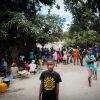
Haiti’s Transition of Power Predicted to Worsen Gang Violence
Gang violence has ravaged Haiti, causing thousands of civilian deaths, displacements, and violations of international humanitarian law. Turmoil is expected to escalate following the removal of Haitian Prime Minister Garry Conille from office on November 11.
Leather Cooperative Stops Unemployment in Northeast Brazil
The small community of Ribeira stands out in the Northeast, the poorest region of Brazil. There is no unemployment here. One in five inhabitants make a living directly or indirectly from the Arteza Cooperative of Tanners and Leather Artisans.
Arab Region Leaders, Experts Gather to Find Solutions to Water Scarcity, Sustainable Development
The Arab region is among the most water-scarce areas globally, as nearly 392 million people live in countries facing water scarcity or absolute water scarcity. So dire is the situation that, of the 22 Arab countries, 19 fall below the annual threshold for water scarcity in renewable resources, defined as 1,000 cubic meters per person.
Brazil Promotes a Freer Global Biofuels Market
Holding this year's presidency of the Group of 20 (G20) large industrial and emerging economies is allowing Brazil to push forward the dream of creating a global biofuels market without the current trade barriers.
Mexican Cooperative Promotes Energy Transition on Indigenous Lands
What began as a search for fair prices for indigenous handicrafts in 1985 has evolved into a women's organisation in Mexico that promotes climate justice while advocating for land and environmental rights.
COP16 Delivers on Indigenous Peoples, Digital Sequencing, But Fails on Finance
The curtains fell on the 16th Conference of the Parties of UN Biodiversity (COP16) on Sunday without any formal closing. In a voice message, David Ainsworth, the Communications Director of the UNCBD, confirmed that the COP was suspended due to a lack of quorum in the plenary and would be resumed sometime later. However, before being suspended, the parties managed to adopt a historic decision to open the door for Indigenous Peoples (IPS) and local communities (LCs) to influence the global plan to halt the destruction of biodiversity.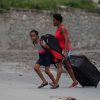
Conditions Deteriorate from Persisting Gang Violence in Haiti
Due to worsening political instability, escalating gang violence, and a lack of basic services, Haiti is in the midst of one of the most severe humanitarian crises in the world. According to a 2024 ACAPS report, gangs have seized 85 percent of the nation’s capital, Port-Au-Prince, resulting in over 700,000 displaced persons.
Solar Energy Saves Dairy Cooperative in Brazil’s Semi-Arid Region
“Ixe! If it wasn't for solar energy, we would have closed down, you can be sure. We had to stop due to the pandemic on 15 March 2020, but the energy costs were fixed,” said Erika Cazuza, administrative and financial manager of the Brazilian Cooperative of Rural Producers of Monteiro (Capribom).« Previous Page — Next Page » *#*

The Week with IPS

NEXT STOP - SDGs
Tracking global progress towards a sustainable world
Tracking global progress towards a sustainable world

