Languages
Wednesday, September 16, 2026



News and Views from the Global South
Migration & Refugees
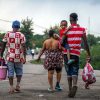
The Current Plight of Haitians: Interview with a Mason in the Dominican Republic
On March 18, the first plane with deportees from the US landed in Cap-Haïtien. Of the 46 passengers, 25 were convicted felons. Taking effect on April 24 the US Department of Homeland Security will revoke the temporary legal status of more than 210,000 Haitians. They had by the Biden administration been granted a safe haven, but all these Haitians are now expected to be deported back to a country immersed in a humanitarian crisis.
Education Cannot Wait Interviews Sigrid Kaag, Chair of the ECW High-Level Steering Group
Sigrid Kaag is the new Chair of Education Cannot Wait’s High-Level Steering Group. Kaag brings a wealth of experience in political, humanitarian and development affairs, as well as in diplomacy. In 2025, she was appointed by United Nations Secretary-General António Guterres as the UN Special Coordinator for the Middle East Peace Process, a.i. Kaag has just concluded her mandate as Senior Humanitarian and Reconstruction Coordinator for Gaza, a role she held since 2024. She served as the first Deputy Prime Minister and first female Minister of Finance in the Dutch government starting in January 2022. Prior to this, she was Dutch Minister for Trade and Development Cooperation from October 2017 until May 2021, and Minister for Foreign Affairs until September 2021.[related_articles]
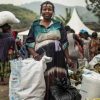
DR Congo: Millions Facing Destitution as Violence Forces People to Flee Multiple Times
The Norwegian Refugee Council (NRC) warns that 100,000s of people in eastern Democratic Republic of Congo (DRC) have been pushed into desperate conditions by the escalation of violent conflict in 2025.
Hunger and Heightened Insecurity Pushes Sudan to the Brink of Collapse
After nearly two years of extended warfare and protracted crises as a result of the Sudanese Civil War, Sudan remains the world’s biggest internal displacement crisis. According to the United Nations High Commissioner for Refugees (UNHCR), heightened insecurity, widespread famine, economic strife, and climate shocks threaten the lives of approximately 25.6 million people.
African Diaspora Exhibition Showcases Transformative Solidarity and the Legacy of Slavery
Ahead of the International Day of Remembrance of the Victims of Slavery and the Transatlantic Slave Trade on March 24, the United Nations (UN) unveiled a new exhibition examining the themes of equality and transformative solidarity in the context of the African diaspora.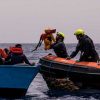
A Test of Humanity: Migrants’ Rights in a World Turning Inward
The United Nations Refugee Agency faces devastating cuts that may eliminate 5,000 to 6,000 jobs, with potentially catastrophic consequences for millions of people fleeing war, repression, hunger and climate disasters. This 75-year-old institution, established to help Europeans displaced by the Second World War, now confronts an unprecedented financial crisis, primarily due to the US foreign aid freeze – and the timing couldn’t be worse.
The Toll of Mental Health in Conflict Areas
Over the past two decades, conversations surrounding mental wellness have entered the cultural consciousness in the western world. Despite this, these topics receive far less media exposure in the Global South, particularly in areas that have been entrenched in warfare, where the onset of harmful mental health conditions are prevalent.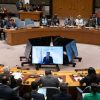
Israel Ends Ceasefire in Gaza as Strikes Resume
On March 18, the Israeli Defense Forces (IDF) launched an attack on the Gaza Strip, effectively terminating the Israel-Hamas ceasefire agreement. This comes after a pause in ceasefire operations when Israel continued its blockade on humanitarian aid in the enclave and demanded the release of additional hostages.
The United States Confronts the Demographic Piper
As the United States confronts the unflinching demographic piper with the stark facts of reality, the new administration and Congress are denying, disengaging and dismantling.
UN Chief’s Ramadan Solidarity Visit Revives Rohingya Refugees Hope
When United Nations Secretary-General António Guterres appeared before the Rohingya refugees wearing a traditional white panjabi, a costume of Muslims, to join an iftar party in Ukhiya refugee camp, thousands who had gathered waved to welcome him.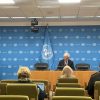
Surges in Violence in Haiti Push Basic Services to the Brink of Collapse
In 2025, the humanitarian crisis in Haiti has grown increasingly dire amid the ongoing gang wars. With rates of displacement, child recruitment, food insecurity, physical violence, and sexual violence having skyrocketed in the past year alone, the national police have found it difficult to keep gang activity under control.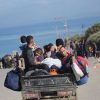
Tensions Between Israel and Hamas Threaten Second Phase of Gaza Ceasefire
On March 1, the first phase of the Israel-Hamas ceasefire was scheduled to end. However, as Israel continues to block humanitarian aid from entering Gaza, and Hamas declining to release more hostages until the second phase goes into effect, the long-term feasibility of the ceasefire agreement is uncertain. Additionally, U.S. President Donald Trump’s recent inflammatory comments surrounding the conflict between the two parties might put further strain on the already fragile ceasefire agreement.
DAWN Calls on ICC to Investigate U.S. Officials for War Crimes in Gaza
On February 24, the human rights organization Democracy for the Arab World Now (DAWN) called on the International Criminal Court (ICC) to investigate former U.S. President Joe Biden, Secretary of State Antony Blinken, and Secretary of Defense Lloyd Austin, among other U.S. government officials, for aiding and abetting Israeli war crimes that deliberately infringed on human rights in the Gaza Strip. This poses significant implications for the future of U.S. foreign policy and the role of impunity in world conflicts.
Humanitarian Groups Face Challenges in Reaching the Sudanese Displaced Population
In the final quarter of 2024 ,there has been an escalation in the Sudanese civil war, with armed clashes between the Rapid Support Forces (RSF) and the Sudanese Armed Forces (SAF) having grown in brutality. Heightened insecurity has pushed millions of people into displacement, hunger, and poverty. Additionally, the continued hostilities have made it difficult for humanitarian organizations to scale their responses up.
A Full Implementation of the Israel-Hamas Ceasefire is Uncertain
On January 19, Israel and Hamas implemented a ceasefire agreement that would end the fighting in Israel and Palestine, see the return of hostages and prisoners, and begin a period of recovery and reconstruction for Palestine. Although the past several weeks have seen a relatively smooth transition and a cessation of hostilities, the prospect of a long-term implementation of the ceasefire remains fragile and there is significant risk of a return to warfare and heightened instability across the Middle East. With the humanitarian situation in Gaza improving for the first time in 16 months, it is imperative that the ceasefire remains in effect.
The Land of Immigration: America’s Demographic Past, Present and Future
Of the approximately 280 million immigrants in the world, the country hosting the largest number is America, the land of immigration. One-fifth of the world’s international migrants reside in the US, with those migrants arriving from nearly every country in the world.
Afghan Refugees, Among Others, Feel the Impact of USAID Funding Freeze
“I was shocked when told by a security guard that the clinic has been closed down. I, along with my relatives, used to visit the clinic for free checkups,” Jamila Begum, 22, an Afghan woman, told IPS.
Sexual Violence and Displacement: Disproportionate Threats to Children in Haiti
As ongoing gang violence and unrest bring down the living conditions in Haiti, humanitarian groups sound the alarm on human rights violations and the increasing challenges they dace in providing relief efforts.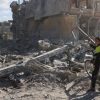
Forcing Palestinians Out of Gaza is A Recipe for Unimaginable Disaster
Even after Trump declared that he wanted to take back the Panama Canal, acquire Greenland by force, if necessary, and rename the Gulf of Mexico to the Gulf of America, I could not, like many others, imagine that his madness could reach a new unfathomable height.
Haitian Government Faces Criticism for its Response to Gang Attack in Kenscoff
The humanitarian situation in Haiti continues to deteriorate as armed gangs expand their control in Port-Au-Prince and escalate acts of violence throughout the nation. Due to heightened insecurity, civilian displacement has reached new peaks, with hunger, disease, and the economic crisis having grown worse. With access to basic services diminished, approximately 5.5 million Haitians are dependent on humanitarian aid for survival. However, relief efforts have been severely hampered due to safety risks, restricted mobility and the vast scale of needs.
‘Reconciliation Will Require Robust Transitional Justice and Accountability Mechanisms’
CIVICUS discusses the ongoing conflict in Ethiopia’s Amhara region with Hone Mandefro, advocacy director at the Amhara Association of America, and Henok Ashagray, PhD candidate and project officer at the Centre for Human Rights at the University of Pretoria.
« Previous Page — Next Page »


Human migration is a matter of global concern. Flows of migrants and refugees influence and change the social, economic and political dynamics of their destinations -- and the places they have left behind. IPS covers crucial issues such as migrant and refugee rights, irregular or undocumented migration, human trafficking, remittances, displaced persons and forced labour. And the positive: in many cases migration creates a new dialogue among civilisations. Migrants themselves become the building blocks of bridges connecting different cultures.

The Week with IPS

NEXT STOP - SDGs
Tracking global progress towards a sustainable world
Tracking global progress towards a sustainable world
