Languages
Sunday, September 13, 2026



News and Views from the Global South
Migration & Refugees

A New Pope at a Pivotal Moment: Civil Society’s Hopes for Leo XIV
The new pope, the latest in a line dating back almost 2,000 years, was quickly subjected to a very modern phenomenon: no sooner had Pope Leo XIV delivered his first address than people started trawling his social media history for clues about his views. In the context of an ongoing culture war, the fact that far-right grievance entrepreneurs were quick to decry the new pope as ‘woke’ seemed reason enough for progressives to welcome him. But for civil society and the global human rights community, it’s how Leo acts that matters.
‘Our Legal Challenge of the Funding Freeze Is Testing the Judiciary’s Ability to Check Executive Power’
CIVICUS speaks with Eric Bjornlund, President and CEO of Democracy International, about the impacts of the US foreign aid freeze and the resulting legal challenges the Trump administration is facing. Democracy International is a global civil society organisation (CSO) that works for a more peaceful and democratic world.

U.S. Deported Bhutanese Refugees Cry–‘No Country To Call Home’
Sitting in his small hut in the Beldangi refugee camp in Jhapa district, Nepal, Narayan Kumar Subedi feels relieved that his son, Aasis Subedi, is safe. Aasis is one of four United States deportees who were the subject of Nepal's Supreme Court landmark ruling on April 24, which directed the government not to deport four Bhutanese refugees who entered Nepal in March of this year after being disowned by Bhutan. U.S. Immigration and Customs Enforcement (ICE) deported the four after they had lived in various parts of the United States for nearly a decade.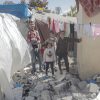
UN Warns of Exacerbated Famine and Malnutrition in Gaza
Since the dissolution of the ceasefire agreement between Israel and Hamas in March, roughly 2 million Palestinians residing within the Gaza Strip have struggled to survive amid constant barrages of airstrikes from the Israeli Defense Forces (IDF) and a persisting blockade on humanitarian aid. With essential border crossings in Gaza remaining closed, humanitarian organizations have expressed fear that the Palestinians within the enclave could experience exacerbated rates of famine and malnutrition.
The Indus Water Treaty Suspension: A Wake-Up Call for Asia–Pacific Unity ?
On April 23, India suspended the Indus Water Treaty (IWT), a 65-year-old agreement that had been a rare symbol of cooperation between India and Pakistan despite decades of hostility. The suspension came a day after militants attacked civilians in Jammu and Kashmir, a disputed region, killing 26 people, most of them Indian tourists. India accused Pakistan of supporting “cross-border terrorism” and responded by halting the treaty. Pakistan denied involvement in the attack and called India’s move an “act of war.”
Armed Gangs Expand Their Control in the Centre Department of Haiti
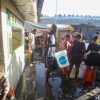
Following a series of brutal altercations in the communes of Mirebalais and Saut d’Eau in Haiti back in late March, local gangs have taken over both communes, spurring heightened displacement and insecurity. This is indicative of the continuing deterioration of the humanitarian situation in Haiti as these armed gangs expand their control beyond Port-au-Prince.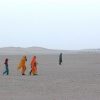
Underfunding Threatens Sahrawi Refugees in Algeria
Since the Western Sahara War in 1975, Sahrawi refugees have resided in a collection of refugee shelters in the Tindouf province of Algeria. For over 50 years, these communities have struggled to develop self-sufficiency and have been solely dependent on humanitarian aid for survival, marking one of the most protracted refugee crises in the world.
‘Trump Is Advancing a 21st-century US Variant of Fascism, Backed by a White Nationalist Ideology’
CIVICUS speaks about democratic decline in the USA with humanitarian and civil society activist Samuel Worthington, former president of the US civil society alliance InterAction and author of a new book, Prisoners of Hope: Global Action and the Evolving Roles of US NGOs.
Humanitarian Aid is Stretched Following Surges in Violence in Sudan
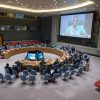
After over two years of extended warfare in Sudan, humanitarian organizations have expressed fears of an imminent collapse as widespread hunger, displacement, and insecurity ravages the population. With tensions between the Rapid Support Forces (RSF) and the Sudanese Armed Forces (SAF) having reached a new peak in 2025, it is imperative that Sudanese communities in the most crisis-affected areas have unfettered access to life-saving aid.
‘The International Response Should Follow the Principle of ‘Nothing about Us, Without Us’’
CIVICUS speaks with Ukrainian gender rights activist Maryna Rudenko about the gendered impacts of the war in Ukraine and the importance of including women in peacebuilding efforts. Russia’s full-scale invasion of Ukraine has profoundly impacted on women and girls. Many have been displaced and are struggling with poverty and unemployment. Those who’ve stayed endure daily missile attacks, damaged infrastructure, lack of basic services and sexual violence from Russian forces if they live in occupied territories. Women activists, caregivers and journalists are particularly vulnerable. The international community must increase support to ensure justice for victims and women’s inclusion in peace efforts.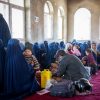
World Immunization Week Highlights the Urgency of Global Vaccine Access
For 2025, the theme of World Health Immunization Week (24-30 April), “Immunization for All is Humanly Possible”, emphasizes the need to eradicate disparities in access to vaccines, particularly for children. By encouraging governments to implement vaccination programs at the local and national levels, the World Health Organization (WHO) seeks t0 ensure worldwide access to life-saving vaccines.
The Disappeared: Mexico’s Industrial-Scale Human Rights Crisis
They found shoes, hundreds of them, scattered across the dirt floor of an extermination camp in Jalisco state. These abandoned shoes, once belonging to someone’s child, parent or spouse, stand as silent witnesses to Mexico’s deepest national trauma. Alongside charred human remains and makeshift crematoria meant to erase all evidence of humanity, they tell the story of a crisis that has reached industrial-scale proportions.
‘Noboa Did Not Receive a Blank Cheque: He Will Have to Show Tangible Results’
CIVICUS discusses Ecuador’s presidential election with Jorge Tapia de los Reyes, Coordinator of the Democracy and Politics Department and the Political Funding Observatory of the Citizenship and Development Foundation (FCD). FCD is an Ecuadorian civil society organisation that promotes participation, citizen monitoring and open government.
UN Warns of an Imminent Collapse in Haiti
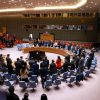
As gang violence in Haiti continues to target civilians and critical infrastructures, humanitarian organizations and the Haitian National Police (HNP) have found it increasingly difficult to manage the growing scale of needs. The United Nations (UN) and its partners fear that Haiti will approach a nationwide collapse due to numerous shortfalls in funding, a widespread lack of essential resources, and rampant insecurity.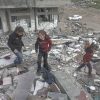
Children at the Center
Creativity and innovation are essential to finding extraordinary solutions to abnormal problems. Now more than ever we must continue finding creative solutions to protect the world’s most vulnerable children from the excruciating pain of war, dispossession and destruction of their last hope: a quality education. The current humanitarian and development funding levels are falling. However, with creativity we can prevent further deterioration and instead turn towards an upward direction.
Essential Supplies Run Critically Low in Gaza While Displacement Soars
Since the deterioration of the ceasefire agreement between Israel and Hamas in March, the Israeli Defense Forces (IDF) have issued numerous evacuation orders and bombardments on the Gaza Strip, resulting in exacerbated rates of displacement and a significant amount of civilian casualties. Roughly two million Palestinians within the enclave struggle to stay alive amid repeated blockages of humanitarian aid.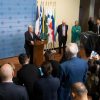
Netanyahu Refuses Calls to End the Gaza War as Palestinians Struggle to Survive
Since the breakdown of the ceasefire agreement between Israel and Hamas, the Gaza Strip has been subjected to significant bombardment and blockages of humanitarian aid. With aid deliveries having been halted from entering the Gaza Strip for over one month, roughly two million Palestinians have been relying on dwindling resources, facing heightened risks of malnutrition and disease.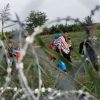
Migrant Smuggling: Europe Must Make a U-Turn
Europe must understand that the only reasonable and humane way to tackle migrant smuggling is to open regular routes for people to reach Europe in safety and dignity.
Rohingya Refugees Are Not Safe in Bangladesh or Myanmar
On April 4, it was confirmed by Myanmar authorities that there were approximately 180,000 Rohingya refugees residing in Bangladesh that are eligible to return. Following numerous cuts in funding as a result of President Donald Trump’s reduction of USAID, as well as the increasingly volatile humanitarian crisis in Myanmar, it is uncertain if repatriation will best serve Rohingya refugee communities.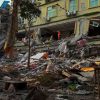
Myanmar Reels From Its Strongest Earthquake in Over a Century
The 7.7 magnitude earthquake that struck central Myanmar on March 28, marked the strongest earthquake the nation has experienced in over a century and the second deadliest in it’s history. The earthquake caused extensive damage in Myanmar and Thailand, with infrastructures in southern China and Vietnam also having been affected.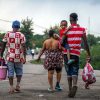
The Current Plight of Haitians: Interview with a Mason in the Dominican Republic
On March 18, the first plane with deportees from the US landed in Cap-Haïtien. Of the 46 passengers, 25 were convicted felons. Taking effect on April 24 the US Department of Homeland Security will revoke the temporary legal status of more than 210,000 Haitians. They had by the Biden administration been granted a safe haven, but all these Haitians are now expected to be deported back to a country immersed in a humanitarian crisis.« Previous Page — Next Page »


Human migration is a matter of global concern. Flows of migrants and refugees influence and change the social, economic and political dynamics of their destinations -- and the places they have left behind. IPS covers crucial issues such as migrant and refugee rights, irregular or undocumented migration, human trafficking, remittances, displaced persons and forced labour. And the positive: in many cases migration creates a new dialogue among civilisations. Migrants themselves become the building blocks of bridges connecting different cultures.

The Week with IPS

NEXT STOP - SDGs
Tracking global progress towards a sustainable world
Tracking global progress towards a sustainable world
