Languages
Wednesday, November 18, 2026



News and Views from the Global South
Human Rights
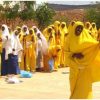
Gang Rape & Murder of 12 Year Old Somali Girl Sparks Fury
Aisha Elias Adan was abducted on the evening of February 24th at a market in Israc village, Puntland, Somalia. Her body was carelessly dumped in front of her family home the following morning. A doctor’s report showed that she had been brutally gang-raped.
HER LOST LAND
(The Daily Star) - I do not usually write very easily. As someone working mostly with people with little or no literacy, my forte, as I would like to call it, is the oral tradition. I speak, I talk, I converse. I write today based on my perceptions from my work with rural women with whom I have lived and learnt from over the last four decades.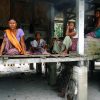
From 2018: When Environmental Crises Hit Homes, Women Suffer the Most
When Mandelena became a mother, she was only 16. During the prolonged dry season in Gwor County, South Sudan, her community saw crops failing and cattle dying. Children stopped going to school because of hunger and women and girls had to walk up to five hours every day to collect water.
Syrian Crisis Enters Ninth Year with 11 Million Refugees Overseas & 6 Million Home
The bell rings and the halls erupt with the sounds of chatter and excitement as hundreds of children run to the dusty courtyard for recess. I joined them to play football but the game instead turned into a round of questions.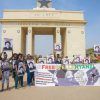
Free Stella Nyanzi, Demand Pan African Activists in Ghana
On Saturday 9th March, a small group of activists from Ghana, concerned by the continued incarceration of Ugandan feminist activist Dr Stella Nyanzi, rallied by the symbolic national independence Square to raise awareness on the dangers of remaining quiet to injustice.
People Affected by Leprosy Still Face Stigma in Latin America
The First Latin American and Caribbean Meeting of Organisations of People Affected by Hansen's Disease, more widely known as leprosy, seeks to exorcise stigma and discrimination. The meeting has brought together around a hundred activists in Brazil.
Multilateralism: A Testimony
For over 70 years, the UN system has been perceived as the guardian of peace and development in the world. However, multilateralism today is undeniably under strain. The effectiveness of global institutions and of global policymaking is questioned, and alliances are fraying.
Women, Work, and Migration
Social barriers have historically been blamed for the lack of gender parity in the workplace. But there are other dimensions to this age-old discourse.
The Crisis in Venezuela
My mission to Venezuela in November/December 2017 was the first by a UN rapporteur in 21 years. It was intended to open the door to the visit of other rapporteurs and to explore ways how to help the Venezuelan people overcome the protracted economic and institutional crisis.
Birds of a Feather: Kim Jong-un and Donald J Trump
After his first meeting with Kim Jong-un Donald Trump declared: "And then we fell in love, okay? No, really – he wrote me beautiful letters, and they're great letters." Maybe it was a joke, maybe not. At least Trump indicated that he and Kim Jong-un were friends. In his book De Amicitia, written 44 BCE, Marcus Tullius Cicero wrote "A friend is, as it were, a second self." Are Trump and Kim Jong-un really friends? At least they seem to have many personal traits in common.
Preaching World Peace by Day, Peddling Lethal Weapons By Night
The Middle East, one of the world’s most politically-volatile and war-ravaged regions, has doubled its arms imports during the past five years, according to the Stockholm International Peace Research Institute (SIPRI).
Millions of Venezuelans in Need of Protection
The international community must extend protections for Venezuelans in light of a growing humanitarian crisis with no end in sight. Human Rights Watch has urged governments in the Americas to provide temporary protection to the millions of Venezuelans fleeing a severe humanitarian crisis.
Will ‘People Power’, or Powerful People, Change the World?
When I was a little girl, I wanted to be a hero. While my friends dressed up as princesses, I wore a home-made Joan of Arc costume. Where others read romance novels, I read about fighting dragons. I didn’t want to be a princess, I wanted to save them.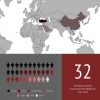
On International Women’s Day, CPJ highlights jailed female journalists
On International Women's Day, CPJ has highlighted the cases of female journalists jailed around the world in retaliation for their work. At least 33 of the 251 journalists in jail at the time of CPJ's prison census are women. At least one of those--Turkish reporter and artist Zehra Dogan--was released in February after serving a sentence on anti-state charges. The four female journalists jailed in Saudi Arabia were detained over their criticism of the kingdom's ban on women driving.
Break the Menstrual Taboo
It is time to rise up and fight a long neglected taboo: menstruation. Marking International Women’s Day, United Nations human rights experts called on the international community to break taboos around menstruation, noting its impacts on women and girls’ human rights.
The Geneva Centre celebrated International Women’s Day with a debate and book presentation on Muslim women between stereotypes and reality: an objective narrative
No country in the world has a perfect record on women’s rights and gender equality and there is a felt need for cooperation and joint endeavours in order to reach the common goal of empowering women and putting an end to gender inequality. Muslim women must be given the right to freely choose what to wear and what not to wear, and fully included in society, be it through insertion on the labour market or simply through the practice of sports.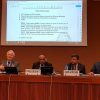
Geneva Centre’s Executive Director presents the agenda of the 21 March “Celebration of diversity: beyond tolerance the path towards empathy” conference to African Group Ambassadors
On 7 March, the Geneva Centre’s Executive Director Ambassador Idriss Jazairy was invited by the Permanent Delegation of the African Union to an official meeting of all African Group Ambassadors in Geneva to present the rationale and purpose of the Geneva Centre’s forthcoming conference on “Celebration of diversity: beyond tolerance the path towards empathy.”
Protecting Women’s Space in Politics
Women human rights defenders around the globe are facing heightened threats of violence and repression. Sometimes they are targeted for being activists, and sometimes just for being women. World leaders should do much more to secure space for women’s safe participation in public life.
Eight Years on, Fukushima Still Poses Health Risks for Children
On March 11, we commemorate the 8th anniversary of the Fukushima nuclear disaster. To an outside observer, this anniversary passes as a technical progress report, a look at new robot, or a short story on how lives there are slowly returning to normal.
Smart Tech Will Only Work for Women When the Fundamentals for Its Uptake Are in Place
Science and technology offer exciting pathways for rural women to tackle the challenges they face daily. Innovative solutions for rural women can, for example, reduce their workload, raise food production and increase their participation in the paid labour market. But even the very best innovative, gender-appropriate technology makes no sense without access to other critical resources, especially secure land rights, which women in rural areas need to flourish.
Was Slavery the World’s First Human Rights Violation?
The United Nations, which diligently monitors human rights violations worldwide, believes that centuries-old slavery still exists worldwide.« Previous Page — Next Page »


One world, one humanity, now one court to defend its rights. Another step towards universal human rights, but not remotely a step far enough. The United Nations adopted the Universal Declaration of Human Rights more than half a century ago, but that has done little to stop violations the world over, just as the Geneva Convention has not protected prisoners of war enough. Democracy itself and the freedom it presupposes has not been protective enough. This is the century to move from politicisation of human rights towards humanising political ways. IPS keeps an eye on that difficult path.

The Week with IPS

NEXT STOP - SDGs
Tracking global progress towards a sustainable world
Tracking global progress towards a sustainable world
