Languages
Friday, August 14, 2026



News and Views from the Global South
Human Rights

Education Cannot Wait Interviews Tom Dannatt, Founder and CEO of Street Child
Tom Dannatt is a Founder and CEO of Street Child, an international non-government organization active in over 20 disaster-hit and lowest-income countries – working for a world where all children are ‘safe, in school and learning’. Tom founded Street Child in 2008 with his wife Lucinda and has led the organization since its inception. Street Child leads the civil society constituency within ECW’s governance and, accordingly, Dannatt represents the constituency on the Fund’s High-Level Steering Committee.

Experts Launch a Climate and Health Curriculum for African Negotiators Ahead of COP30
Despite climate change being a health risk multiplier, health is often underrepresented in climate negotiation processes. Experts attribute this to a lack of funding by the African governments and a lack of capacity building among climate negotiators.
Israel, Hamas, the US and Qatar—Unraveling the Mess
Israel’s brazen attack on Hamas’ negotiating team in Qatar while they were deliberating a new ceasefire with Israel raises serious questions not only about the legality of the attack, which violated international laws and norms, and concerns over Qatar’s sovereignty, but also the potential regional and international fallout.
Afghanistan’s Overlapping Crises Deepen Following 6.0 Magnitude Earthquake
Over the past week, Afghanistan’s humanitarian situation has deteriorated significantly following the August 31 earthquake, which measured over 6.0 in magnitude and caused an immense loss of life and widespread destruction of critical infrastructure. Compounded by the nation’s fragile economy, severe shortages of essential resources, and persistent access challenges, humanitarian organizations have found it increasingly difficult to reach vulnerable communities—especially women and children.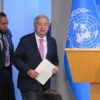
Global Military Spending Shows Misalignment of Priorities, says UN Secretary General
Global military spending has been on the rise for more than 20 years, and in 2024, it surged across all five global regions in the world to reach a record high of USD 2.7 trillion. Yet, such growth has come at the cost of diverting financial resources away from sustainable development efforts, which the United Nations and its chief warn puts pressure on an “already strained financial context.”
Nepal Faces Political Crisis after Deadly Gen-Z Protests
Nepal entered into a new era of constitutional and political crisis after deadly protests by the deeply frustrated young generation (Gen-Z). Prime Minister KP Sharma Oli resigned on Tuesday after protests grew out of control.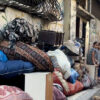
Palestinians Pushed into Deeper Crisis with Israeli Displacement Order on Entire Gaza City
Israel’s intent to displace around 1 million civilians, half of whom are living in famine, is impossible and illegal Oxfam said, while the Israeli military continued to flatten Gaza City building by building as its mass forced displacement of civilians in the city gains terrifying momentum.
Translating Recognition of a Palestinian State into Reality
During the upcoming annual UN General Assembly, several key European countries are expected to recognize a Palestinian state. The question that looms is how to translate such a significant development into reality, whereby the Palestinians will realize their national aspiration for statehood
Do We Need a Pacific Peace Index?
Globally, there is a 0.36% deterioration in average levels of peacefulness, as more countries are increasing their levels of militarisation against the backdrop of rising geopolitical tensions, increasing conflict, and rising economic uncertainty.
No Progress Without Women’s Freedom
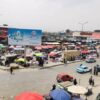
In recent weeks, the walls of the Afghan capital have been plastered with slogans about women's hijab: “Unveiling is a sign of ignorance”; “Hijab is a father's honour and the pride of Muslims”.
50 Years On: Lebanon’s Civil War, Feminist Peacebuilding, and the Fight Against Silence
 This year marks half a century since the start of Lebanon’s civil war in 1975 - a conflict that lasted 15 years, killed over 150,000 lives, and resulted in as many as 17,000 missing. Decades later, the legacy of that war is still everywhere: in the silence of classrooms without history books, in families who never knew what happened to their missing loved ones, and in violence made mundane in all parts of society.

Japan Backs Africa’s Health Future at TICAD
At a time of great transformation for global health, solidarity is more important than ever. As other countries have retreated from their commitments, Japan has instead continued its steadfast investment in a shared future that prioritizes human dignity and security.
Is Western Support for Israel Beginning to Crumble?
When the high-level meeting of over 150 world leaders takes place at the United Nations, September 22-30, one of the political highlights would be the announcement by at least 10 Western nations to recognize Palestine as a sovereign nation state. The 10 countries-- some already announcing their recognition ahead of the UN meeting -- include UK, France, Canada, Australia, Portugal, Malta, Belgium, Spain, Ireland and Norway-- proving the longstanding support for Israel is gradually diminishing in the Western world.
UN Mobilizes Amid Cascading Earthquakes in Eastern Afghanistan, Aiming to ‘Build Back Better’
United Nations aid organizations are rallying after a series of earthquakes and powerful aftershocks wreaked unprecedented havoc across eastern Afghanistan—particularly in the mountainous provinces of Kunar and Nangarhar.
‘Angola produces large quantities of oil and diamonds, yet most people don’t see the benefits’
CIVICUS discusses recent protests in Angola with Florindo Chivucute, founder and executive director of Friends of Angola, a US-based civil society organisation established in 2014 that works to promote democracy, human rights and good governance in Angola.
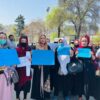
Afghan Women to the International Community: Real Action, Not Mere Sympathy or Words of Condemnation
This year marks the fourth anniversary of the Taliban retaking power in Afghanistan. All these years have been one long nightmare for the women of Afghanistan, the ones who have borne the brunt of oppression – arguably the worst of its kind anywhere in the world.
Togo’s Young Generation Challenges Six Decades of Dynastic Rule
In late June, thousands flooded the streets of Lomé, Togo’s capital, presenting the ruling dynasty with its biggest challenge in decades. The catalyst was constitutional manoeuvring by President Faure Gnassingbé to maintain his grip on power. In March 2024, his government pushed through constitutional amendments that transformed Togo from a presidential to a parliamentary system. This created a new position, the President of the Council of Ministers – effectively Togo’s chief executive – elected by parliament rather than by popular vote, and with no term limits. Gnassingbé assumed this new role in May, making it abundantly clear the changes were only about keeping him in power indefinitely.
From Matriarchy to Victims: An Ongoing Story of Indigenous Women in Canada
If European colonialism had never happened in Canada, matriarchy would still have been strong in Indigenous culture.
Youth Lead Global Call to Support Hibakusha on UN Day Against Nuclear Test
Marking the United Nations’ International Day Against Nuclear Tests, young activists and experts gathered at the UN University in Tokyo for an event titled “The Role of Youth in Supporting Global Hibakusha.” The forum underscored how youth solidarity can amplify the voices of survivors of nuclear testing and bombings, known collectively as the “Global Hibakusha” — communities scarred by the use, production, and testing of nuclear weapons, from Hiroshima to the Marshall Islands — and strengthen global momentum toward nuclear abolition.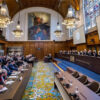
African Debt & Climate Change: How the ICJ’s Vanuatu Ruling Could be Used for Broader Justice
African sovereign debtors in distress face terrible choices. They are often forced to choose between fully paying their creditors and financing the needs of their populations – health, education, renewable energy, water.
‘Who Will Take the Mic at the United Nations When Doing so Might Cost Them Their Freedom?’
CIVICUS discusses civil society’s challenges in engaging with United Nations (UN) processes with an activist from a Salvadoran queer-led organisation who asked to remain anonymous for security reasons.
« Previous Page — Next Page »


One world, one humanity, now one court to defend its rights. Another step towards universal human rights, but not remotely a step far enough. The United Nations adopted the Universal Declaration of Human Rights more than half a century ago, but that has done little to stop violations the world over, just as the Geneva Convention has not protected prisoners of war enough. Democracy itself and the freedom it presupposes has not been protective enough. This is the century to move from politicisation of human rights towards humanising political ways. IPS keeps an eye on that difficult path.

The Week with IPS

NEXT STOP - SDGs
Tracking global progress towards a sustainable world
Tracking global progress towards a sustainable world
