Languages
Tuesday, October 20, 2026



News and Views from the Global South
Peace

With Ceasefire in Effect, Tonnes of Aid Expected to be Delivered into Gaza
After two years of conflict with Israel, Hamas has released the remaining 20 living hostages, while Israel has freed 250 Palestinian prisoners and over 1,700 detainees who have since returned to Gaza. Following a ceasefire agreement that took effect on October 10, Israeli forces are set to withdraw from designated areas within the Gaza Strip as humanitarian organizations mobilize to assist Palestinians in urgent need.
Strengthening East Asian Cooperation via ASEAN?
Global South cooperation arrangements must evolve to better respond to pressing contemporary and imminent challenges, rather than risk being irrelevant straitjackets stuck in the past.
Breaking the Silence in Tokyo: A Kazakh Filmmaker Confronts the Nuclear Scars Through Her Documentary “Jara”
[caption id="attachment_192574" align="alignleft" width="300"]Aigerim Seitenova stepped forward in a black T-shirt and green skirt to introduce her 31-minute documentary, “Jara – Radioactive Patriarchy: Women of Qazaqstan.” The screening event was co-organized by the Kazakh Nuclear Frontline Coalition (ASQAQQNFC), the Soka Gakkai Peace Committee, and Peace Boat, with support from Japan NGO Network for Nuclear Weapons Abolition (JANA).

Trump’s Gaza Peace Plan: Today, Tomorrow and the Day After
Back in January last year, my Toda Policy Brief 182 was published with the title “Israel and Gaza: Yesterday, Today and Tomorrow”. On 29 September this year, President Donald Trump and Israeli Prime Minister Benjamin Netanyahu held a joint press conference to announce a peace plan for Gaza. The plan’s title could well have been “Gaza: Today, Tomorrow and the Day After”. Trump’s yearning for the Nobel Peace Prize is no secret, possibly out of Obama-envy. If the bold and audacious 20-point Gaza plan succeeds, he will surely deserve the award. For it entails the end of Hamas as a governing force in Gaza and a security threat to Israel, gives Arabs the stability they seek in the region, promises a terror-free future for Israel and keeps alive the dream of a Palestinian state. That said, however, potholes, there be a few on the pathway to Middle East peace.
Politically Motivated Murders Across the United States
Following the murder of Charles Kirk, a U.S. conservative activist, in Orem, Utah on September 10, various remarks, commentaries, and accusations have been made regarding politically motivated murders occurring across the United States.
World War II Era Weapons Still Threatening Lives and Development in the Solomon Islands
Last century the remote Solomon Islands was the stage for some of the most intense battles fought during the Pacific campaign of the Second World War. But while Allied troops departed on the heels of victory, the military forces of both sides left a massive legacy of unexploded ordnance (UXO) which is still scattered across the country and others in the region.
UN80: Three Tests to Make Reform About People, Not Spreadsheets
This September the UN turns 80, but the lessons of peace, justice, and cooperation are still unfinished. The world today faces the flames of inequality, conflict, ecological collapse and growing digital threats. In short, the very problems the UN was created to solve are once again staring us in the face.
UN at 80: Civil Society Must Have a Say in the Struggle for Renewal
As the high-level opening week of the UN General Assembly unfolds, with heads of states delivering often self-serving speeches from the UN’s podium, the organisation is undergoing one of its worst set of crises since its founding 80 years ago. This year’s General Assembly – ostensibly focused on development, human rights and peace – comes as wars are raging across multiple continents, climate targets are dangerously being missed and the institution designed to address these global challenges is being hollowed out by funding cuts and political withdrawals.
Why Collective Healing is Central to Peacebuilding
 Wars and oppression leave behind not just rubble and graves. They leave behind invisible wounds, profound trauma carried by survivors. And most often, women carry the largest burden. They are targeted not only because of their gender, but because surviving and leading threaten structures based on patriarchy and domination.

Do We Need a Pacific Peace Index?
Globally, there is a 0.36% deterioration in average levels of peacefulness, as more countries are increasing their levels of militarisation against the backdrop of rising geopolitical tensions, increasing conflict, and rising economic uncertainty.

50 Years On: Lebanon’s Civil War, Feminist Peacebuilding, and the Fight Against Silence
This year marks half a century since the start of Lebanon’s civil war in 1975 - a conflict that lasted 15 years, killed over 150,000 lives, and resulted in as many as 17,000 missing. Decades later, the legacy of that war is still everywhere: in the silence of classrooms without history books, in families who never knew what happened to their missing loved ones, and in violence made mundane in all parts of society.

Youth Lead Global Call to Support Hibakusha on UN Day Against Nuclear Test
Marking the United Nations’ International Day Against Nuclear Tests, young activists and experts gathered at the UN University in Tokyo for an event titled “The Role of Youth in Supporting Global Hibakusha.” The forum underscored how youth solidarity can amplify the voices of survivors of nuclear testing and bombings, known collectively as the “Global Hibakusha” — communities scarred by the use, production, and testing of nuclear weapons, from Hiroshima to the Marshall Islands — and strengthen global momentum toward nuclear abolition.
Soka Gakkai President Issues Statement on Creating a World Without War to Mark 80 Years Since End of World War II
Minoru Harada, president of the Soka Gakkai Buddhist organization, has today issued a statement marking 80 years since the end of World War II, titled “Creating a Wave of Change Toward a Century Without War,” clarifying its ongoing commitment to peace.
A New Non-Alignment for the Global South
The Global South had little voice, let alone influence, in shaping the economically ‘neoliberal’ and politically ‘neoconservative’ globalisation leading to contemporary geopolitical economic conflicts. Pacifist non-aligned cooperation for sustainable development offers the best way forward.
IPC Officially Declares Famine; More than Half a Million Starving in Gaza
The Integrated Food Security Phase Classification (IPC) has officially declared that there is famine in Gaza. The world’s biggest food monitoring system raised its classification to Phase 5, the highest level on its food insecurity scale.
Peacebuilding: The Missing Peace in COP30 Climate Ambition
Peacebuilding, conflict prevention, and crime prevention are no longer niche security concerns—they are global imperatives for sustainable climate action. From the migration crisis in Venezuela to the deforestation-driven conflicts in the Amazon, to organised crime in Central America, the ripple effects of instability and environmental degradation are felt far beyond national borders. In 2025, nearly 80% of countries experiencing risks to peace remain off-track to meet the Sustainable Development Goals (SDGs). Addressing these challenges isn’t just about safeguarding peace, stability and development. It’s also about ensuring sustainable climate action.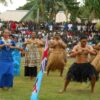
Fiji’s Truth and Reconciliation Commission Aims To Restore Trust and Peace After Decades of Political Crises
Fiji, a nation located west of Tonga in the central Pacific, is renowned for its natural beauty and beach resorts. But for 38 years it has endured a political rollercoaster of instability with four armed coups that overturned democratically elected governments and eroded human rights.
Adesso Basta! Enough Is Enough. Israel’s Ethnic Cleansing
On August the first, the Italian daily La Repubblica published an interview with David Grossman, Israel’s most renown author and supporter of a “two-state solution”, as well as an outspoken critic of Israel's violence against Palestinian civilians.
From Semei to Hiroshima: Astana Times Editor on Bringing Global Solidarity Through Journalism
Eighty years ago, the atomic bombings of Hiroshima and Nagasaki left a lasting reminder to humanity of the inhuman nature of nuclear weapons. Kazakhstan, too, is a nation deeply scarred by nuclear tests conducted during the Soviet era. Having covered the activities of Soka Gakkai International (SGI) in Kazakhstan—including its support for exhibitions and documentary productions on nuclear abolition in Astana—, INPS Japan recently interviewed Zhanna Shayakhmetova, editor-in-chief of The Astana Times, a leading English-language newspaper in the country that continues to convey messages of disarmament and peace to the world. In the interview, Shayakhmetova spoke about the role of religious leaders who will gather in Astana from around the world this September, the importance of passing on memories to younger generations, and the responsibility journalism holds in this endeavor.
Aid Denied, Questions Ignored: Israel Keeps Focus on Hostages
At the United Nations media stakeout on Tuesday, Israeli officials kept focus exclusively on the hostages, avoiding questions entirely.
Two-State Solution Conference Presents an “Exceptional Moment” for International Community – The Elders
Dignitaries across the international community have convened in New York to promote the two-State Solution - the coexistence of Israel and Palestine as sovereign states - as the only path forward to shared sustainable peace in the Middle East. Former and current leaders from 145 countries and independent groups will speak at the United Nations to demonstrate their ‘near-universal support’ and discuss the steps that need to be taken to achieve it.« Previous Page — Next Page »





The Week with IPS

NEXT STOP - SDGs
Tracking global progress towards a sustainable world
Tracking global progress towards a sustainable world
