Languages
Friday, October 2, 2026



News and Views from the Global South
Religion

Terrorist Madness
As I sat down to write this yesterday morning, there was breaking news of a mass killing at a residential facility for the disabled not far from Tokyo. The perpetrator was apparently a 26-year-old former employee of the care home who subsequently handed himself over to the police after murdering 19 people and injuring dozens of others.
The Americans Should Have Their Own Chilcot
Ever since the Chilcot Inquiry vilified former Prime Minister Tony Blair on July 6 for taking the United Kingdom to war in Iraq, the world is waiting for the other shoe to drop. If Blair deliberately exaggerated the threat posed by Saddam Hussein, the report assessed he had done it at the behest of his American ally George W. Bush. That gives sufficient ground for the Americans to have their own Chilcot. Blair had bought the distribution rights on this of the Atlantic for the biggest lot of hogwash Bush sold to the entire world.
Convicting Children
Like 73pc of Pakistan’s population, Ansar Iqbal’s birth had never been registered. And like most juvenile defendants in Pakistan, he was erroneously charged and tried as a 23-year-old adult because the police thought that’s how old he looked.
Is Kemalism on Its Way out in Turkey?
The enigmatic coup-attempt in Turkey on the night of July 15 and 16 signals something ominous about the future of Turkey, NATO, and the entire region. There's more to read into the event than what appears on the surface. We don't know much about the nature of the coup, but it has definitely tarnished the “Turkish Model” of success, which its Arab neighbours envied, and European ones admired for the co-existence of liberal Islam, secularism, and democracy. The “abortive coup” seems to have further consolidated Erdogan's power, at least for the time being. Seemingly, Erdogan and his followers are marching together toward “illiberal democracy”, if not toward the utopia of Islamist totalitarianism.
Has the World Gone Mad?
Has the world gone mad? No. Violence is a part of our history, as mankind – we've known it all our lives. But, never before have we been exposed to violence in the manner that we are now, because of cable news coverage and social media. Before this age of rapid transfer of information, it took us much longer to learn about acts of violence in far away lands.
The Importance of Soft Power
The world is at war with extremists. Developed and developing nations, whether it is France, the United States, Russia or China, the Middle East or countries in the sub-continent, we are all battling one form of Muslim militancy or another. And while alliances are being forged on a regional or trans-continental basis to fight outfits like the Boko Haram, Al Qaeda or the Islamic State (IS), and battles are being fought out on land in Iraq Syria, Libya or Yemen, on the streets of Paris or in Dhaka, every nation that has faced the onslaught of extremists who are connected to a global network of jihadists that is increasingly sophisticated, the realisation that they are now battling for the 'hearts and minds' of the populace is emerging.
Ideology and Terrorism
What causes a person to drive a truck through local citizens and tourists celebrating a national holiday? What compels someone to open fire on unsuspecting patrons at a nightclub?
Entrenched Inequalities
Do a girl born in a poor household in rural Balochistan and a boy born in a rich household in Karachi have the same or even a similar set of opportunities in life? Are their chances of acquiring an education similar? Do they have access to comparable healthcare services and facilities? Do they have equal opportunities for access to physical infrastructure and the freedom of movement and association?
Focus on the Supply Side of Terrorism
Clearly, this is a tipping point in our understanding of and approach to ideological terrorism so far as Bangladesh is concerned. Since we have been visited by a series of 'firsts' in so-called jihadi manifestations, perhaps a review is in order.
Saudi Scapegoats
The eleventh day of September 2001 seems a distant memory now. On that day, 19 hijackers unleashed mayhem in the skies over the United States of America. Fifteen of these 19 hijackers, it would later be discovered, were Saudi citizens. Yet the war that ensued, that cast its bloody fingers deep into the Middle East and South Asia, would not be a war against Saudis. It was instead against Afghans, Iraqis and, at least via remote control, Pakistanis.
Murder in the Name of Faith
A wave of terrorist attacks — from Istanbul to Bangladesh and Iraq to Saudi Arabia — has shaken the Muslim world. The deadly week has left hundreds of people dead and wounded. The militant Islamic State group (IS) has claimed responsibility for some of the attacks and others clearly seem to be inspired by the group that has now established itself as the most lethal terrorist network with global reach.
Terror Will Not Define Us
“Everything will be alright in a few days again”, I said to my friend in a half hearted attempt to console her as I left her apartment. It was her answer which consumed me for the rest of the day. Motherly in nature and genuinely bereaved, she looked back at me and said “why should it be, why should we forget”.
Elites, Expats and Enclaves
At the end of a hot and exacting month of fasting, Eid-ul-Fitr this year arrives on the heels of a ghastly number of terrorist attacks. In the week gone by, travellers have perished in Istanbul, diners in Dhaka, shoppers in Baghdad, and several people in three separate blasts in the kingdom of Saudi Arabia the other day.
When Kids Become Monsters
We have been attacked as never before. The facts do not need to be repeated. The savagery with which 20 hostages were slaughtered need not be retold. Islamic terrorism has arrived in Bangladesh with a bang and it has shaken us to our foundations. The relative peace we lived in while the world around us disintegrated in the face of onslaught by extremist outfits such as the Islamic State (IS) and Al Qaeda and other similar outfits across the length and breadth of all continents is now not news anymore, merely a fact of life.
A Night of Terror
So, a night of absolute terror preceded the glorified Night of Power this Ramadan. And it has left Dhaka in a stupor; in a dazed state of disbelief and heartbreak. There is talk of vengeance in the air; and there is the call to patience. There are defenses of creed and vilification of entire traditions. There is evaluation of the response time and criticism of the PR spin on casualties. There are subtle attempts to claim some connection to the tragedy, by professing either geographic or personal proximity to the place, or the people involved. But what is missing is clarity. 'Why did this happen? Why us?'
First Independent Expert To Tackle LGBTI Discrimination: “Historic Victory”
Human rights groups have described the UN Human Rights Council's (HRC) decision on Thursday to appoint an independent expert to target the ongoing discrimination of lesbian, gay, bisexual, transgender and intersex (LGBTI) people all over the world as a "historic victory."
Suspend Saudi Arabia from Human Rights Council, Human Rights Groups Say
Saudi Arabia’s membership in the Human Rights Council (HRC) should be suspended by members of the UN General Assembly, Human Rights Watch (HRW) and Amnesty International (AI) said on Wednesday.
Uganda Rolls Out Compulsory Immunization to Dispel Anti-Vaccine Myths
Patience*, a Ugandan maid, planned on taking her three-year-old son for polio immunization during the country’s mass campaigns a year ago, until her landlord’s wife told her a shocking myth.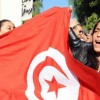
Islamists and Secularists Adjust to Work Together
It is encouraging to watch how Rachid Ghannouchi and Nahdha, the largest and most popular Islamic political party in Tunisia which is now widely expected to come to power again in the next election, have been transforming over time. Recently Ghannouchi astonished the world by declaring that “We will exit political Islam”, meaning that the country would be working to separate religious work from politics. Coming from one who once advocated Sharia law in governance, this change is amazing. Ghannouchi's leadership of remaining flexible, without compromising fundamental values and principles of Islam, has played a major role in helping Tunisia to become a vibrant democracy today, when other countries in the region have failed.
Collective Indifference or Silent Acceptance?
When blogger Rajib Haider was killed in 2013, the outcry was tremendous. But, over the next three years, at least 38 more were added to the list of those murdered, which includes writers, publisher, foreigners, religious minorities and LGBT rights activists. There have been reports about alleged IS involvement, and last week, the security forces launched a drive that resulted in the arrest of 194 'militants'. But the collective outrage over people being murdered seems to have mellowed.
Xenophobic Rhetoric, Now Socially and Politically ‘Acceptable’ ?
“Xenophobic and racist rhetoric seems not only to be on the rise, but also to be becoming more socially and politically acceptable.” The warning has been heralded by the authoritative voice of Mogens Lykketoft, current president of the United Nations General Assembly, who on World Refugee Day on June 20, reacted to the just announced new record number of people displaced from their homes due to conflict and persecution.« Previous Page — Next Page »


Religion plays a big and in some cases growing role in the socio-political dynamics within countries and often is a factor in civil and cross-border conflict, conflict resolution and peace building. From Burmese monks' marches to the role of religious fundamentalism, this dedicated site gathers IPS stories about how religion affects our world, from daily life to geo-politics.

The Week with IPS

NEXT STOP - SDGs
Tracking global progress towards a sustainable world
Tracking global progress towards a sustainable world
