Languages
Friday, October 2, 2026



News and Views from the Global South
Religion

The US War on Muslim Refugees
The gloves are off. With today’s Executive Order on “Protecting the Nation from Terrorist Attacks by Foreign Nationals,” President Donald J. Trump has declared war on Muslim refugees around the world.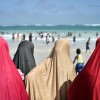
UN Meeting Says No to Anti-Muslim Hatred
The rise in anti-muslim attitudes around the world prompted a special UN meeting Tuesday, just days before the inauguration of US President-elect Donald Trump whose controversial policies have drawn on anti-Muslim sentiments.
Rohingya Refugees Trapped in Limbo
Amid growing persecution by Myanmar's military, thousands of minority Rohingya Muslims in its western state of Rakhine have fled their frontier villages and are languishing along the Myanmar-Bangladesh border for lack of shelter and emergency supplies.
Release of Chibok Girls Rekindles Pressure to Free Last 196
The Nigerian military announced the rescue of a missing Chibok schoolgirl Saturday, bringing to 23 the number freed since Boko Haram seized 219 girls from a secondary school in the country’s northeast in April 2014.
Peace Fails to Bring Prosperity in Eastern Sri Lanka
It is a Tuesday afternoon and only a handful of devotees have flocked to the Meera Grand Mosque in Katankuddi, about 300 kms east of the capital Colombo.
Boko Haram: Recruited by Friends and Family
A recent study supported by the government of Finland has found widespread misconceptions regarding what drives people to join Islamist militant groups like Boko Haram.
Murders, Crackdown Create Lingering Climate of Fear in Bangladesh
Like the living room of any proud family, the one in Ajoy Roy’s house boasts photos of the eldest son, Avijit.
Muslims in Europe: Can There Be Social Harmony ?
Although 20 million Muslims reside in Western Europe, establishing social harmony between the Muslim community and their European counterparts has proved exceedingly challenging.Much to the dismay of international humanitarian agencies and anti-racism activists,the language of exclusion and prejudice persists.
Islam Right Now
Watching Christianity nearly a century–fundamentalist Christians fighting ritualistic Christians fighting secularism, generally moving fundamentalism–>ritualism–>secularism–maybe the same for Islam? Their similarities make “Islam right now” a repetition of Christianity; their differences shout, Watch Out! Let us see where this leads us.
Myanmar Turns to Kofi Annan for Help on Festering Rohingya Crisis
Myanmar’s government has responded to pressure from the international community to tackle religious tensions and persecution of Muslims in Rakhine State by appointing former U.N. secretary general Kofi Annan to head a commission to advise on “a sustainable solution” to the crisis.
The Counter Narrative to Terror and Violence is Already Among Us
The French philospher Voltaire once said that “if we believe in absurdities, we shall commit atrocities.” Indiscriminate killing of self and innocent others, ostensibly in the name of some religion, is among the most absurd of beliefs. And rather than ceasing, the spiral of violence appears to know no end. There appears to be no locus, and no focus, beyond random killing.
Iran: Children at the Gallows
As Iran currently executes the highest number of juvenile offenders in the world, hundreds of Iranian minors helplessly watch their childhoods pass them by as they await their fatal ends behind bars.
History and Society in the Shaping of Terrorism Today
Among the anxieties, fears and confusions generated by the grisly tragedy that occurred on July 1 at the Holey Artisan Bakery in Dhaka, one refrain was fairly consistent – how could some young men, presumably from relatively affluent and educated families, not only become radicalised but also engage in the horrific, detached, surreal brutality through which they killed their victims. The sheer wickedness of some young men repeatedly, deliberately, cold-heartedly hacking, stabbing and decapitating people to death, left us traumatized. How COULD they? Their brutality became the story, and our response reflected the worldwide horror and disgust at the tactics used by terrorists of their particular ilk.
Need for a Factual Assessment
The Muslims make 14.2 percent of India's 1.25 billion people. But, 25 percent of India's 370,000 beggars are Muslims. The newly released data by researchers at the University of California, Davis, and the London School of Economics, published in the journal Human Nature, also show that the Muslim population inside Indian jails is rising. For example, Maharashtra jails have 31.09 percent Muslim prisoners against a state average of 19.06 percent. Arthur Koestler famously writes that statistics don't bleed, but it's the detail which counts. What counts in this instance is that the plight of the second largest Muslim population in the world after Indonesia is nothing but dismal.
“Non-lethal” Pellet Guns Maim Hundreds in Kashmiri Protests
Hospitals in Kashmir’s summer capital are packed to capacity these days, their wards overflowing with pellet gun victims injured during violent clashes with government forces.Pope Refuses to Equate Islam with Violence, Terrorism
He spoke with much apparent deliberation when Pope Francis last Sunday, on his return trip from Poland, said to reporters, “I don’t think it is right to equate Islam with violence.”
Democracy in Islam
Both Islamists and Islamophobes find Islam and democracy incongruent. Some cite a verse that deprecates majority views. To call Islam anti-democracy by citing a brief verse non-contextually is odd. Even in democracy, small ruling groups usually make decisions. Majority only decides who rules. The mode of this decision is the key contrast between democracy and other rules. We must view Islamic stands on such key democracy traits to gauge congruence.
Climate and Terrorism
The media are increasingly reporting events in a basic manner, and have by and large abandoned the process of deep analysis. Now is the moment to focus our attention on terrorism. This topic be will remain a pressing issue for quite some time. We now know that terrorism has many causes, which can be rooted in religion to feelings of social exclusion and from a desire for glory to the actions of a damaged psyche.
Countering Terrorism in Bangladesh
Politicians and law-enforcers in Bangladesh, from time to time, hype up both panic and complacency by publicizing the following: “terrorists everywhere” or “no terrorists anywhere”, in the country. The ambivalence is counterproductive to counterterrorism (CT) operation. The first and foremost requirement for effective CT is understanding of terrorism per se, that terrorists are not mindless robots programmed to kill innocent people just for the sake of killing. Terrorism is ideology-driven violence, different from violent crime and warfare. Most terrorists, globally, have been well-to-do engineers and technocrats, not poverty-stricken madrassa-educated people.
Honour & Deviance
You either stay in your sanitised comfort zone, or you step out and get inured to contempt for women. Some events, though, still leave an imprint.
The Challenge Before Us
The Indian subcontinent was partitioned in 1947 on the basis of religion. Bangladesh was born 31 years later, in 1971, on the basis of nationalism, democracy and secularism. Democracy we lost first, in the mid-seventies and then in the early eighties, and are yet to recover it fully. Secularism, which was on a gradual decline, now faces its most severe threat.« Previous Page — Next Page »


Religion plays a big and in some cases growing role in the socio-political dynamics within countries and often is a factor in civil and cross-border conflict, conflict resolution and peace building. From Burmese monks' marches to the role of religious fundamentalism, this dedicated site gathers IPS stories about how religion affects our world, from daily life to geo-politics.

The Week with IPS

NEXT STOP - SDGs
Tracking global progress towards a sustainable world
Tracking global progress towards a sustainable world
