
Monday, October 19, 2026



News and Views from the Global South
IPS UN: Inside the Glasshouse

West Bank: Record Number of Demolitions over Building Permits as Israel Furthers Annexation Agenda
In less than nine months, Israel has demolished more Palestinian homes and structures in the occupied West Bank, including East Jerusalem, over building permits than in the whole of last year.
UN Conference Recommits to Solidarity With Rohingyas, People of Myanmar
The international community convened for a high-level meeting at UN Headquarters, this time to mobilize political support for the ongoing issue of the persecution of the Rohingya Muslims and other minorities in Myanmar.
Nuclear Testing Threats are Returning & Saber Rattling is Getting Louder, warns UN Chief
Is the unpredictable Trump administration toying with the idea of resuming nuclear tests? The New York times reported April 10 that some of Trump’s senior advisers had proposed the resumption of “test denotations for the sake of national security". The last such US explosion took place in 1992.
Multilateralism Minus the People: 80 Years of the UN’s Broken Promise
Last week, the United Nations (UN) marked its 80th anniversary against the backdrop of an unprecedented global crisis. With the highest number of active conflicts since 1946, trust in multilateralism is faltering.
Empower Her, Empower Us: A Call to Empower UN Women Now
In her opening statement, Annalena Baerbock (Germany), President of the 80th UN General Assembly, only the fifth female to hold this position over 80 years, stated, “Our future as an institution will also be shaped by the selection of the next Secretary-General. And here we must pause and reflect. In nearly eighty years, this Organization has never chosen a woman for that role. One might wonder how out of four billion potential candidates, there could not be found a single one. … Like 80 years ago, we are standing at a crossroads.”
UN at 80: Civil Society Must Have a Say in the Struggle for Renewal
As the high-level opening week of the UN General Assembly unfolds, with heads of states delivering often self-serving speeches from the UN’s podium, the organisation is undergoing one of its worst set of crises since its founding 80 years ago. This year’s General Assembly – ostensibly focused on development, human rights and peace – comes as wars are raging across multiple continents, climate targets are dangerously being missed and the institution designed to address these global challenges is being hollowed out by funding cuts and political withdrawals.
Attention World Leaders: Prevent Nuclear War, End Arms Race & Abolish Nuclear Weapons
In 2013, frustrated at the lack of progress on nuclear disarmament, the United Nations General Assembly declared September 26 as the International Day for the Total Elimination of Nuclear Weapons. This international day provides an opportunity to enhance public awareness and education about the threat posed to humanity by nuclear weapons and the necessity for their total elimination.
Record Number of Women Living Within Striking Distance of Military Conflicts
The battlefield is no longer distant; for millions of women, it’s next door. An estimated 676 million women – nearly 17 percent of the global female population – lived within 50 kilometres of a deadly conflict last year, according to a new report from the Peace Research Institute Oslo (PRIO). That is the highest figure recorded since the end of the Cold War.
Prospects for the Upcoming High-Level Conference on Rohingya
Last month marked eight years since hundreds of thousands of Rohingya were forcibly displaced from Myanmar’s Rakhine State to Bangladesh by the Myanmar military.
Mamdani’s Stand on Genocide is More Important than the Dynamics of Arresting Netanyahu
No leader responsible for mass atrocities enjoys greater impunity on the international stage than Benjamin Netanyahu. This is due to the strange stranglehold of the pro-Israel lobby on the two major political parties in the United States.
UN at 80: a Mixed Legacy of Highs and Lows
As the UN commemorates its 80th anniversary, at a high-level meeting of 138 world political leaders, one lingering question remains: is there any reason for a celebration-- judging by the UN’s mostly failed political performances over the last eight decades?
The Humanitarian Sector is at a Breaking Point: Here’s How to Fix It
As world leaders convene in New York, September 22-30, for the 80th session of the UN General Assembly, they will confront a humanitarian sector in crisis. With only 9% of the $47 billion requested for global humanitarian needs currently funded, the sector faces what UN Emergency Relief Coordinator Tom Fletcher calls "a crisis of morale and legitimacy" alongside devastating funding cuts. So where do we go from here?
New Report Investigates Violence Against Women and Girls Through Surrogacy, Sparks Global Dialogue
A United Nations report calling for the global abolition of surrogacy has sparked intense debate among experts, with critics arguing that blanket bans could harm the very women the policy aims to protect.
World Leaders Should Commit to Human Rights, International Justice
World leaders gathering at the United Nations General Assembly from September 22-30, 2025, should commit to protecting the UN from powerful governments seeking to defund and undermine the organization’s capacity to promote human rights and international justice, Human Rights Watch said today.
Gender Equality: The Key to Peace, Prosperity, and Sustainability
On Monday, three decades on from the historic Fourth World Conference on Women, the General Assembly meets to discuss recommitting to, resourcing, and accelerating the implementation of the 1995 Beijing Platform for Action – an historic agreement which mapped the path to achieving gender equality and the empowerment of all women and girls.
A Meeting of Over 150 World Leaders Under One Roof—& the Day UN Came Under a Terror Attack
When the high-level meeting of the General Assembly takes place, September 22-30—with over 150 world political leaders in town--the UN will be in a locked down mode with extra tight security. With a rash of threats and political killings in the US—including an attempted assassination of Donald Trump when he was campaigning for the US presidency in July 2024-- the list continues.
When Civil Society is Kept Outside, We Should Build a Bigger Room
The recent IPS article, "UNGA’s High-Level Meetings: NGOs Banned Again," served as a stark and painful reminder of a long-standing paradox: the United Nations, an organization founded on the principle of "We the Peoples," often closes its doors to the very communities it was created to serve.
Why the Awaza Declaration Could Rewrite the Future for the World’s Landlocked Nations
The theater of diplomacy can be more revealing than the speeches. Under a scorching Caspian sun in Awaza, two marines lowered their flags with the precision of a ballet. The green silk of Turkmenistan, folded into a neat bundle before the UN’s blue-and-gold standard, fluttered briefly and vanished into waiting hands.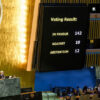
The Cruel Deceptions of Peace in Palestine
In a long past due move, the UN General Assembly voted 142-10 to approve a plan called “The New York Declaration” that hopes to revive the long dead Two State Solution for Palestinian Independence.
Closing the US$1.5 trillion Gap: How FDI can Help Achieve SDGs in Asia & the Pacific
Over the past two decades, foreign direct investment (FDI) has been the single largest and most stable source of external development capital in Asia and the Pacific (see Figure).
NGOs on a Virtual Blacklist at UN High-Level Meetings of World Leaders
When the high-level meeting of over 150 world political leaders takes place September 22-30, thousands of non-governmental organizations (NGOs) and their accredited UN representatives will either be banned from the UN premises or permitted into the building on a strictly restricted basis-- as it happens every year.« Previous Page — Next Page »





It was dubbed "The Glass House" by U.S. ambassador James Wadsworth in 1966. Half a century later, the United Nations has gradually expanded its role as agent of peace and protector of the world's vulnerable populations, while simultaneously facing internal pressures to become more inclusive, increase transparency and maintain legitimacy in the post-Cold War political and economic order. Highlighting the local impacts of global policies on economic development, environment, health and human rights, IPS's coverage goes beyond the edicts of the Security Council to illuminate the power struggles, successes and shortcomings of the 193-member institution as it grapples with crises like climate change, armed conflict, poverty and HIV/AIDS.

The Week with IPS
