
Friday, September 4, 2026



News and Views from the Global South
IPS UN: Inside the Glasshouse

UN’s Proposed Structural Changes Laid Out in a “Strictly Confidential” Internal Document
A six-page internal document, marked “STRICTLY CONFIDENTIAL” on every single page – indicating restricted access to protect sensitive information-- is one of the most comprehensive “compilation of non-attributable suggestions by the UN80 Task Force” on the proposed restructuring of the world body.
Staff Union Demands Full & Active Participation in Ongoing Negotiations on UN Reforms
As discussions on the restructuring of the United Nations-- including a possible merger of UN agencies and staff lay-offs system-wide -- continue at the highest levels of the Secretariat—the Staff Union (UNSU) is demanding an active presence in the ongoing talks. A proposed resolution, which is expected to be adopted at the UNSU general meeting on May 14, is very specific in its demands.
India-Pakistan: On the Brink—But Is There a Way Back?
Just after the young couple arrived at Al-Sayyed Shabistan, a quaint guesthouse in Taobat, on April 30, soldiers showed up, urging them to leave—war, they warned, could break out any moment. Yahya Shah, guest-house owner and head of Taobat’s hotel association, told IPS over the phone, “Tourist season just began, but for two weeks the village feels like a ghost town—everyone’s hit: shopkeepers, eateries, drivers.”
UN Needs to Protect its Vital, Yet Underfunded, Human Rights Work
Major-power cutbacks and delayed payments amidst conflict and insecurity are testing the very principles and frameworks upon which the international human rights infrastructure was built nearly 80 years ago.
World Press Freedom Day 2025
Call to Protect Elections from AI ‘Information Pollution’
The prevalence of artificial intelligence (AI) is changing the flow and access of information, which has a wider influence on how freedom of expression is affected. National and local elections can demonstrate the particular strengths and vulnerabilities that can be exploited as AI is used to influence voters and political campaigns. As people grow more critical of institutions and the information they receive, governments and tech companies must exercise their responsibility to protect freedom of expression during elections. 
New Forms of Power-Sharing are Needed to Uphold Rights of Indigenous Peoples
A UN groundbreaking report published in 1982 laid the legal ground for defining the inalienable rights of Indigenous Peoples. The document, written by José Martínez Cobo, a United Nations Special Rapporteur, analyzed the complex discrimination patterns faced by Indigenous Peoples.
Does the UN’s Restructuring Negotiations Leave the Staff Union Out in the Cold?
The UN’s proposed plans for restructuring the world body, currently under discussion at the highest echelons of the Secretariat, have provoked a protest from the UN Staff Union (UNSU) in New York which claims it is being left out of the ongoing negotiations.
Uncertainty Looms for Kenya Following Tense IMF/World Bank Spring Meetings
Reflecting on this year’s IMF/World Bank Spring Meetings, one word lingers in my mind: uncertainty. The shifting global geopolitical landscape loomed large—none more so than the US administration’s initial threat to withdraw from the Bretton Woods institutions.
A Feminist Future for the UN: Why the Next Secretary-General Must Champion Civil Society
Climate change is threatening to engulf small island states such as Maldives and the Marshall Islands. Gender apartheid is still practiced in theocratic states such as Afghanistan and Saudi Arabia. War crimes and genocide are taking place in the Occupied Palestinian Territories and Sudan.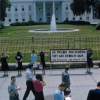
The Vietnam and Gaza Wars Shattered Young Illusions About US Leaders
Eight years before the U.S.-backed regime in South Vietnam collapsed, I stood with high school friends at Manhattan’s Penn Station on the night of April 15, 1967, waiting for a train back to Washington after attending the era’s largest antiwar protest so far.
Trump’s First 100 Days Portend Long-Lasting Damage to Press Freedom
Press freedom is no longer a given in the United States 100 days into President Donald Trump’s second term as journalists and newsrooms face mounting pressures that threaten their ability to report freely and the public’s right to know.
US Cutbacks Lead to Growing Anxiety Among UN Staffers–& its Impact on Mental Health
The Trump administration’s on-again-off-again threats against the United Nations, and US withdrawals from several UN agencies aggravated further by financial cutbacks, have left most staffers with growing apprehension and uncertainty about their future--- and their mental health.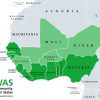
Economic Community of West African States: Fifty and Fractured
Half a century after ECOWAS promised peace and prosperity, three breakaway states are testing West African solidarity, sparking a potential trade war.
Germany’s Role in International Security: Time to Match Words with Deeds
For the first time ever in its history, the United Nations Peacekeeping Ministerial (PKM) will take place in Berlin from 13 to 14 May. The aim of the meeting is to discuss the future of UN peace missions. These biennial meetings serve as a gauge of the continuing political support for such missions, which are, of course, just one of the tools in the UN’s comprehensive ‘toolkit’ for handling conflict — alongside general conflict prevention, mediation missions and peacebuilding measures.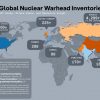
If the US Nuclear Umbrella Collapses, Will it Trigger a Euro-Bomb?
The Trump administration’s hostile attitude towards Western Europe—and the threat to pullout of the 32-member military alliance, the North Atlantic Treaty Organization (NATO) – signifies the danger of losing the longstanding protection of the US nuclear umbrella over Europe. Jana Puglierin, director of the German office of the European Council on Foreign Relations, was quoted as saying: “Trump may, or may not, want to leave NATO officially, but he has every means to undermine NATO”.
Reclaiming Equity: Why G20 Must Center Women, Children & Adolescents in the UHC Agenda
As the G20 Health Working Group convened in KwaZulu-Natal under South Africa’s presidency earlier this year, a central question echoed across plenaries: How can we accelerate universal health coverage (UHC) in an increasingly unequal world?
US Plans at Restructuring May Include World Bank, IMF & UN Agencies
The US State Department, in a wide-ranging political re-structuring of its policies, will eliminate 132 domestic offices, lay-off about 700 federal workers and reduce diplomatic missions overseas. The proposed changes will also include terminating some of the funding for the United Nations and its agencies, budgetary cuts to the 32-member military alliance, the North Atlantic Treaty Organization (NATO), and revamping 20 other international organizations, including the World Bank (WB) and the International Monetary Fund (IMF).
A Nation Bleeds While the World Watches: The Tragedy in Sudan Must End
The ongoing civil war in Sudan is tragic, but the greater tragedy is that if the international community sits on its hands and does nothing to stop this horrific war and prevent further escalation of the conflict, it will come at an unfathomable price
UN Chief, Brazil Gather World Leaders to Reaffirm Commitments Paris Agreement
UN Secretary-General António Guterres and President Lula da Silva of Brazil on Wednesday, April 23, held a closed-door meeting with heads of state to discuss strengthening global efforts against the climate crisis and to ensure a just energy transition.
US Considering Nuclear Power for Saudi Arabia in Grand Bargain
The Trump administration is reportedly pursuing a deal with Saudi Arabia that would be a pathway to developing a commercial nuclear power industry in the desert kingdom and maybe even lead to the enrichment of uranium on Saudi soil.
Slave Trade: Gorée Island and the ‘Fragility of Freedom’
Gorée Island, off the coast of Dakar, is a somber reminder of the transatlantic slave trade. Listed as a UNESCO World Heritage Site, it embodies both the duty to remember and the challenges of passing on a painful past.« Previous Page — Next Page »


It was dubbed "The Glass House" by U.S. ambassador James Wadsworth in 1966. Half a century later, the United Nations has gradually expanded its role as agent of peace and protector of the world's vulnerable populations, while simultaneously facing internal pressures to become more inclusive, increase transparency and maintain legitimacy in the post-Cold War political and economic order. Highlighting the local impacts of global policies on economic development, environment, health and human rights, IPS's coverage goes beyond the edicts of the Security Council to illuminate the power struggles, successes and shortcomings of the 193-member institution as it grapples with crises like climate change, armed conflict, poverty and HIV/AIDS.

The Week with IPS
