Languages
Wednesday, October 14, 2026



News and Views from the Global South
Multimedia

Mauritian men work to change attitudes
 Mauritian men are standing up against violence against women. Nasseem Ackbarally reports that some are now joining organisations to change attitudes towards women in society.

The Green Climate Fund
 The Green Climate Fund is meant to help developing countries with 100 billion dollars a year by 2020 to adapt to the effects of climate change. The creation of the GCF was approved during the COP16 in Cancun. Civil society and some developing nations noted that governments have made trillions of dollars available for the bank and financial sector and that the world's military budget is more than 10 times what is needed for the GFC. Up until now, countries have not been able to agree on a single mechanism to draw public funds.

Durban Platform
After two weeks and an additional 29 hours of intense and even bitter negotiations, the 193 nations participating in the United Nations climate talks agreed to a complex and technical set of documents called the "Durban Platform." The biggest development reached at dawn Sunday is an agreement to negotiate a new global treaty to reduce emissions by 2015. 
Global emissions from burning fossil fuels
Documents under negotiation in Durban, South Africa acknowledge the science-based emissions reduction target of 25 to 40 percent by 2020. Those reductions and that timeline are what is needed to stay below two degrees Celsius. The draft text says this would be the target to be agreed on at COP 18. The science shows that global emissions need to fall to 44 Gt by 2020 and continue to decline by two percent per year.
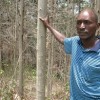
AUDIO – KENYA: Thirsty Eucalyptus Good for Absorbing Carbon
Eucalyptus trees are helping Kenyans to earn an income, but they are also playing a role in mitigating carbon emissions. However, the Kenyan government is of the opinion that the trees might be putting a strain on water resources.
[podcast]http://traffic.libsyn.com/ipsaudio/20120313_eucalyptus_esipisu.mp3[/podcast] 
Thousands march to protest against climate change
Thousands of protesters marched in Durban on Saturday in an effort to make the need for the fight against climate change known to the world. Zukiswa Zimela of IPS followed the protest and compiled this sound-slide.

Mountain magic turning tragic
A mountainous country that boasts of eight of the 14 highest peaks in the world, including Mt Everest, Nepal is threatened by both deluge and drought with climate change shrinking its glaciers by 21 percent in 30 years. As rising temperature disturbs the balance of snow, ice and water in the Hindu Kush Himalayan region where it is located, millions of mountain people and 1.3 billion people living downstream in Asia's major river basins face the loss of livelihood, homes and lives due to flash floods and droughts.

Giant puppets welcome delegates to Durban
The COP17 negotiations in Durban, South Africa, have been described as the most colourful UN event yet after giant puppets and musicians welcomed delegates to the International Conference Centre in the port city.

Waste pickers can play a role in climate change mitigation
Waste pickers can play a role in climate change mitigation. IPS Africa led a team of reporters that produced ten days of outstanding coverage of the climate change negotiations that took place in Durban, South Africa over the past weeks. During the last four days of the official negotiations a twelve-page printed TerraViva supplement was included daily as part of The New Age newspaper, distributed inside the conference hall to the delegates and to its usual readership across KwaZulu Natal province.
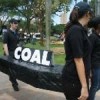
Civil society is calling for the introduction of green energy to replace coal
Civil society is calling for the introduction of green energy to replace coal.
SRI LANKA: Climate Change May Not Make the News, But is All Around
 Climate change hardly makes news here in Sri Lanka, except when there is a big international conference or a devastating natural calamity. Even then, it is mentioned as a passing anecdote, a scientific theory, removed from public discourse.

West African farmers see climate changing
Women in West Africa have over the years relied on fishing and farming as their traditional source of income. But as Sam Olukoya reports from Lagos, changing weather patterns caused by climate change have put their livelihood under threat.
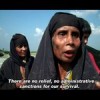
Climate Change – A silent killer in coastal Bangladesh
Bangladesh, a deltaic country that drains major Asian rivers like the Ganges and the Brahamputra, is highly vulnerable to climate change and the effects are already being felt in the coastal regions in the shape of salinity, frequent floods and land erosion. Farmers and fisherman are already turning into climate refugees and, in a buiness as usual scenario, the next decades could see millions of people displaced according to projections by the United Nations Framework Convention for Climate Change.

Women and gender recognised by UNFCCC
Days before the start of COP17 in Durban, the UNFCCC has formally recognised the Women and Gender Constituency, giving them full constituency status when the talks start in Durban at the end of November. Tinus de Jager reports that there will be a strong push for a gender-specific focus at the climate-change talks in South Africa 
PODCAST: Coffee growers feel climate change
Women coffee growers speak to Martha Nyambura about the impact of climate change on their production.

Coffee growers feel climate change
Women coffee growers speak to Martha Nyambura about the impact of climate change on their production.

Oil discoveries hold back agriculture
Zuki Zimela reports from Libreville, Gabon: Farmers organisation say oil discoveries in Africa are holding back agricultural development. 
Sao Tomé project shows great promise
Farming cocoa, coffee and pepper in Sao Tomé show promise, with interest from Europe lifting farmers’ profits. Ulrich Vital AHOTONDJI interviews Andrea Serpagli, the coordinator of the FIDA project.
[podcast]http://traffic.libsyn.com/ipsaudio/20111116_papafpa_vital.mp3[/podcast] 
Le Gabon Renforce SA politique Agricole pour une Meilleure Autonomie
Le ministre Gabonais de l’Agriculture, Raymond Ndong Sima, nous donne un aperçu des réformes en matière de politique agricole au Gabon.
[podcast]http://traffic.libsyn.com/ipsaudio/20111115_minsterqa_tola2.mp3[/podcast] 
Africa’s farmers still face serious challenges
Stakeholders in agriculture from Western and Central Africa are meeting in Gabon for the 6th International Fund for Agricultural Development (IFAD) regional forum. As Zukiswa Zimela reports, they are talking about the challenges facing smallholder farmers.

Gender must be on COP17 agenda: SADC
The head of SADCs gender unit, Magdeline Mathiba-Madibela, says climate change affects women in Southern Africa and their plight must be discussed at COP 17 in Durban later this month. Zukiswa Zimela interviews Mathiba-Madibela in Gaborone and asked her what is needed to protect women against climate change.
« Previous Page — Next Page »





The Week with IPS

NEXT STOP - SDGs
Tracking global progress towards a sustainable world
Tracking global progress towards a sustainable world
