Languages
Saturday, October 17, 2026



News and Views from the Global South
Multimedia
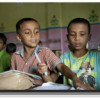
Bangladesh: Despite the Odds, A Thirst for Education
 It’s monsoon time in Bangladesh when flashes of lightning streak across the skies, howling gusty winds bring the South Asian country under great swathes of rain- bursting rivers, and sometimes washing whole villages away. But for trouble-hardened Bangladeshis, it’s just another rainy season.





If clinical trials are successful, the new tenofovir microbicide gel that protects women against the HIV virus will be manufactured in South Africa.
 Dr Henry Gabelnick, of CONRAD, says licensing makes it possible to produce the topical gel to fit in to several price structures. Tinus de Jager asked Gabelnick what rights the South Africans received.

Lao Theatre Serves Up Creative Menu of Advocacy, Arts
Khaoniew puppet theatre group, whose name translates into the ‘sticky rice’ that Laos is so known for, serves its audience a homegrown mix of creative social messages through the use of tools that locals are well familiar with.

South Africa is going ahead with clinical trials of the tenofovir microbicide gel that has showed a 39% effectiveness in preventing HIV transmission to in women.
South Africa is going ahead with clinical trials of the tenofovir microbicide gel that has showed a 39% effectiveness in preventing HIV transmission to in women.
The latest statistics on HIV and Aids show large numbers of youth in sub-Saharan Africa are affected by the pandemic.
The latest statistics on HIV and Aids show large numbers of youth in sub-Saharan Africa are affected by the pandemic.
Sewing project gives women a chance to empower themselves
Sewing project gives women a chance to empower themselves

South African civil society organisations are calling on the Government, churches and communities to join forces in the fight against corrective rape.
South African civil society organisations are calling on the Government, churches and communities to join forces in the fight against corrective rape. Zukiswa Zimela reports from Johannesburg.
The results of the South African local government elections results have been declared and, while turnout is the highest since democratic elections started in 1994, women are falling way short of 50% representation in local government.
The results of the South African local government elections results have been declared and, while turnout is the highest since democratic elections started in 1994, women are falling way short of 50% representation in local government.
Xayaburi Dam: An Unfinished Story in the Mekong
Say ‘Mekong dams’ these days and the first thing that comes to mind is the controversial Xayaburi dam project in Laos, which in recent years has been the subject of worries among neighbouring – especially downstream -- communities and governments.

South Africans are voting for new municipal councillors, with more than 200 thousand special ballots expected to be made before Election Day.
South Africans are voting for new municipal councillors, with more than 200 thousand special ballots expected to be made before Election Day. The chief electoral officer, Advocate Pansy Tlakula, is happy with the preparations and progress, but she is concerned about the lack of women candidates.

South Africans go to the polls on Wednesday 18 May to elect new local government representatives.
South Africans go to the polls on Wednesday 18 May to elect new local government representatives. But some gender advocates say more than an election is needed to make women equal to men in South African society.

DEVELOPMENT: Women Leading Bangladesh Away from the LDC Tag | LDC-IV
 “In the garments sector we have a revolution," Nasreen Awal Mintoo, president of the Women Entrepreneurs Association of Bangladesh, told IPS. A women-led revolution, she says, that will help uplift the entire country. Sanjay Suri reports from the fourth United Nations Conference on the Least Developed Countries in Istanbul, Turkey.
ipsnews.net/news.asp?idnews=55656
“In the garments sector we have a revolution," Nasreen Awal Mintoo, president of the Women Entrepreneurs Association of Bangladesh, told IPS. A women-led revolution, she says, that will help uplift the entire country. Sanjay Suri reports from the fourth United Nations Conference on the Least Developed Countries in Istanbul, Turkey.
ipsnews.net/news.asp?idnews=55656 
DEVELOPMENT: Chinese Step In, Efficiently | LDC-IV
For Jany Chen, CEO of Shanghai Environmental Group, concern often raised in Europe and North America about the Chinese invasion of Africa is a lot of wasteful talk that deserves to be flushed down the toilet. Sanjay Suri reports from the fourth United Nations Conference on the Least Developed Countries in Istanbul, Turkey.
ipsnews.net/news.asp?idnews=55652 
SOUTH UNITES FOR LDCs, Sanjay Suri reports for IPS from LDC-IV in Istanbul
Within the broad failure of the weeklong Fourth U.N. Conference on the Least Developed Countries (LDC-IV) in Istanbul that concluded Friday, many delegates are taking heart in a strengthening South-South front that has emerged. “We would like to push for greater South-South cooperation because in our opinion it's one way for LDCs to have more political autonomy to design their own policies and formulate their own priorities, and to implement policies that are in the best interests of their citizens.”
ipsnews.net/news.asp?idnews=55629 « Previous Page — Next Page »





The Week with IPS

NEXT STOP - SDGs
Tracking global progress towards a sustainable world
Tracking global progress towards a sustainable world
