Languages
Saturday, October 17, 2026



News and Views from the Global South
Multimedia

BIZARRE BAZAAR: Market Forces Rise Above Declarations | LDC-IV
 At the Fourth U.N. Conference on the Least Developed Countries in Istanbul, a battery of Turkish companies set up stalls at a bazaar, eager to sell to businesses from the LDCs. Sanjay Suri reports on this “private sector track” of the conference that ran parallel to the meetings' gabfest.

LDCs CANNOT CONTINUE TO WAIT FOR WTO DEAL, Sanjay Suri from IPS speaks with Valentine Rugwabiza of the WTO.
We are not at the origins of this impasse, we are not the ones preventing the round from progressing, but we are the ones who are going to pay the highest cost,” Rugwabiza told IPS.
LDCs are seeking a mini trade deal ahead of any worldwide agreement under the Doha Round of trade negotiations. The talks - underway since 2001 - have slowed to almost a halt, and the rise of emerging Southern economies has made the donor-client rhetoric of many players in the talks increasingly irrelevant.
ipsnews.net/news.asp?idnews=55590 
The Search for Water
 Summer brings with it the search for better access to drinking water, especially in the Irrawaddy Delta of Myanmar that was hit by Cyclone Nargis in May 2008. More than 5,000 ponds and 3,000 hand-dug wells in the delta area, the usual sources of water for local communities, were also destroyed by Nargis.
A lack of funds in Mozambique is hampering access to medicines in the southern African country.
 A lack of funds in Mozambique is hampering access to medicines in the southern African country. IPS reporter Johannes Myburgh speaks to Mozambique's health ministry about shortages at public health institutions.

POPULATION: Promise Rises With a Problem | LDC-IV
ISTANBUL, May 10, 2011 (IPS) - On the face of it, a rapidly rising population among the Least Developed Countries (LDCs) spells the usual doom about adequate resource distribution. But the least developed are also among the youngest in the world - and well channelled, they can be a valuable asset, United Nations Population Fund (UNFPA) head Babatunde Osotimehin told IPS.

Women Clamour for Contraceptives
In a small women's clinic in the congested community of San Andres Bukid in the Philippine capital, a mother of 11 is availing herself of family planning services for the first time in her life.
Globally 75 million girls remain out of school and robbed of a fulfilling future.
Globally 75 million girls remain out of school and robbed of a fulfilling future. Poverty and early marriage are some of the contributing factors to early pregnancy.
As Nargis’ Anniversary Nears, Schools Sprout Back Up
The onset of May brings with it the memory of the destruction brought by Cyclone Nargis in Myanmar, but also still ongoing efforts to put the pieces of life back together again. These efforts include reconstructing and building schools, since about 4,000 of them were totally or partially damaged by the killer cyclone that struck on May 3, 2008, according to the Post-Nargis Joint Assessment report done by the Association of South-east Asian Nations (ASEAN).
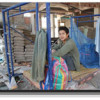
From the Farms to the Cities
Many people go about their daily lives hearing the endless hum from the construction of buildings, roads and other structures in Vientiane, the Lao capital.
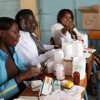
Activists say governments, and big pharmaceutical companies, can get more essential medicines to the poor.
Isaiah Esipisu reports from Zambia, where campaigners work-shopped ways to make medicines more affordable.

ENVIRONMENT: Military Debris Threaten Oceans
Military debris dumped into the world’s oceans are hazardous to coral ecosystems, reefs, fish and marine wildlife, say experts, who also warn - in light of the recent tragedy in Japan - that earthquakes and tsunamis could disturb this debris and even wash it ashore.
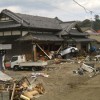
EXCLUSIVE: Report from Fukushima
My decision to visit Fukushima - the area worst hit by the massive quake, tsunami and nuclear power accident on Mar. 11 - was taken one afternoon last week after a long meeting with scientists.
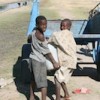
A $45-million infrastructure upgrade could give clean drinking water and provide sanitation to a million people in Namibia and Angola.
A $45-million infrastructure upgrade could give clean drinking water and provide sanitation to a million people in Namibia and Angola.
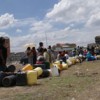
Nairobi’s slums are not known for positive community inputs, but in Waruku a group of residents have taken steps to improve access to water.
Nairobi’s slums are not known for positive community inputs, but in Waruku a group of residents have taken steps to improve access to water. Mary Itumbi visited the Kenyan informal settlement.
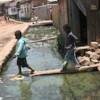
SADC says World Water Day must be used to highlight the movement of Africa’s rural people to the cities and the pressure that the influx is putting on water resources.
SADC says World Water Day must be used to highlight the movement of Africa’s rural people to the cities and the pressure that the influx is putting on water resources.
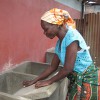
Johannes Myburgh talks to residents of Maputo suburb Chamanculo enjoying running water for the first time thanks to a community-centred infrastructure upgrade.
Johannes Myburgh talks to residents of Maputo suburb Chamanculo enjoying running water for the first time thanks to a community-centred infrastructure upgrade.
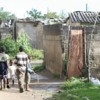
Officials say illegal connections are hampering efforts to provide water to some 200 000 people in the John Laing township of Lusaka.
Officials say illegal connections are hampering efforts to provide water to some 200 000 people in the John Laing township of Lusaka. Brian Moonga reports from Zambia’s capital.

Southern African nations are looking to extend the use of reservoirs along the Zambezi from the current production of electricity to flood management and caring for the environment.
Southern African nations are looking to extend the use of reservoirs along the Zambezi from the current production of electricity to flood management and caring for the environment.
Farmers on the banks of the Zambezi are worried their crops will be washed away again.
Farmers on the banks of the Zambezi are worried their crops will be washed away again. Little has been done to protect the small-holders from flooding, as Brian Moonga reports from Zambia…
Aggressive immunisation campaign is needed to rid Angola of polio.
Aggressive immunisation campaign is needed to rid Angola of polio.

WORLD SOCIAL FORUM: ‘Signs of Change’ Says Bolivia’s Morales as World Social Forum Opens
Tens of thousands of people marched through the streets of Dakar on Sunday to mark the start of the annual World Social Forum. Activists carried colorful banners denouncing land grabs, restrictive immigration laws, agricultural subsidies in Europe and the U.S. and many other issues.
« Previous Page — Next Page »





The Week with IPS

NEXT STOP - SDGs
Tracking global progress towards a sustainable world
Tracking global progress towards a sustainable world
