Languages
Sunday, October 25, 2026



News and Views from the Global South
Slideshow

“We Tripantu”, the Mapuche people’s new year celebration
 "We Tripantu" means "rising of the new sun," and is the new year celebration of the Mapuche people, held over the shortest days of the year in the southern hemisphere, coinciding with the winter solstice.
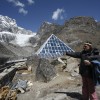
When the Himalayan Glaciers Recede
Every morning, as Gian Pietro Verza walks up the lateral moraine of the Khumbu Glacier in this Himalayan country’s north-east to take measurements, the wind makes colourful prayer flags flutter noisily. That same wind carries soot particles that are causing the snow on the mountains to melt faster.

A Sustainability Paradise : Ecovillage at Ithaca
Why can't we live a different way? That’s the question asked by a pioneer community of 160 trying to achieve greater sustainability and a higher quality of life. 
Paradise island fights poverty
“Every child born on this island has got a potential and we have to nourish it through education. This is the answer to poverty and exclusion,” says the Prime Minister Navin Ramgoolam.
Audio Slide Show 
Southern Africa’ fruit and vegetables come here
The Johannesburg Fresh Produce Market is the hub of fruit and vegetable trade in Southern Africa, with some 10 000 buyers getting their wares here. Siphosethu Stuurman compiled this sound slide.
Audio Slide Show 
Kenyan nurses suffer after self-diagnosis
 “ … when you are stigmatized, you hide away, you are in denial, you become depressed, and you stay away in isolation. That kills us …”
Audio Slide Show
“ … when you are stigmatized, you hide away, you are in denial, you become depressed, and you stay away in isolation. That kills us …”
Audio Slide Show 
SLIDESHOW: Pride Parade Draws Hundreds of Thousands in Support of LGBT in Washington DC
On Saturday, Jun. 9 2012, the annual Capital Pride Parade brought together hundreds of thousands of lesbian, gay, bisexual and transgender (LGBT) people marching with their allies in the sunny streets of Washington DC.

SRI LANKA: Climate Change May Not Make the News, But is All Around
Climate change hardly makes news here in Sri Lanka, except when there is a big international conference or a devastating natural calamity. Even then, it is mentioned as a passing anecdote, a scientific theory, removed from public discourse.


Pharmacy to the Developing World May Shut Shop
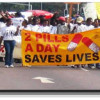
India’s generic drugs are a lifeline not only for millions of poor people in
India, but also to developing countries in Africa, Asia and Latin America.
So much so that India is known as the ‘pharmacy to the developing world’.
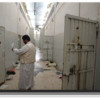
Some Were Merely Tortured
Karlos Zurutuza reports for IPS from Abu Salim prison in Tripoli.

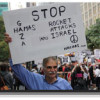
The Battle Over Canada’s Tar Sands: Citizens Speak Out
On Sep. 26, normally placid and polite Canadians shouted, waved banners and demanded the closure of the multi-billion-dollar tar sands oil extraction projects in northern Alberta to protect the global climate and the health of local people and environment.
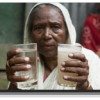
Bangladesh: Learning by Doing
Six year-old Moly scrubs and cleans her hand under a running water from a tap in her village here in Sirajgonj city, 110 kilometres north-west of the capital city Dhaka. The hands she proudly holds out are squeaky clean.
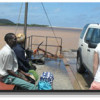
Bangladesh: Erosion, Climate Change Create Refugees
Thirty-year-old Halima Begum sometimes sits on the banks of the river Jamuna in Vatpeyari village in this district, located some 157 miles from the Bangladesh capita of Dhaka, and ponders about the home she lost to river erosion.
TIMOR-LESTE: Working to Tackle Unemployment
Tackling unemployment has been one of the main stumbling blocks in the statebuilding process in Timor-Leste, a half-island nation of about 1.1 million people.
TIMOR-LESTE: Future Lies in the Young Nation’s Hands
Timor-Leste is a young nation in every sense. Nine years after achieving formal independence in 2002, ending 24 years of savage occupation by the Indonesian army, half of its population of 1.1 million is under the age of 18.
Bangladesh: Despite the Odds, A Thirst for Education
It’s monsoon time in Bangladesh when flashes of lightning streak across the skies, howling gusty winds bring the South Asian country under great swathes of rain- bursting rivers, and sometimes washing whole villages away. But for trouble-hardened Bangladeshis, it’s just another rainy season.
« Previous Page — Next Page »





The Week with IPS

NEXT STOP - SDGs
Tracking global progress towards a sustainable world
Tracking global progress towards a sustainable world
