Languages
Wednesday, October 28, 2026



News and Views from the Global South
The Southern Africa Water Wire
SOUTH AFRICA: Copper Thieves, an Abattoir and Coal Mining Threaten Lake District
Raw sewage flowing into Lake Chrissie is threatening to turn South Africa’s largest natural freshwater body into a massive cesspool. Environmentalists claim that for seven years, local authorities ignored their pleas to upgrade water treatment facilities; officials only took action, they say, when local revenue was affected by the closure of tourism routes such as biking trails, as a result of pollution.DEVELOPMENT-ZIMBABWE: The City of “Passport Size” Ablutions
The City Council of Bulawayo, Zimbabwe’s second largest city, has issued a warning to residents of a possible outbreak of disease following a massive cut in the city’s water supply. This is the first time in Bulawayo's history such a health warning has been issued.
DEVELOPMENT-ZIMBABWE: Water Shortages in Capital Leave Residents Desperate
Taps in the Zimbabwean capital, Harare, are running dry even though the city’s main supply dams are more than 60 percent full, according to figures from the Zimbabwe National Water Authority (ZINWA). With more than half of Harare's three million inhabitants now experiencing water shortages, residents are resorting to desperate measures to find supplies.
SOUTHERN AFRICA: Blind, Translucent, Vulnerable – And Important For Your Health
An unexpectedly rich variety of organisms can be found in groundwater, a source that more than 37 percent of people in Southern Africa are dependent on, according to the Southern African Development Community's Water Sector Co-ordinating Unit. And, an Australian scientist visiting South Africa believes these tiny animals should be studied more intensively to monitor the quality of groundwater.
SOUTHERN AFRICA: Unequal Water Resources Present a Challenge
Water resources are unevenly distributed throughout the countries of Southern Africa. The region boasts of some of the world’s largest lakes and rivers, but is also a land of vast deserts.
ENERGY-SOUTH AFRICA: Putting Sunshine in Your Taps
Solar water heaters offer people the chance to save money, increase the security of the local and national energy supply - and cut down on greenhouse emissions said to cause climate change. Yet, roofs throughout South Africa are noticeably bare.POLITICS: "Take The Bull By the Horns And Move Towards a New Country – Africa"
Positions are being staked out concerning the establishment of a pan-African government, this at the annual summit of the African Union (AU), underway in Accra. Heads of state and government from around the continent began meeting in the Ghanaian capital Sunday; they will wrap up talks Tuesday.
Q&A: "Species Are Moving Southwards"
For South African author Leonie Joubert, global warming is a grass roots issue - literally.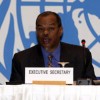
Q&A: Water Is a Right, Not Business
Water is not the stuff of business, it is a basic human right. Hama Arba Diallo, outgoing executive secretary of the Convention of the United Nations to Combat Desertification (UNCCD), is convinced that the United Nations is about to formally recognise this principle, possibly by 2008.AFRICA: Food for 12 Billion. So Why Did 854 Million Go Without?
"As you are suffering from over-consumption, I am suffering from under-consumption. We need to strike a balance," said Mary Wahu Kaara from the Kenya Debt Relief Network with reference to the North and the South.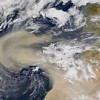
ENVIRONMENT: Around the Globe, Farmers Losing Ground
In 1938, Walter Lowdermilk, a senior official in the Soil Conservation Service of the U.S. Department of Agriculture, traveled abroad to look at lands that had been cultivated for thousands of years, seeking to learn how these older civilisations had coped with soil erosion.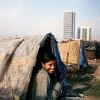
POPULATION: World's Poor Abandon Rural Past for Big Cities
A dramatic population explosion in the world's urban centres will be the single largest influence on development in the 21st century, the U.N. Population Fund (UNFPA) says in a new report released Wednesday.DEVELOPMENT: New Plans for Niger Basin
New plans are being developed for the 4,100 km Niger River that passes through several West African countries.RWANDA: A Difficult Trade-Off to Protect Lake Kivu
Sylvestre Munyalibanje has been accustomed to farming in the Rwandan district of Rutsiro, on the shores of Lake Kivu. But now, he's facing the end of an era.
Q&A: "After the Initial Warnings About Desertification, We Could Have Done More"
Years of working in West Africa have given agricultural technician Henri Girard many insights into what is needed to halt land degradation in the region.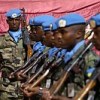
SUDAN: U.N. Seeks African Troops for New Hybrid Force
The United Nations is saddled with the arduous task of raising a 17,000 to 20,000-strong peacekeeping force for the politically troubled Darfur region in Sudan following a long-awaited agreement for the creation of a joint U.N.-African Union (AU) mission for that country.« Previous Page





The Southern Africa Water Wire provides in-depth coverage of a diverse range of water-related issues in Africa, linking water to economic development, social well-being and environmental protection. Local journalists from across the continent explore the challenges, failures and successes of managing this vital resource.


Like the Southern Africa Water Wire to receive the latest water news and information from IPS and other top news agencies, as well as agencies in the field
Follow @africawaterwire

