
Sunday, September 27, 2026



News and Views from the Global South
Q&A: "After the Initial Warnings About Desertification, We Could Have Done More"
Interview with Henri Girard
- Years of working in West Africa have given agricultural technician Henri Girard many insights into what is needed to halt land degradation in the region.
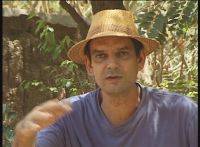
Henri Girard of AZN/Green Earth Credit: Henri Girard
"Zoramb Naagtaba" means "associated friends" in the Mossi language. AZN groups subsistence farmers in Burkina Faso to restore degraded soils; Green Earth is a French organisation created alongside AZN to assist it with finding technical and financial support in Europe.
IPS correspondent Michée Boko sat down with Girard recently to find out more about his work.
IPS: Tell us about the techniques that you use.
Henri Girard (HG): The first of the techniques…involves developing land to ensure that it is no longer destroyed by erosion, fire and grazing. In practice, this is done inside wooded perimeters that we call "Wégoubri" in the Moore language, where everything is done to retain rain water, reduce drying and enrich the soil. Once the perimeter is developed, farmers benefit from an area where they can attempt new…techniques such as crop rotation, hedges, controlled grazing and zaï.
IPS: What is zaï?
HG: Zaï is a traditional technique for cultivating cereals, originally from north-western Burkina Faso…It involves concentrating water and nutrients around the plants. This technique guarantees the rapid growth of plants…Zaï enables us to restore degraded land while getting it to yield a good harvest from the first year…irrespective of poor weather conditions…
An agricultural competition for the most impressive zaï field is organised each year in October between the farmers of the eight villages assisted by AZN.
IPS: Do people react positively to your assistance?
HG: It depends on the village. Some refuse it immediately; others are interested in it, but do not manage to agree on the redistribution of land. But certain villages firmly believe in it, and begin developing perimeters of more than 100 hectares.
IPS: Do you receive any type of support from the Burkinabé authorities?
HG: The technical services of the state appreciate…our initiatives, but…the Burkinabé state focuses on creating a legal framework for allowing rural areas to develop; this is its primary role. We cannot expect the state to do everything. If it provides a favourable framework, individuals and local communities should get involved.
IPS: Do you think that Africa is already doing what's necessary to address desertification?
HG: No. After the initial warnings about desertification in 1968 and 1973, with the knowledge and the means available to humanity, we could have done more and better.
IPS: In Burkina Faso, can one say that the results of the fight against desertification are encouraging?
HG: A great number of initiatives have been started, but the big challenge before us is to extend them…throughout the country. A few symbolic thickets will not increase the forests…
IPS: What, in your opinion, are the shortcomings in the fight against desertification in Africa?
HG: From our experience, the techniques are there, but there is a lack of widespread social support and involvement of every person to make things progress.
IPS: Can one hold out hope, in spite of this?
HG: Yes, the Sahel is a region full of unexploited environmental riches, but we must not delay taking action, as the Sahel is the front lines with confronting the immense Sahara – and climate change.
 Print
|
Print
|




