Languages
Sunday, November 8, 2026



News and Views from the Global South

Ecobreves – CUBA: Accelerating Fruit Maturation with Chemicals
Cuban experts warn that the indiscriminate use of chemicals to speed up the maturation process of fruits and vegetables threatens the health of consumers in this Caribbean country, which officially favors ecological farming methods.Ecobreves – VENEZUELA: Aquatic Species Discovered
Two fish species, five new types of crustaceans and two micromollusks were found in the delta of the Orinoco River, in northeast Venezuela, by researchers from the LaSalle Foundation for the Natural Sciences.Ecobreves – CHILE:: Defending Water Against Mining Company
Los Caimanes, a small rural community in northern Chile, launched a signature collection campaign to convince the government to prohibit a big mining company from building a reservoir that would contaminate the area's aquifers, the only local source of potable water.Ecobreves – BRAZIL: Forests Produce More Intact than Cleared for Farming
The Amazon forests that remain intact are more ''competitive'' than farming in this globalized economy, according to a doctoral thesis recently approved by the University of Brasilia.Ecobreves – GUATEMALA: Christmas Threatens the Pinabete
The situation of the pinabete (Abies guatemalensis R), an endangered tree in Guatemala, worsens every Christmas season due to the widespread use of its branches as decoration by the mostly Roman Catholic population.
Venice Doesn't Want to Be Another New Orleans
A gigantic engineering project, slated for completion in 2010, aims to save the mystical Italian city of canals from the encroaching sea. Environmental groups sound the alarm on the work's potential environmental impact.
Childhood in the Pit
More than 13,500 children and adolescents work in small mining operations in Bolivia, exposed to toxic gases, accidents and explosions. Their life expectancy is just 45 years.Ecobreves – BRAZIL: Eco-Education Expands
Ninety-four percent of Brazilian schools include environmental education in their curriculum, as a regular course or in specific projects, according to the 2004 school census, which covered 215,000 schools.Ecobreves – CUBA: Bamboo In Vitro
A project to develop bamboo in Cuba aims to obtain and multiply "in vitro" four species useable as lumber in order to expand its use throughout this Caribbean island.Ecobreves – GUATEMALA: Protests Put the Brakes on Water Law
Guatemalan lawmakers have withdrawn a bill to establish the Water Law in the wake of protests staged in mid-September by thousands of peasant farmers in the western part of the country.Ecobreves – CHILE: No Risk of Drought
Heavy rains and snowfall over much of Chile, more than 70 percent above average and triggered by a prolonged, harsh winter, have ruled out any risk of drought and energy rationing that was proposed earlier this year.Ecobreves – VENEZUELA: Building on a Devastated Mountain
Venezuela is considering the construction of 30,000 housing units on 3,500 hectares in the north of Avila, the mountain that separates Caracas from the Caribbean Sea, and where flooding and mudslides left thousands dead in 1999, says Environment minister Jacqueline Faría.
Amazonian Paranoia
A broad sector of the Brazilian population believes that foreign powers aim to take over the Amazon region. Could their fears have a basis in reality?
Prison Is a Blow, but Doesn't Knock Down Peasant-Activist
"If they keep on killing trees, there won't be any more water. I'll continue fighting this. I'm not afraid," says Mexican peasant farmer Felipe Arreaga, released Sep. 15 after spending 10 months behind bars.
Canaima Pits Miners Against Environment
More than a thousand miners in the Venezuelan town of Las Claritas are demanding their right to work. The government is sending mixed signals about how it will quell the conflict, which has already left several people injured.
Beautiful Meadows Emerge from the Rubbish
Lush vegetation grows atop what was once garbage in the Don Juanito landfill in Colombia. Some 300 tons of waste are processed there each day in a sustainable way.Years Before Katrina's Environmental Costs Measured
Hurricane Katrina wiped out 52 square kilometers of coastal wetlands, and many barrier islands along the Gulf of Mexico coast disappeared. The environmental effects of this mega-storm will be felt for at least 15 years, say scientists.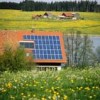
An Island That Wants to Survive
Wind and sun produce 70 percent of the electricity in Foehr, an island in northern Germany in the North Sea that is fighting against rising sea levels.Ecobreves – COLOMBIA: Peasants Recuperate Forests
Some 3,000 peasant farming families in the northern Colombian department of Bolívar this month completed two years in the governmental program Guardabosques, eradicating illegal drug crops in the areas where they work.Ecobreves – BRAZIL: Mega-Pipeline Considered Nonviable
In the short term, the project to build a gas pipeline more than 8,000 km long, from Venezuela through Brazil and ending in Buenos Aires and Montevideo, is financially nonviable, Giuseppe Bacoccoli, of the Federal University of Rio de Janeiro, told Tierramérica.« Previous Page — Next Page »





Tierramérica is the main communications platform on sustainable development and the environment in Latin America and the Caribbean. It is produced by IPS Noticias, the agency’s Spanish-language service, which created it jointly with the United Nations Development Programme (UNDP) and the United Nations Environment Programme (UNEP), with later support from the World Bank. The weekly editions of Tierramérica are published in Spanish, Portuguese and English and are picked up and printed by dozens of media outlets in the region. Follow us on Facebook and Twitter.

From the Frontline of Environment
Supported by

Tierramérica en Español

Terramérica em Portuguese

