Languages
Monday, November 9, 2026



News and Views from the Global South

Ecobreves – HONDURAS: Promoting Vegetable Oil for Cars
A group of U.S. experts with the environmental group Sustainable Solutions Caravan proposed to government officials and civil society groups in Honduras the use of ''bio-fuel'' for cars as a means to reduce pollution.Inuit to Charge U.S. for Climate Change
The Inuit peoples of the Arctic regions hope the Inter-American Commission on Human Rights will find that the United States, the leading emitter of carbon dioxide, is threatening their existence. Their action is seen as the first case that links climate change and the rights of indigenous communities.
''We'll need imagination after Kyoto''
Klaus Toepfer, the world's top environment official as chief of the United Nations Environment Program, spoke with Tierramérica in the lead-up to Feb. 16, the day the Kyoto Protocol on climate change takes effect.
The 'Green' Promises of CAFTA
The environment chapter of the Central American-U.S. free trade agreement has environmental activists divided: for some it is merely ''symbolic'', for others it is a ''major victory''.Unacceptable' Work Conditions in Chile's Fields
Hundreds of thousands of people who work Chile's farmland are victims of abuse and mistreatment by employers and poisoning from pesticides, charge health, indigenous and union activists.Ecobreves – AMAZON: Fight Against Mercury
Mercury in the rivers of the Amazon region is threatening the environment and human health, says the Amazonian Cooperation Treaty Organization (OTCA), which is discussing action plans for curbing contamination from this heavy metal in the eight countries with Amazonian territory.Ecobreves – CHILE:: Cellulose Plant Remains Closed
The Chilean regional environmental commission, COREMA, resolved to maintain the closure of the Arauco Constitución cellulose plant in Valdivia, in southern Chile, until it complies with four requisites for preventing contamination of the Carlos Anwandter Nature Sanctuary.Ecobreves – CUBA: Kids Care for Havana Bay
A university environmental project implemented in several Havana schools aims to raise environmental awareness amongst children and adolescents for protecting the capital's bay, an ecosystem contaminated by the city's domestic and industrial waste.Ecobreves – HONDURAS: Pine Beetle Emergency
The Honduran government is working hard to prevent the spread of the southern pine beetle (Dendroctonus frontalis) plague in the northeastern department of Olancho, Roberto Cabrera, of the state-run forest development agency COHDEFOR, told Tierramérica.Ecobreves – GUATEMALA: No to Unregulated Fishing
Family fishing operations in Guatemala's Izabal Lake, the largest in the country, covering a thousand square kilometers, have denounced a rise in illegal fishing by smugglers, whose activities they say could push several species to extinction.Ecobreves – PERU: Carrot and Stick for Polluters
The reform of Peru's Environmental Code will include economic incentives for compliance with environmental regulations, lawmaker Fabiola Morales told Tierramérica.Ecobreves – ARGENTINA: Entrepreneurs Dissuaded from Buying Preserve
Protests by residents and by environmental groups against the sale and logging of 25,000 hectares in Argentina's General Pizarro nature preserve, in the northern province of Salta, led businessman Manuel Santos Uribellarrea to withdraw from the project, Greenpeace representatives told Tierramérica.Ecobreves – COLOMBIA: Promoting Commercial Forestry
The forest industry is responsible for 38,000 direct jobs in Colombia, and if the area planted for commercial ends would expand from 150,000 to 3.0 million hectares in the next five years, the number of jobs would be 760,000, according to ''Outlook for investment in the Colombian forest industry''.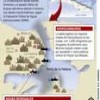
Fish Return to Havana Bay
Officials assure that marine life is recovering in Havana Bay, one of the most polluted bays in the world. Contamination from wastewater and from petroleum products has been reduced, according to a report to which Tierramérica had access.
Alarm Sounded on Panama-Colombia Electrical Project
Environmentalists fear that a project to connect the Colombian and Panamanian electrical systems will hurt Central America's largest protected area. The route of the power lines will be determined in six months.
''They want transgenics, good or bad''
Biologist Ignacio Chapela, who discovered that Mexican corn had been contaminated with genetically modified material, spoke recently with Tierramérica. He denounces a campaign by the big biotech transnationals to undermine his reputation.Human Development at the Service of Wildlife
Improving the quality of life in the communities of the developing South is indispensable for protecting species diversity, said eminent biologist Edward O. Wilson in a conversation with Tierramérica.
How Much Is the Biodiversity of the Andes Worth?
The issue of access to genetic resources will continue to complicate free trade negotiations with the United States, warn Peruvian experts on the eve of the seventh round of talks.Ecobreves – GUATEMALA: Plans for Planting 75 Million Trees
Some 75 million trees are to be planted in Guatemala before 2008 as part of the ''Guate Verde'' plan, Environment and Natural Resources Minister Mario Dary told Tierramérica.Ecobreves – HONDURAS: Reporter Faces Trial for Defending Environment
- Journalist Frank Mejía tried to protect the trees in the Honduran capital's main park, and ended up in the courts, accused of ''disobedience''.
Agrarian Reform Reaches the Forest Edge
The land intervention policy of Venezuelan President Hugo Chávez could hurt nature preserves that are that are rich in biological resources, warn environmentalists.« Previous Page — Next Page »





Tierramérica is the main communications platform on sustainable development and the environment in Latin America and the Caribbean. It is produced by IPS Noticias, the agency’s Spanish-language service, which created it jointly with the United Nations Development Programme (UNDP) and the United Nations Environment Programme (UNEP), with later support from the World Bank. The weekly editions of Tierramérica are published in Spanish, Portuguese and English and are picked up and printed by dozens of media outlets in the region. Follow us on Facebook and Twitter.

From the Frontline of Environment
Supported by

Tierramérica en Español

Terramérica em Portuguese

