Languages
Monday, November 9, 2026



News and Views from the Global South

Ecobreves – SOUTH AMERICA: Promoting Sustainable Fishing
Artisanal fisherfolk from seven South American countries met in Argentina Mar. 1-4 to discuss small-scale sustainable fishing and to exchange information on fishing stock management.Ecobreves – VENEZUELA: A Tree Nursery for a National Park
Groundbreaking for nursery that is to hold 5,000 species of trees and other plants, some in danger of extinction, took place in El Avila National Park, which encompasses the mountain that separates the Venezuelan capital from the Caribbean coast.Ecobreves – CHILE: Controversy Rekindled on Cellulose Plant
A technical report leaked to the press has rekindled the debate between activists and the environmental authorities that authorized the reopening of a cellulose factory that has been blamed for the deaths of thousands of black-necked swans.Ecobreves – HONDURAS: Tourism and Pollution Threaten Reefs
Tourism and pollution in the beautiful Bahía Islands threaten the coral reefs of the Honduran Caribbean, environmental attorney general Aldo Santos told Tierramérica.Ecobreves – CUBA: Drought Extends Across the Island
The drought that has been thrashing Cuba's eastern provinces for almost two years is now hitting the central and western regions of this Caribbean country, report the authorities.Law on the Side of Transgenics?
A new Mexican law on biosecurity and genetically modified organisms could be taken as a model by other Latin American governments. Environmentalists and some scientists disagree on the virtues of the legislation.Ecobreves – GUATEMALA: Amatitlán Lake Slated for Clean Up
The Guatemalan government will invest 29 million dollars to clean up Amatitlán Lake, 25 km south of the capital. The lake is full of algae and waste, which threatens to turn it into a swamp in just 10 years.
The Refuge of the Pink Flamingo
Thousands of flamingos will reach Cuba's Máximo-Cagüey wetlands in April for their nesting season. Workers at this nature preserve have everything ready to welcome the birds.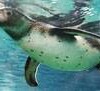
Penguins Revive Debate of Homosexuality in Animals
At a German zoo, six endangered Humboldt penguins prefer mates of the same sex. Scientists debate whether this behavior has biological or social origins -- or both.Ecobreves – MEXICO: 'Export' of Law on Transgenics?
The environmental watchdog group Greenpeace warned that the new Mexican law on biosecurity for genetically modified organisms (GMOs) --opposed by environmentalists, a group of farmers, and scientists -- could be used as a model for similar legislation in Central America.Ecobreves – PERU: Oil Companies Resist Ethanol
Sugarcane growers in Peru are demanding that the government comply with the law on Promotion of Bio-Fuel Market, in effect since Jan. 1, and which obligates petroleum refineries to replace the lead in gasoline with ethanol.Ecobreves – HONDURAS:: $320 Million to Fight Water Shortage
Honduran authorities need 320 million dollars to build a reservoir for potable water in the capital, where tight rationing of water supplies has been in effect because of a dry summer and the climate phenomenon known as El Niño.Ecobreves – GUATEMALA: To Jail for Littering
The municipal government of Quiché, a tourist destination in central Guatemala, will send anyone who dumps trash in the streets to prison for 10 to 60 days.
Car Industry Challenges California Law
In 10 years, all new cars in California must emit at least 30 percent less carbon dioxide, says the first law of its kind in the world. But car manufacturers have filed a lawsuit to halt the legislation.
Mapuche Culture a Boon to Health and Palate
Chilean Indians are opening pharmacies and restaurants as a means to disseminate their view of the world... and to create jobs. Most of Chile's 600,000 Mapuches live in poverty.Spain Lags Behind in Kyoto Protocol Compliance
Spain is the European nation with the biggest increase in greenhouse gas emissions since 1990. Many companies are expected to turn to Latin America in order to meet their emissions reduction quotas. The energy company Endesa has announced it will invest 3.2 billion dollars in the region.Industry's Hidden Environmental Costs
Contaminated soil threatens the health of some two million people in Brazil, say authorities. Gas stations are the leading culprits behind this type of pollution in the state of Sao Paulo, the nation's industrial centerViolence Against Environmental Activists
The assassination on Feb. 12 of Dorothy Stang, a U.S.-born Catholic nun working in the Brazilian Amazon state of Pará, turned international attention to the human rights of environmental activists. Tierramérica offers this guide for navigating the issue on the Internet.
Ecobreves – COLOMBIA: Holy Week, but No Palm Fronds
Colombia's Environment Ministry and Bogotá's Botanical Garden have launched the ''Reconcile with Nature'' campaign to prevent the use of the fronds of the wax palm (Ceroxylon quindiuense) in the celebrations of Christianity's Holy Week.Unacceptable' Work Conditions in Chile's Fields
Hundreds of thousands of people who work Chile's farmland are victims of abuse and mistreatment by employers and poisoning from pesticides, charge health, indigenous and union activists.Ecobreves – AMAZON: Fight Against Mercury
Mercury in the rivers of the Amazon region is threatening the environment and human health, says the Amazonian Cooperation Treaty Organization (OTCA), which is discussing action plans for curbing contamination from this heavy metal in the eight countries with Amazonian territory.« Previous Page — Next Page »





Tierramérica is the main communications platform on sustainable development and the environment in Latin America and the Caribbean. It is produced by IPS Noticias, the agency’s Spanish-language service, which created it jointly with the United Nations Development Programme (UNDP) and the United Nations Environment Programme (UNEP), with later support from the World Bank. The weekly editions of Tierramérica are published in Spanish, Portuguese and English and are picked up and printed by dozens of media outlets in the region. Follow us on Facebook and Twitter.

From the Frontline of Environment
Supported by

Tierramérica en Español

Terramérica em Portuguese

