Languages
Monday, November 9, 2026



News and Views from the Global South

Ecobreves – BRAZIL: Bio-Construction at the World Social Forum
The 5th World Social Forum put into practice the technique of bio-construction -- ''less expensive and more ecologically correct'' -- in building the venues for five days of conferences and debate by 120,000 civil society activists gathered in the southern Brazilian city of Porto Alegre.Ecobreves – CHILE: Ecologists Applaud Energy Efficiency Plan
The non-governmental Sustainable Chile Program congratulated Economy Minister Jorge Rodríguez for presenting a National Energy Efficiency Project, which includes standards for both the public and private sectors for rational use and saving energy.Ecobreves – CARIBBEAN: Community Education to Save Birds
Residents of coastal ecosystems in two Cuban provinces, like their counterparts in Haiti, Dominican Republic and Jamaica, are learning in conference and workshops about protecting the 'yaguasa criolla' (Dendrocygna arobrea), a Caribbean bird that faces extinction.Ecobreves – VENEZUELA: Indians Pro-Water, Anti-Coal
Indigenous and peasant communities of the northwestern Venezuelan oil-producing state of Zulia, bordering Colombia, founded the Water for Life Committee as a counterweight to a government proposal to mine coal in the watersheds of the area's two main rivers, the Socuy and Cachirí, and the Tulé reservoir.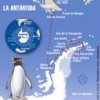
Voyage to the Fragile Beauty of Antarctica
The international renowned photographer Sebastiao Salgado shares with Tierramérica his first days aboard the Tara, which set sail this month on an Antarctic expedition.
Death Traps Below the Big Cities
The ever-growing number of underground transportation networks, shopping centers and parking ramps in the world's mega-cities are vulnerable to natural disasters, warn experts. Not even the wealthiest cities of the United States and Europe have given this serious issue much thought.
Tsunami Forces Issue of Early Warning System
United Nations experts have announced an early warning system for tsunamis in the Indian Ocean to be launched in Julio. But there is still much to do. ''We are worried the importance of rehabilitating the local communities is being sidelined in this process,'' say NGOs.Ecobreves – ARGENTINA: Demands for More Forest Protection
Social and environmental groups from the northern Argentine province of Santiago del Estero, which lost 2.5 million hectares of forest in the 20th century, denounce the government's bill on forest conservation and use.Ecobreves – COLOMBIA: A Guide to Fruits and Seeds
The EcoAndina Foundation has launched the ''Guide to Fruit and Seeds of the Middle Otún River'', a record of the great diversity of the flora of the Colombian AndesEcobreves – PERU: Investigation Into Gas Leak
Elena Foronda, head of the Peruvian Society for Environmental Law, and representatives of the Machiguenga indigenous council are demanding that the authorities conduct a public environmental inspection of the gas leak that occurred in the pipeline that runs from the south-central zone of Camisea to the central Peruvian coast on the Pacific.Ecobreves – GUATEMALA: Protests Against Mine Continue
Opposition to open-pit mining in Guatemala will continue, rural leader Daniel Pascual told Tierramérica, despite the violence that erupted on Jan. 11, claiming the life of one protester.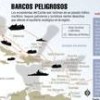
Ships Leave Tons of Waste in Caribbean Waters
Each of the thousands of cruise ships that sail through the Caribbean Sea generate up to 1,200 cubic meters of liquid waste daily, including wastewater from kitchens and showers. The region lacks effective system for handling organic and toxic waste generated by the shipping industry.
Coral Reefs the Silent Victims of Asian Tsunami
The gigantic waves of Dec. 26 caused large-scale destruction of the barrier reef of Andaman and Nicobar islands, the largest in South Asia and the source of sustenance for local communities, reports our special Tierramérica contributor from Thailand.
Maps Ignore Lakes and Lagoons
Around a thousand bodies of water do not appear in the cartography of Central America, according to the preliminary results of a new study to which Tierramérica had access.Ecobreves – BRAZIL: Tsunami Fizzles on Copacabana Beach
The giant waves that killed more than 150,000 people around the Indian Ocean reached this Brazilian coastal city, but had been reduced to small waves some 20 hours after the underwater earthquake the triggered the tragedy on Dec. 26.Ecobreves – GUATEMALA: A Green Belt for the Capital
Officials in the Guatemalan capital are seeking a way to create a ''green belt'' to improve the environment and the flow of water through the city.Ecobreves – COSTA RICA: Prevention Plans Come Up Short
The torrential rains that hit Costa Rica last week, killing two people and causing economic losses that will surpass 20 million dollars, demonstrated the fragility of the country's disaster prevention systems, admitted an official source.Ecobreves – CHILE: Cellulose Plant Construction Halted
The regional environmental commission, COREMA, of Biobío, in southern Chile, ordered a stop to the construction of the Itata cellulose plant, which was designed for a production volume greater than what was authorized, as environmental groups denounced two months ago.Ecobreves – CUBA: Bays Increasingly Contaminated
Contamination from organic waste in Cuba's bays increased 2.3 percent during 2004, in contrast to a decline of 3.6 percent of the waste burden received by the island's eight main basins.Ecobreves – VENEZUELA: Shrimp Granted a Visa for U.S.A.
The United States has lifted a ban that since the late 1990s prohibited entry of shrimp from Venezuela, saying the South American country now meets the international requirements for protecting sea turtles that accidentally get caught in the fishing nets.Ecobreves – MEXICO: Whales in Danger
Dozens of female gray whales that are pregnant, many of which are ready to give birth, began to arrive this month in the Sea of Cortez, off the Mexican state of Baja California, in keeping with a natural cycle that could come to an end if tourism development plans continue, say environmentalists.« Previous Page — Next Page »





Tierramérica is the main communications platform on sustainable development and the environment in Latin America and the Caribbean. It is produced by IPS Noticias, the agency’s Spanish-language service, which created it jointly with the United Nations Development Programme (UNDP) and the United Nations Environment Programme (UNEP), with later support from the World Bank. The weekly editions of Tierramérica are published in Spanish, Portuguese and English and are picked up and printed by dozens of media outlets in the region. Follow us on Facebook and Twitter.

From the Frontline of Environment
Supported by

Tierramérica en Español

Terramérica em Portuguese

